News
Can I Run With Plantar Fasciitis? Risks and Advice
Running with sole pain can make the injury worse. These guidelines explain when to stop and how to return safely.

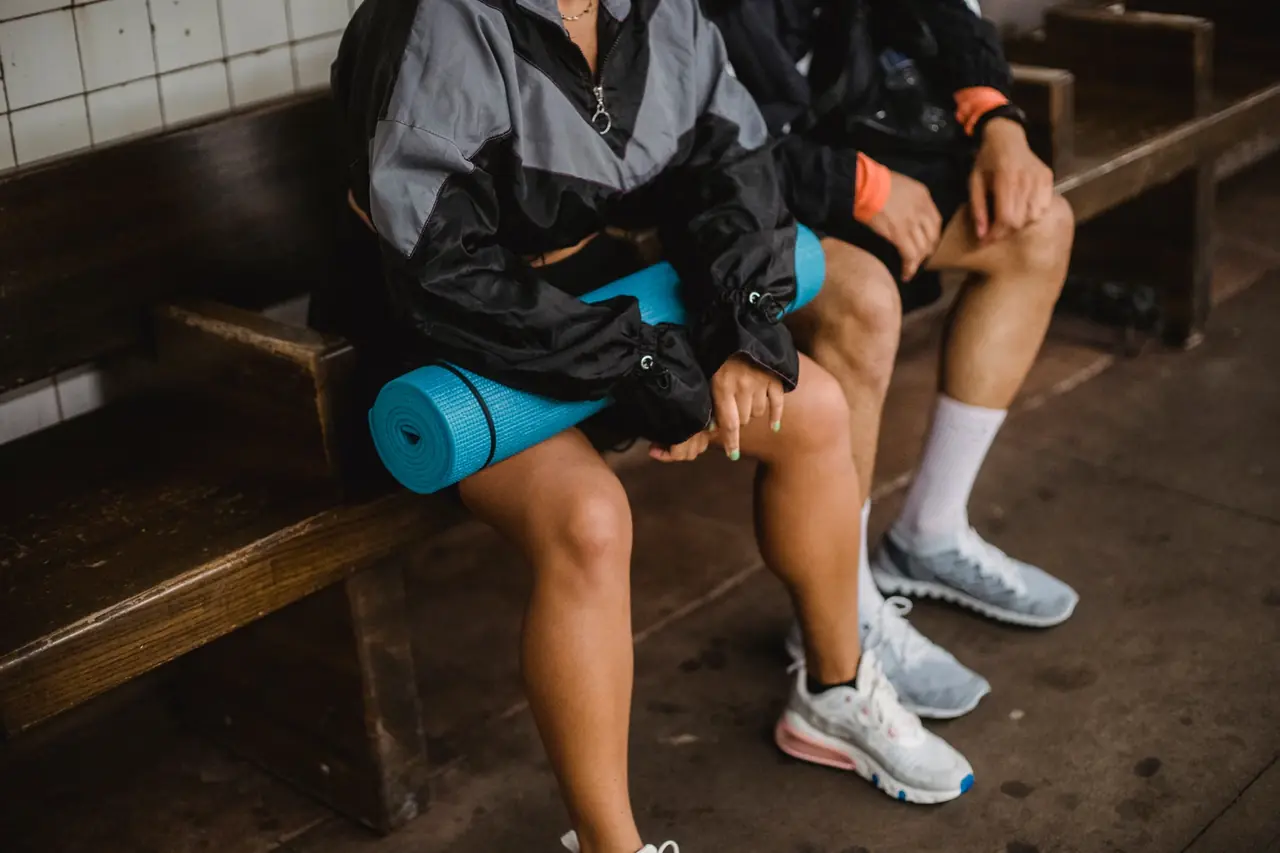
Running with plantar fasciitis is not automatically forbidden, but ignoring pain to stay on a training schedule is not advisable either. The decision depends on the intensity of the symptoms, whether your stride changes and whether the pain disappears during the activity or remains afterward. A mild case may allow modified exercise; intense pain, limping or pain at rest require a temporary break from running.
Plantar fasciitis involves irritation of the fascia, a strong band of tissue running along the bottom of the foot from the heel to the base of the toes. The most typical symptom is pain during the first steps in the morning, although it may also appear after getting up from sitting, walking for a long time or increasing running volume. The goal is not to prove how much pain you can tolerate, but to prevent every session from prolonging the irritation.
Pain determines whether running is sensible
There is no universal number that authorizes or rules out a run, because tolerance differs between people and changes throughout the injury. As a practical guide, a mild, stable discomfort that does not alter technique may be compatible with very easy activity. By contrast, pain that shortens the stride, changes the landing or makes you protect one leg shows that the current load is exceeding the foot’s capacity.
The response during the following hours is particularly useful. If pain clearly increases after running, feels worse the next morning or takes more than 24 hours to return to its usual level, the session was too demanding. The next morning’s response is often more informative than the temporary relief some people feel during warm-up.
The location and behavior of the discomfort also matter. Typical pain is found near the inner part of the heel or along the arch, but sharp calf pain, numbness, burning, marked swelling or loss of strength may point to another problem. In those situations, do not assume everything is caused by the plantar fascia, because treatment and recovery times may be different.
When to stop and when to reduce the load
Some signs justify stopping running until you receive a health assessment: severe pain while walking, limping, inability to bear weight normally, night pain, visible swelling, bruising, loss of sensation or pain that began suddenly after trauma. Being unable to walk without compensation is a more important limit than any training plan.
It is also sensible to stop impact sessions when discomfort increases on every run, remains for several days without improving or requires painkillers to make running possible. Medication may reduce the perception of pain, but it does not correct the mechanical load irritating the tissue. Running under its effect can also make the body’s warning signals harder to read.
A less concerning situation is one in which the discomfort is localized, low and stable, walking is normal and a short session does not make symptoms worse afterward. Even then, running should not continue as usual. Distance, pace and weekly frequency should be reduced temporarily, especially if the problem began after increasing mileage, adding hills or changing surfaces.
How to test running without aggravating the foot
Returning should resemble a controlled check rather than a complete workout. An initial test can take place after walking without significant pain, with a few minutes of gentle mobility, on a regular and flat surface. Alternating short jogging intervals with walking makes it possible to observe the response without suddenly accumulating the full load of a continuous run.
The pace should allow a relaxed stride and normal conversation. This is not the time to chase speed, elevation or competitive sensations. If pain increases while running, the way you land changes or a visible compensation appears, the test should end. Stopping early often saves more recovery time than finishing a session that has already changed your technique.
Progress should assess three moments: how the foot feels at the start, what happens during the session and how it feels the next day. If all three remain stable, running time can be increased gradually, but distance, intensity and frequency should not all rise at once. A cautious approach is to keep two variables stable and change only one every few days, provided the response remains favorable.
The surface can also influence the outcome. Asphalt is not necessarily the cause of plantar fasciitis, but a hard, uniform surface may make discomfort more noticeable for some people. Hills, uneven paths and descents create different demands on the foot. For an initial return, a flat, predictable route close to home makes the load easier to control.
Factors that may keep irritation going
The fascia absorbs repeated forces with every step, so the problem is often linked to an imbalance between accumulated load and recovery capacity. A sudden mileage increase, several hard workouts in a row or the addition of hilly races can exceed that capacity even when someone has run for years without symptoms.
Recovery does not depend only on stopping running. Spending many hours standing, walking in unstable footwear, working on hard surfaces or suddenly returning to long days can keep the area under tension. Relative rest aims to reduce the stimuli that trigger pain without necessarily turning the entire day into complete immobilization. Walking within a tolerable level is not the same as accumulating repeated impact at running pace.
Footwear deserves review, although there is no universal shoe for this condition. A heavily worn model, a deformed midsole or a shoe that clearly feels unstable may not be suitable during recovery. Similarly, switching without adaptation to a very minimal shoe, with little protection or a major change in heel-to-toe drop, can abruptly alter the demands placed on the foot.
Body weight, ankle mobility, calf strength, foot-muscle function and training habits can also play a role. They should not be treated as a list of culprits or as proof that the injury has one single cause. Plantar fasciitis is often the result of several factors coming together, not one particular session or shoe.
Measures that may support recovery
The first measure is usually to adjust the load that causes symptoms, rather than applying complete rest without a clear reason. Stationary cycling, swimming or pain-free strength training can maintain part of your fitness while impact is reduced. The choice depends on individual tolerance: an alternative activity that also worsens heel pain is not providing useful unloading.
Cold may provide temporary relief after activity, but it does not solve the cause on its own. Some people tolerate gently massaging the sole with a soft ball or moving the foot; others become more irritated if they press too hard. Relief from one measure does not prove that the tissue is ready to run again.
Progressive strength exercises for the calf and foot muscles are often part of rehabilitation, but they must be adapted to the stage of the injury and to each person’s response. Early on, they may involve simple, controlled movements; later, resistance, repetitions or weight-bearing load can be increased. Mild, stable discomfort does not always require stopping an exercise, while increasing or sharp pain does require modification.
Calf and sole stretching may be useful when stiffness is present, but it should not involve bouncing or lead to intense pain. It is also worth paying attention to the first steps of the day: getting up slowly, moving the ankle before standing and avoiding bare feet on hard floors may reduce initial discomfort for some people. These are general measures and do not replace an assessment when symptoms continue.
A full return requires more than pain disappearing
The disappearance of pain at rest is a good sign, but it does not guarantee that the foot can yet tolerate a long session. Running requires hundreds or thousands of consecutive contacts, and a structure may feel comfortable while walking but react badly after 30 or 40 minutes of jogging. The ability to tolerate load must be rebuilt gradually, not assumed because pain has decreased.
Before returning to normal training, it is reasonable to check whether brisk walking, stairs and basic strength exercises cause a delayed reaction. Short running sections separated by walking can then be introduced, leaving enough time to observe the response. Speed and hills usually return later than easy jogging because they increase mechanical demand and make load control more difficult.
Once several easy sessions are tolerated, increases should remain gradual. It is not sensible to make up for missed weeks with a long run, a race or two hard workouts in a row. The most useful rule is to follow the trend: less pain, better tolerance and faster recovery indicate progress; symptoms that appear earlier or become more intense mean that the load should be reduced again.
Return may be slower when plantar fasciitis has lasted for months, when there is significant excess weight, marked ankle stiffness or pain in both feet. Greater caution is also needed after repeated episodes. A recurrent injury deserves a review of training distribution and whole-leg strength, not just a new pair of shoes.
When to consult a health professional
An assessment by a doctor, physical therapist or another qualified health professional is advisable when pain does not improve after several weeks of load adjustment, limits daily life or has no clear trigger. Examination can distinguish plantar fascia pain from problems such as a bone stress injury, nerve irritation, tendinopathy or a change in the heel fat pad.
Diagnosis is usually based on the history and physical examination. Imaging is not always necessary at the beginning, but it may be considered when there is uncertainty, an atypical course or no response to treatment. Persistent pain should not be self-diagnosed indefinitely using general information found online.
Assessment is also important if pain occurs with fever, intense redness, progressive swelling, weakness, loss of sensation or after a fall. These signs do not fit the usual pattern and require more prompt evaluation. For people with diabetes, circulation problems, rheumatic disease or a history of stress fractures, the threshold for seeking care should be particularly low.
The safest approach for anyone who wants to keep running is to individualize the load and accept that the schedule may need a pause. The plantar fascia does not recover through willpower or by ignoring warning signs; it improves when tissue capacity and demand meet again. Running can be part of the return, but only when the foot tolerates impact without increasing pain or compensation.
You may also like: Time off work after plantar fasciitis surgery.



How to prevent thigh chafing: causes and real solutions

Women’s running windbreakers: seven jackets and how to choose

Do more workouts get rid of soreness? A guide for runners

Jaén Half Marathon 2026: Record 3,800 Runners Registered

Men’s short running tights: how to choose the right pair

World Triathlon confirms data breach involving medical data

Izan Edo targets podium at Miyazaki World Cup

María Pérez ranks ninth in World Athletics’ 2026 top ten

Dos Santos, Duplantis and Sawe: World Athlete of the Year finalists

San Silvestre Vallecana 2026: 42,000 places, prices and start times

 Races4 months ago
Valencia Half Marathon 2027: date and registration

 Races4 months ago
Valencia Marathon 2026: entry, ballot and course

 Reviews and Comparisons4 months ago
Asics Gel-Roadmiles 3 for men: review and current price

 Reviews and Comparisons4 months ago
Asics Gel Sonoma 8 Gore-Tex: complete analysis for trail and rain

 Sneakers3 months ago
Saucony Endorphin Pro 4: full review and verdict

 News5 months ago
Strava API 2026: what changes for clubs, challenges and runner apps?

 Reviews and Comparisons5 months ago
Nike Alphafly 3: opinions, sensations, and real key points

 Reviews and Comparisons4 months ago
Under Armour running shoes review 2025-2026: models and key features

 Sports Equipment4 months ago
Shoe sizes in cm: a clear guide to getting the right fit for your footwear

 Sneakers3 months ago
Skechers GO RUN Consistent 2.0 analysis: comfort and limits

 News5 months ago
Valencia Marathon 2026 route: key tips to train and run better

 Sneakers4 months ago
Adidas Adizero Boston 13 for men: review and verdict