Sneakers
Women’s LED running shoes for night: buying guide
What they offer, their limitations and how to choose illuminated footwear for running after sunset.

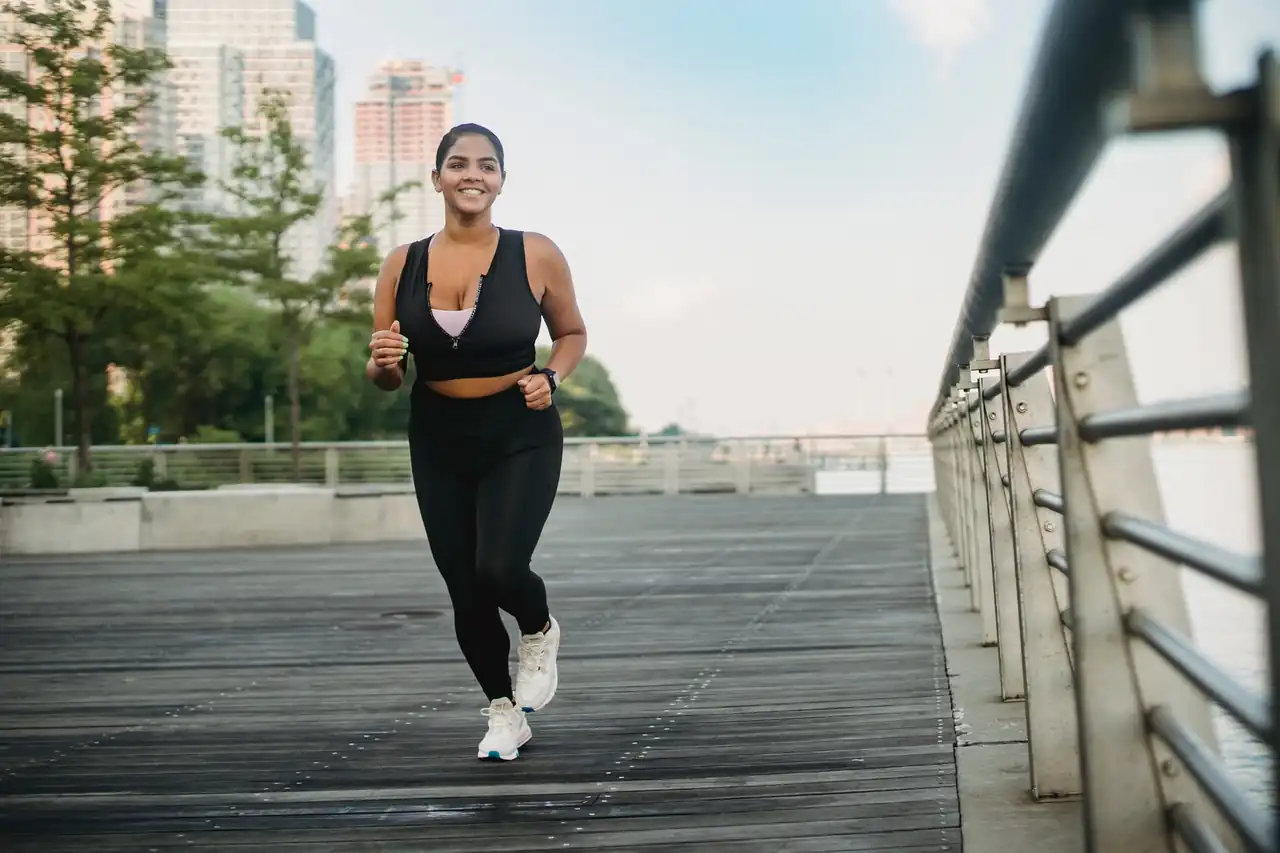
Shoes with integrated lighting can improve a runner’s visibility after dark, but they do not replace a headlamp or turn every illuminated model into running footwear. The market includes very different products: decorative sneakers with multicolour lights, and shoes designed specifically for running, with forward-facing illumination and rear elements visible to traffic. The difference affects grip, stability, battery life and real safety.
The widest online offer generally ranges from about 20 to 60 euros, while specialised night-running models can exceed 70 euros and approach 100 euros. The right purchase depends less on the number of LED colours than on specific features: a suitable outsole, protected battery, firm fit and a light that helps identify the ground without causing glare. Visual appeal is secondary when the pavement is wet or the path loses its lighting.
Which type of illuminated shoe works for running
Many women’s LED shoes shown in search results are designed for parties, festivals, costumes or casual use. They include lights in the midsole, several colours and flashing modes, but often provide little information about cushioning, torsional flexibility, water resistance or behaviour during a run. They may be eye-catching for walking, although they do not necessarily withstand the repeated impact of a several-kilometre session.
A more suitable model for running should start with a conventional sports construction. The upper must hold the midfoot without creating pressure points, the tongue should stay in place and the toe box needs enough room for the toes to spread during the stride. LED lighting does not compensate for a narrow fit, rigid platform or flat urban outsole. The foundation remains a running shoe, not a luminous accessory marketed as sports equipment.
It is also useful to distinguish between lighting that helps you see and lighting that helps others see you. A side strip adds visual presence but projects little light onto the ground. More complete systems combine a front beam aimed at the route with rear or side lights in red, yellow or white. The first helps identify irregularities; the others allow people to recognise the runner’s movement. They are complementary functions, not interchangeable ones.
Front, rear and side lights have different purposes
Front lighting is the most interesting feature for runners using urban routes with dark sections. Some specialised models claim a range of more than 6 metres and an aperture close to 180 degrees, figures that may help reveal kerbs, roots or changes in surface. Its practical value nevertheless depends on actual brightness, installation height and the way the light moves with the foot during running.
A light positioned on the toe can swing with every landing and create uneven illumination. On a straight, smooth section it may be enough, but on a path with changes in elevation the beam can jump from the ground to the vegetation. A headlamp usually offers more stable orientation and remains the more complete option for seeing farther ahead. Footwear lighting should be treated as support, not as the only source of vision.
Rear LEDs have another role. A red or yellow flash can attract the attention of drivers, cyclists and pedestrians, especially when the runner is using a road shoulder or crossing a street. Flashing makes movement easier to detect, but it does not guarantee that a vehicle will slow down and does not replace traffic rules. On shared roads, caution, reflective clothing and common sense still matter more than any lighting effect.
Side lights can be useful at crossings and in areas with crossing traffic because they make foot movement visible. By contrast, intense colours and rapid changes are more closely related to style than safety. A white front light, red rear light and reflective details usually create a clearer signal than continuous RGB illumination. The more complex the electronics, the more important it is to check whether the pattern can be activated and kept stable.
Battery life, charging and water resistance
Illuminated adult shoes usually include a rechargeable battery charged through USB. The products reviewed advertise battery life ranging from four to eight hours, although the real figure may fall when maximum brightness or flashing mode is used. Battery life also changes with temperature, battery age and how long the system remains switched on before the run begins.
A full charge may take between two and four hours. Better-designed models protect the port or use a magnetic connector that avoids handling a small rubber cover. Cheaper designs often hide a conventional USB port beneath an imprecise flap. If the protection does not close properly, water, sweat and dust can reach the electronics. The battery and sealing deserve as much attention as brightness.
Marketing terms such as waterproof or water-resistant are not enough to establish the protection level. Buyers should look for a specific IP rating or, at minimum, clear instructions about contact with rain. A shoe that withstands splashes cannot necessarily be washed under a tap or used during a long run with water entering through the upper.
The battery should not be charged immediately after a session if the footwear is wet. It is better to remove dirt, let the shoes dry at room temperature and check that the connector contains no moisture. Radiator heat can deform materials and damage the battery. It is also unwise to sleep with the charger connected or use damaged cables. These simple precautions extend the life of a system that receives impacts and repeated flexing because of its location.
Fit, weight and comfort while running
Electronics add weight and rigidity to a conventional shoe. The difference may be small during a walk but noticeable after several kilometres, when each landing is repeated hundreds of times. Party-oriented models tend to prioritise platforms, brightness and appearance; running-specific models try to maintain a flexible midsole and moderate weight. Compare the weight of the complete pair rather than relying on commercial descriptions such as lightweight.
The fit should prevent heel lift without squeezing the instep. Properly distributed laces allow tension to be adjusted and reduce internal slipping, while laceless designs may feel comfortable for walking but less secure during pace changes. A mesh upper improves ventilation, although it may offer less protection against rain and splashes than a more closed fabric. A stable foot makes better use of the outsole and reduces unnecessary movement.
Size should not be chosen only by the usual number. Night runs often involve slightly thicker socks, and the foot may swell a little during prolonged effort. There should be roughly a thumb’s width between the longest toe and the front, without the foot moving sideways. Trying shoes at the end of the day gives a better impression of that space than trying them immediately after waking.
The position of the lights also deserves a physical check. A hard module beneath the arch, a battery placed in a flex point or a strip rubbing against the ankle may go unnoticed for five minutes and become irritating after half an hour. Comfort cannot be inferred from a photograph: it requires walking, flexing the foot and, when possible, completing a short test before using the shoes for a full session.
Outsole, grip and night surfaces
The outsole is what most clearly separates sports footwear from a fashion model. On dry asphalt, rubber with a shallow pattern may provide a smooth transition and reasonable contact. For parks, compact dirt paths or walks covered with wet leaves, a more pronounced pattern and rubber that maintains traction are needed. Illuminated shoes with a completely flat outsole are not the best choice for changing terrain.
Rain changes the assessment completely. Tiles, metal covers, road markings and wet leaves can be slippery even with an apparently sporty outsole. LEDs do not improve grip, and a weak front light can make reflected water harder to interpret. Traction should be judged according to the usual terrain, not according to the lighting design.
In mountain or trail running, the demands increase. Integrated-light shoes designed for leisure rarely include toe protection, deep lugs or a plate capable of dealing with rocks and roots. They may work as occasional footwear on a simple forest track if the outsole is stable, but they should not be confused with trail shoes. In that setting, a powerful headlamp and purpose-built footwear remain a more coherent combination.
Wear can also change performance. When the outsole loses its pattern, the runner needs more care on turns and during braking, while an LED strip may continue working as if nothing had changed. Checking the rubber, seams, wiring and charging-port closure should be part of normal maintenance. Brightness is not an indicator of overall condition.
Prices and differences between models
Large online platforms show a broad price range. Generic multicolour USB-rechargeable designs appear from about 20 or 30 euros; models with better finishes and several modes usually sit between 35 and 60 euros. This category includes high-top shoes, low-cut sneakers and fibre-optic designs, many aimed at parties or casual use rather than training.
Specialised running models may cost around 77 euros on sale and reach 110 euros at their usual price, depending on the manufacturer and lighting system. Their difference is not necessarily having more colours, but integrating a front beam, independent rear lights, remote control, a larger battery and geometry closer to a running shoe. Price only makes sense when linked to verifiable features.
Reviews should be read carefully. A high rating may refer to appearance, delivery or use at a party without saying anything about performance after 10 kilometres. It is also common for one product page to combine sizes, colours and variants made from different materials. Before comparing reviews, check that they refer to the exact model rather than another version of the same listing.
Accessory costs matter too. If the front lighting is inadequate, a headlamp may be necessary; if the model lacks reflective elements, a visible garment or band may need to be added. The initial price can change once the complete setup is considered. Sometimes a conventional running shoe paired with a rear light and headlamp offers more versatility than a striking shoe with little technical information.
What to check before buying online
Product photographs usually show the lights switched on indoors, a condition that exaggerates their intensity. It is more useful to look for images of the product on a real street, check the dimensions of the light module and establish whether the system illuminates the ground or only the upper. The outsole should also be viewed from below, since its pattern provides information rarely shown in promotional images.
The listing should state available sizes, weight, charging type, estimated battery life, charging time and water limitations. If it only mentions seven or 10 colours and several flashing modes but says nothing about outsole construction or battery position, the sports information is insufficient. A lack of technical data is also information for making a decision.
The switch must be easy to operate. A small button on the side can be difficult to find while running or wearing gloves. An independent remote control makes it possible to operate the lights without stopping, although it adds another item that can be lost or run out of battery. The simplest solution is often the most practical: clear, accessible controls with a visible charge indicator.
Return policy matters particularly for footwear. Size, width and stability can only be properly assessed when the shoes are worn. Check the return period, the conditions for trying the product and who pays the shipping. A 14- or 30-day period may apply in some shops, but the exact terms depend on the seller and should be confirmed before payment.
Safety when running at night
Visibility does not depend on one point of light. A runner is easier to identify when front, rear and side elements are combined with reflective clothing that returns vehicle headlights. Clothing colour does not replace reflectors, and illuminated shoes do not make the torso or arms visible. The entire silhouette should be recognisable from different angles.
In cities, routes should prioritise lit streets, wide pavements and predictable crossings. In areas without public lighting, a front beam helps identify obstacles, but detection distance remains limited. Running with music at high volume reduces awareness of bicycles, vehicles and other users. Seeing and being seen are two separate tasks that must be solved together.
Flashing lights may attract more attention but can also disturb other people or make distance harder to judge. On shared paths, a fixed mode or moderate flash is usually less aggressive than a rapid colour sequence. The right setting depends on the environment, traffic and available visibility.
LED footwear should not be used as a reason to run in unsafe places. An isolated trail, road without a shoulder or obstacle-filled area requires a separate assessment. Lighting can improve visual information and detection by others, but it does not remove the risk of uneven ground, a vehicle failing to leave space or a flat battery.
A choice that starts with real use
For walking through urban areas after dark, shoes with side lights, an anti-slip outsole and rechargeable battery may serve a reasonable purpose. For easy asphalt sessions, fit, cushioning and stability become priorities, with lighting complementing a headlamp or rear band. For trail running, the decision should focus on grip and protection, even if that means giving up integrated lighting.
Models with seven or 10 colours, fibre optics and flashing effects fit better with leisure, parties and casual use. Shoes with a front beam and independent rear signal are more interesting for night travel, provided their sports construction is properly developed. Between these extremes lies a wide range of hybrid products that look attractive but are difficult to assess because of limited data.
The best purchase is not the one that shines most in a photograph, but the one that keeps the foot secure, offers a dependable outsole and maintains enough battery life for the planned route. Lighting should support a broader safety strategy involving route choice, reflectors, traffic awareness and a suitable light source. At night, useful technology improves perception without distracting from the ground.
Women’s LED running shoes can have a place in night training, but only when they are selected as sports footwear rather than as a simple luminous accessory. Checking battery life, sealing, outsole, fit and the exact role of each light separates a practical tool from a decorative product. That difference becomes particularly clear when the streetlights disappear and every landing matters.
Este artículo contiene enlaces de afiliado: si compras a través de ellos, se genera una pequeña comisión sin coste adicional para ti. Más información.



How to prevent thigh chafing: causes and real solutions

Women’s running windbreakers: seven jackets and how to choose

Do more workouts get rid of soreness? A guide for runners

Jaén Half Marathon 2026: Record 3,800 Runners Registered

Men’s short running tights: how to choose the right pair

World Triathlon confirms data breach involving medical data

Izan Edo targets podium at Miyazaki World Cup

María Pérez ranks ninth in World Athletics’ 2026 top ten

Dos Santos, Duplantis and Sawe: World Athlete of the Year finalists

San Silvestre Vallecana 2026: 42,000 places, prices and start times

 Races4 months ago
Valencia Half Marathon 2027: date and registration

 Races4 months ago
Valencia Marathon 2026: entry, ballot and course

 Reviews and Comparisons4 months ago
Asics Gel-Roadmiles 3 for men: review and current price

 Reviews and Comparisons4 months ago
Asics Gel Sonoma 8 Gore-Tex: complete analysis for trail and rain

 Sneakers3 months ago
Saucony Endorphin Pro 4: full review and verdict

 News5 months ago
Strava API 2026: what changes for clubs, challenges and runner apps?

 Reviews and Comparisons5 months ago
Nike Alphafly 3: opinions, sensations, and real key points

 Reviews and Comparisons4 months ago
Under Armour running shoes review 2025-2026: models and key features

 Sports Equipment4 months ago
Shoe sizes in cm: a clear guide to getting the right fit for your footwear

 Sneakers3 months ago
Skechers GO RUN Consistent 2.0 analysis: comfort and limits

 News5 months ago
Valencia Marathon 2026 route: key tips to train and run better

 Sneakers4 months ago
Adidas Adizero Boston 13 for men: review and verdict