Sneakers
When to replace running shoes according to mileage and signs
Miles, wear and tear, and the body’s signals to know when it’s time to replace your shoes and avoid surprises.

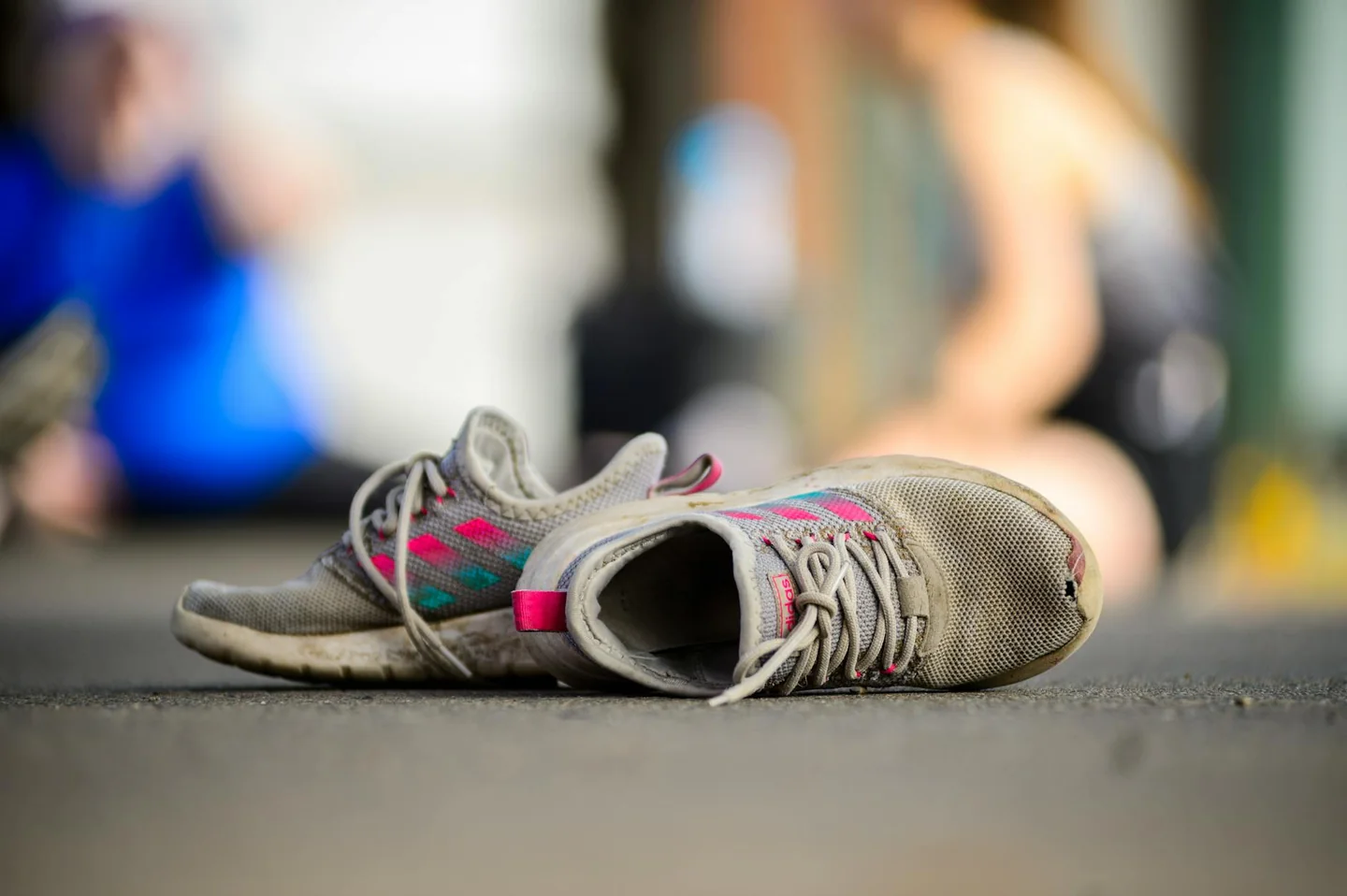
Imagen: Bryce Carithers / Pexels
Running shoes don’t wear out all at once: they fade little by little. First they lose responsiveness, then the stride becomes less stable and, almost without warning, the body starts to notice what the material no longer supports. That’s why there isn’t a single exact universal date, but there is a fairly clear range worth keeping an eye on: most training models perform well between 500 and 800 kilometers, although some runners replace them sooner and others stretch that range a bit more if the use has been gentle and the terrain kind.
The right moment to renew them doesn’t depend only on the counter. Weight, technique, the type of outsole, the hardness of the asphalt, humidity, heat and even the way the pair is stored after training all play a part. A shoe can still look intact on the outside and, however, have lost much of the cushioning that protects joints and calves. That’s the trap: useful wear is almost never visible at a glance, but it does leave very specific traces in the body and in the running feel.
Mileage gives a clue, but it doesn’t decide the verdict
The most repeated figure in the industry is the 500 to 800 kilometer range for road models designed for daily training. It’s a reasonable reference because it reflects what manufacturers, specialty stores and experienced runners observe in practice. Even so, it shouldn’t be read as a rigid rule. Two identical pairs can age differently if one is used for easy runs and the other for intervals, if one runs on compact dirt and the other always hits asphalt, or if one is worn by a light person and the other by a runner with greater body mass.
In real life, wear works like a car tire that has done many more city trips than highway miles: it doesn’t just lose tread, it also changes feel. The midsole, which is the intermediate layer responsible for cushioning and returning part of the energy, compresses with use. When that happens, the shoe may still look new on the outside, but it no longer responds the same to impact. The rebound sensation decreases and the runner starts to notice a flatter, drier, almost noisier run.
That’s why mileage should be understood as a starting point and not as a mathematical boundary. A runner who trains three times a week at easy paces on compact paths can extend the useful life of the pair quite a bit. On the other hand, someone who does many runs on asphalt, weighs more, lands heavily on the heel or turns the same shoes into companions for easy runs, intervals and races will probably need to replace them sooner.
The signs that warn before the counter does
The first clue is usually in the feeling while running. The body detects before the eye when a pair has lost its spark. If one day you notice that the legs absorb impact worse, that the foot is less guided or that the landing feels unstable on turns, the material may no longer be offering the same protection. It’s not a dramatic alarm, but it is an invitation to check the condition of the shoes calmly and without self-deception.
Another very reliable sign appears on the underside. A smooth outsole in very specific areas, a midsole that no longer regains its shape or a deformed upper are symptoms of the end of the cycle. Sometimes wear is concentrated on the outer edge of the heel, other times on the forefoot, and in runners with a more pronounced strike it can leave asymmetrical marks. Asymmetry isn’t always a problem, but when it becomes obvious and progressive, the whole starts to lose balance.
The body’s language also matters. If after a normal workout you notice knee discomfort, ankle issues, plantar fascia pain or tibialis anterior strain, and there were no relevant changes in load, it’s worth looking at the shoes first. That doesn’t mean the shoe is the only culprit, but it may be contributing to the problem. In many cases, the runner interprets the discomfort as lack of fitness or too much work when in reality they’re landing on material that’s already fatigued.
There’s also a sign that often goes unnoticed: noise. A pair that used to cushion with a kind of muted thud and now sounds drier may be warning that the foam has lost its absorption capacity. The sound of the stride ages too; it’s not scientific proof on its own, but combined with the rest of the clues it’s very useful.
What factors shorten or extend useful life
Body weight matters, but not in isolation. The greater the load, the greater the repeated compression on the midsole and the more work for the shoe’s structure. However, it’s not a simplistic rule. A heavier runner who lands with fluid technique and keeps steady paces can preserve a pair quite well, while a lighter one with a harsh stride and lots of runs on hard surfaces will wear it out sooner.
The surface makes very visible differences. Asphalt is harsher than compact dirt, and the treadmill is usually kinder to the outsole, though not to every usage pattern. Humidity, extreme heat and sudden temperature changes also weaken materials and adhesives. Leaving shoes in a trunk for weeks or letting them dry next to a radiator speeds up the aging of the foam and the seams. Heat, in particular, is a silent enemy: it doesn’t break things immediately, but it dries them out and fatigues them.
The type of session matters as much as the setting. Shoes meant for easy running don’t suffer the same way in a steady-pace run as they do on a day of intervals, pace changes and short accelerations. More explosive landings compress the midsole more violently and wear out the elastic response sooner. That’s why it’s worth remembering that not all shoes are designed for everything. Some ask for softness; others need rotation with another pair so they don’t die in a single routine.
Construction also plays a role. Soft, very plush foams usually offer a pleasant feel from the first use, but they often show earlier aging in the touch. Firmer ones may last a bit longer and keep their structure better, though they sacrifice initial softness. There is no perfect material; there is the balance between comfort, durability and real use.
Why the midsole matters more than it seems
The midsole is the functional heart of any running shoe. That’s where the cushioning, energy return and much of the perceived stability are. When that area compresses permanently, the runner loses the shoe’s main advantage: filtering part of the impact so the effort falls less on tendons, muscles and joints.
The problem is that degradation doesn’t always show up as an obvious collapse. Sometimes the foam just becomes a little less lively, like a mattress that still works but no longer invites rest. Other times it loses symmetry and the foot sinks more on one side than the other. That small deviation changes the mechanics of the landing and can trigger chain overloads. A fatigued midsole alters the run even if the eye doesn’t notice it.
In daily training shoes, the response usually degrades before the aesthetics are affected. That’s why some runners keep clean, apparently intact pairs for too long. The outside appearance is easily misleading. The upper may still be whole, the tongue may be perfect and, even so, the main platform may have lost the consistency that supported every stride.
How to check a pair without performing an autopsy
A useful check starts from the ground up and continues with touch. Just place the shoes on a table and see whether they rest symmetrically or if one leans inward or outward. Then press the midsole with your thumb in several areas. If the foam no longer regains its shape quickly, if it feels too compacted or if sunken areas appear, the useful life is very advanced.
After that, look at the outsole. Worn lugs or ridges, especially in repeated contact areas, reduce grip and alter stability. On urban asphalt, erosion usually concentrates on the heel and forefoot; on paths, it may spread more, but it leaves a smoother texture. When traction changes, confidence changes too. And in running, confidence in the landing matters almost as much as physical condition.
The upper offers another clue. If there are tears in the big toe area, if the heel counter has lost firmness or if the toe box no longer holds the foot like before, the whole thing starts to fail. Some deformations are cosmetic, others structural. The difference is felt when you put them on: if the foot moves around a little more or if the fit no longer hugs with the same precision, the pair has started to say enough.
The body’s role in the final decision
Not all wear is measured in material; it’s also measured in sensations. A runner can tolerate a somewhat aged pair without consequences for a few weeks and another may notice discomfort with much less age. Individual tolerance depends on strength, mobility, technique and weekly load. That’s why the same model can last differently from one person to another even if the use looks similar on paper.
Recurring discomfort often appears as a more serious warning than any visible crack. If after running there’s a strange feeling of fatigue in the calves, tension in the plantar fascia or unusual load in the shin, the shoes deserve a serious look. The body usually speaks before the shoe breaks. Ignoring it is easy; listening to it is much smarter.
It’s also worth distinguishing between normal muscle fatigue and mechanical mismatch. A hard workout leaves its mark, of course, but if the discomfort repeats with easy sessions and disappears when you change shoes, the pattern points to the material. No need to dramatize it: sometimes it’s enough to recognize that a shoe no longer goes with the movement, it only bears it.
How to extend the life of a pair without forcing it
The best way to make them last longer is not to ask everything of them at once. Reserving the shoes for running, and not for daily walking, already makes a noticeable difference. Continuous urban use flattens the midsole and wears down the outsole before training even begins. It also helps to rotate between two pairs if weekly volume is high, because the foam has more time to recover part of its shape between sessions.
Drying deserves care. After rain or a wet workout, it’s best to leave them in a ventilated place, away from direct heat. Putting absorbent paper inside can help remove moisture, but the washing machine is usually not a good idea. Water, heat and harsh detergents are not a friendly combination for glues, foams and technical fabrics.
Storing the pair in a cool, dry place, without crushing it under other things, also helps. It doesn’t seem like an important detail, but it is. Modern materials depend a lot on their internal structure, and passive mistreatment, the everyday kind, ends up doing more damage than a single intense outing. A shoe doesn’t age only by running; it also ages by how we treat it between runs.
What happens if you keep running in a worn-out pair
Keeping worn-out shoes doesn’t automatically cause an injury, but it does increase the risk. Protection decreases, support becomes less stable and the body has to absorb more impact on its own. That can translate into overloads, poorer recovery and a feeling of fatigue that shows up too early. In runners with a history of discomfort, the margin for error gets even smaller.
The most visible consequence isn’t always sharp pain, but a drip of small discomforts. The runner feels they run worse, finish stiffer or need more time to recover after a normal run. The real cost of wear isn’t paid in the store, but in training. A pair that no longer protects well ends up demanding more from the body than from the budget.
In competition or key sessions, the effect is even more noticeable. If the shoe no longer responds, efficiency drops and the pace becomes more expensive. It’s not about obsessing over every scratch, but about understanding that good material condition helps maintain cleaner mechanics. That applies to the recreational runner, to someone preparing a 10K and also to anyone adding long runs every week.
When to replace according to real use
Replacement frequency depends on weekly volume and the training context. A runner who accumulates between 20 and 30 kilometers a week can stretch a pair for many months, sometimes more than a year, if they use it prudently. On the other hand, someone who goes beyond 40 or 50 kilometers a week, especially on asphalt, usually gets closer to the functional end sooner. There’s no universal date, but there is a fairly clear relationship between load and wear.
Occasional runners tend to delay the change because their shoes don’t rack up kilometers quickly. The problem there is different: the age of the material. Even if the counter is low, a shoe stored for years can lose properties simply through aging of foams and glues. The clock matters too, not just the distance. A pair that’s very little used but very old doesn’t always behave like a recent one.
That’s why the practical answer can’t be reduced to months or kilometers alone. The sensible thing is to combine both criteria: review the accumulated mileage, observe the physical condition of the shoe and listen to the body. That three-part filter gives a fairly reliable reading and avoids both waste and the stubbornness of stretching the life of fatigued material too far.
The sensible balance between savings, performance and health
Changing a pair on time isn’t a whim, but a matter of sports hygiene. Shoes are part of the runner’s protection system, just like a good warm-up or a coherent load progression. When they fail, it’s not just the foot that loses comfort; the rest of the chain is altered too. Ignoring it to save a few weeks usually ends up costing more in feel, and sometimes in discomfort that interrupts the routine.
The key is not to look for a magic number, because there isn’t one. What’s useful is recognizing the pattern: between 500 and 800 kilometers in many training models, sooner if the use is demanding, a little more if the conditions have been benign. But above the number, what matters is the combination of signs: tired midsole, worn outsole, deformed upper, less stability and small discomforts that appear where there used to be nothing.
Replacing footwear when it’s due doesn’t make anyone a more sophisticated runner. It simply allows you to keep training with a more reliable, less noisy and more predictable base. And in a sport where every stride adds up, that predictability is worth almost as much as the pace on the watch.
Este artículo contiene enlaces de afiliado: si compras a través de ellos, se genera una pequeña comisión sin coste adicional para ti. Más información.



How to prevent thigh chafing: causes and real solutions

Women’s running windbreakers: seven jackets and how to choose

Do more workouts get rid of soreness? A guide for runners

Jaén Half Marathon 2026: Record 3,800 Runners Registered

Men’s short running tights: how to choose the right pair

World Triathlon confirms data breach involving medical data

Izan Edo targets podium at Miyazaki World Cup

María Pérez ranks ninth in World Athletics’ 2026 top ten

Dos Santos, Duplantis and Sawe: World Athlete of the Year finalists

San Silvestre Vallecana 2026: 42,000 places, prices and start times

 Races3 months ago
Valencia Half Marathon 2027: date and registration

 Races3 months ago
Valencia Marathon 2026: entry, ballot and course

 Reviews and Comparisons4 months ago
Asics Gel-Roadmiles 3 for men: review and current price

 Reviews and Comparisons4 months ago
Asics Gel Sonoma 8 Gore-Tex: complete analysis for trail and rain

 Sneakers3 months ago
Saucony Endorphin Pro 4: full review and verdict

 News5 months ago
Strava API 2026: what changes for clubs, challenges and runner apps?

 Reviews and Comparisons5 months ago
Nike Alphafly 3: opinions, sensations, and real key points

 Reviews and Comparisons4 months ago
Under Armour running shoes review 2025-2026: models and key features

 Sports Equipment4 months ago
Shoe sizes in cm: a clear guide to getting the right fit for your footwear

 Sneakers3 months ago
Skechers GO RUN Consistent 2.0 analysis: comfort and limits

 News5 months ago
Valencia Marathon 2026 route: key tips to train and run better

 Sneakers4 months ago
Adidas Adizero Boston 13 for men: review and verdict