News
La Perico 2026 changes date and seeks more cyclists
The Segovian march moves up its 2026 edition to June 28, opens registration, and makes changes to boost participation.

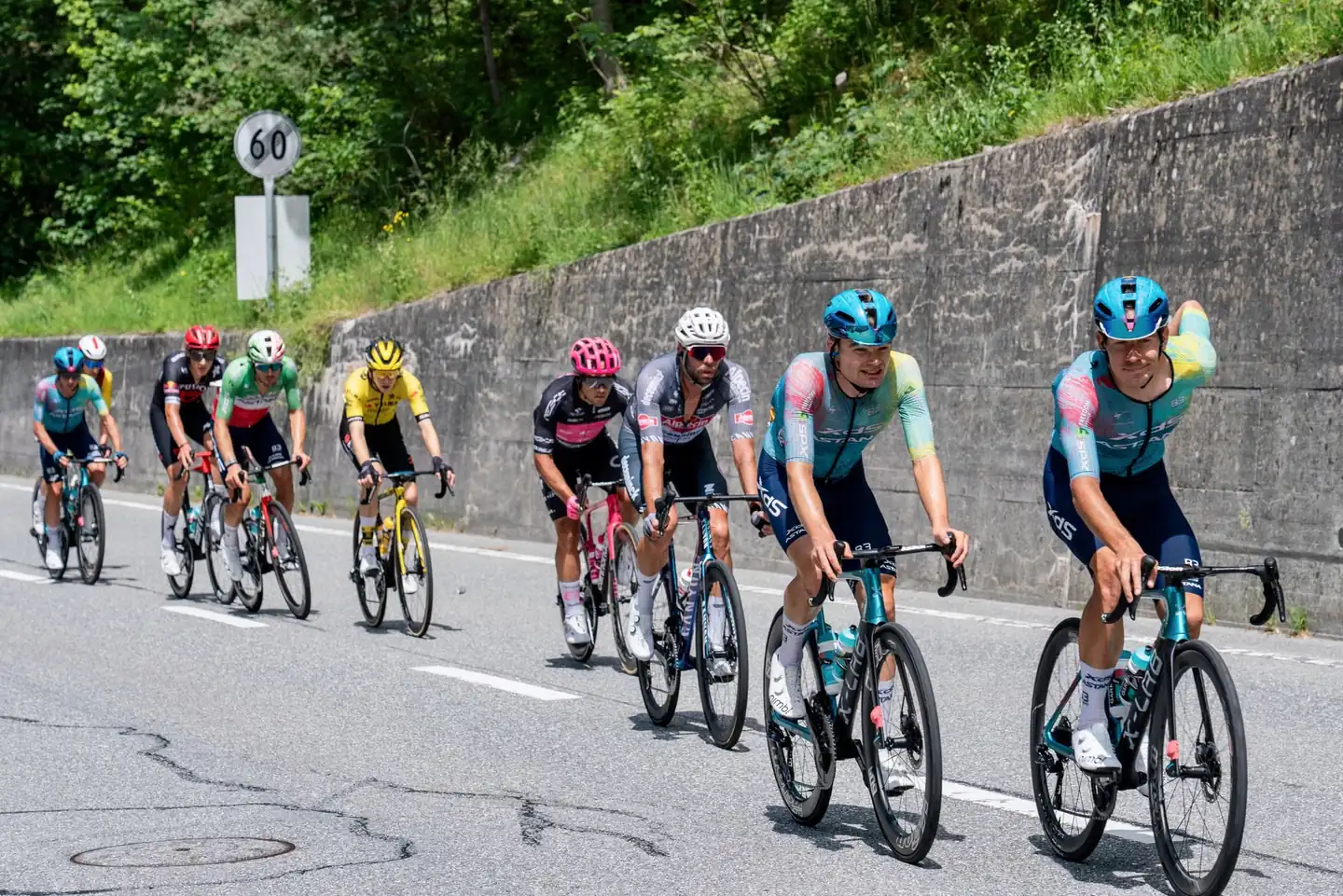
La Perico will debut a never-before-seen date in its recent history in 2026: the cycling touring march will take place on Sunday, June 28, leaving behind the month of August that accompanied it for nearly three decades. The change is no small matter. It means altering routines, moving the local calendar, and reorganizing an event that, in Segovia, serves as a sporting, social, and economic barometer of summer.
Registrations are now open, and the organizers trust that bringing the date forward will help broaden participation. The goal is not only to fill race numbers, but also to recover part of the momentum that in years past brought the event close to 2,500 cyclists. With this new slot, the march is trying to escape a stretch of the calendar that is increasingly saturated and, at the same time, avoid the harshest August heat.
A calendar change with sporting logic
The decision to move La Perico to the end of June responds to a combination of practical and competitive factors. The first is obvious: Segovia’s summer, like that of much of the interior of the Iberian Peninsula, punishes with high temperatures and scorching asphalt. The second has to do with the national cycling touring calendar, which is increasingly compressed and crowded with established events that occupy their slots with surgical precision.
August had been almost fixed territory for this event born in the wake of Pedro Delgado’s figure, but the margin was shrinking. June 28 places the march in a friendlier window, still far from the start of the Vuelta a España and without clashing with the late-month heavyweights in the amateur and cycling touring calendar. The bet is easy to explain and hard to execute: seek more cycling and less friction.
That adjustment also has a symbolic effect. Moving a march from its place is touching an emotional seam. Many participants associate La Perico with the week before the Vuelta a España, with the dry August heat and the tradition of climbing mountain passes in a postcard setting. However, mass cycling no longer lives on tradition alone; it lives on logistics, schedule compatibility, and the ability to offer an experience that makes the trip to Segovia worthwhile.
The organizers have read that context pragmatically. If the August slot was narrowing, June opened a real possibility for growth. The initial response seems encouraging: the pace of registrations points to a final figure higher than the previous year’s, a sign that the change has not disoriented the target audience.
What the march keeps and what it gains with the new setting
The heart of La Perico remains intact: a demanding, scenic, and highly recognizable route for anyone who has ridden through the Guadarrama mountains. The start from Segovia, with the Aqueduct as the opening postcard, preserves that mix of ritual and challenge that explains part of the event’s appeal. It is not just about pedaling; it is about doing so in a landscape that carries its own weight.
In the 2026 edition, the logic of two routes remains: one long and one more accessible, designed for different audiences but united by the same idea: to experience a major march without closed traffic for the entire day, with the mountains as judge and the effort distributed across climbs known to any road cycling fan. Navacerrada, Cotos, Morcuera, Canencia, and Navafría are part of the event’s imagination, and not by chance.
The main route is around 163 or 164 kilometers and accumulates roughly 3,200 or 3,300 meters of positive elevation gain, a figure that places the march among the country’s major endurance events. The shorter option is around 119 or 120 kilometers and reduces the punishment without giving up the event’s flavor. In practice, both versions uphold the same promise: a full day of cycling with character.
Something also changes in the atmosphere. June usually offers cleaner light, a sense of an open season, and a temperature less oppressive than the summer peak. For a long-distance event, that nuance matters more than it seems. It does not turn the march into an outing, but it does soften one of the variables that most affect the participant’s experience and performance by mid-ride.
The history of a march that is already part of the Spanish calendar
La Perico was born with a very defined identity: that of a march linked to Pedro Delgado, winner of the 1988 Tour de France and a central figure in Spanish cycling over the last few decades. That connection is not a promotional flourish, but the guiding thread of an event that has managed to blend closeness, toughness, and sporting memory.
Over the years, the march has ceased to be just a local date and has become a benchmark in national cycling touring. Its appeal lies on several levels at once. On one hand, the setting of Segovia and the mountains. On the other, the sporting challenge, with climbs of their own name. And beyond that, the feeling of taking part in a march with a recognizable stamp, almost a small ceremony of the cycling summer.
The 2025 edition, according to available data, left 1,106 cyclists at the finish, split between 717 on the long course and 389 on the short one. The figure was lower than in the best years, but it was still enough to keep alive the pulse of an event that has gone through shifting trends, growing competition, and a multiplication of races across the country. In this landscape, surviving already says a lot; growing says even more.
The recent history also explains part of the current move. In 2018 and 2019, participation approached 2,500 cyclists, allowing the organizers to give greater scope to their local sporting calendar. Then came quieter years, with a more fragmented market and enthusiasts spreading out among increasingly numerous events. Hence the date change is not a cosmetic gesture, but a maneuver to compete again with better cards.
Why June may work better than August
In cycling touring, the calendar matters almost as much as the route. A march may have emblematic climbs and a postcard-worthy start, but if it coincides with other major dates or falls in a scorching stretch of summer, it loses attraction. June offers a more favorable combination: less extreme heat, less conflict with family travel, and a sense of the season that has not yet entered the July-and-August bottleneck.
The chosen date is not without competition. In mid and late June there are already events that dominate their slot, and the month is no desert. But the 28th has been placed with some intelligence among the major events of the national calendar, avoiding a direct clash with one of Spain’s most in-demand marches and moving away from the rigidity imposed by August. The novelty also acts as a psychological incentive: some cycling tourists need a concrete reason to look at a familiar event again, and a date change often provides that small push.
There is also an organizational component that should not be underestimated. The month of August is increasingly constrained by permits, traffic, and mobility restrictions, as well as by tourist saturation itself. June eases some of that pressure and leaves a little more room to negotiate services, staff, accommodation, and all the infrastructure a march of this size needs in order not to look like an improvised choreography.
Weather remains a decisive factor. There is no guarantee of cool conditions in Segovia at the end of June, especially on a day of prolonged effort. But the probability of encountering a very harsh heat wave is, at least in theory, lower than in the first half of August. For a march with long climbs and demanding sections, that can make the difference between a comfortable edition and a day of survival.
The route: climbs, elevation gain, and the weight of the landscape
La Perico retains its most recognizable trait: respect for the mountains without losing cycling touring logic. It is neither an explosive short-format event nor a mere scenic route. It is an endurance march with substantial climbs, open road on the way back, and a narrative closely tied to the territory. The participant does not just climb; they cross a very specific part of the Segovian and Madrid geography with the feeling of being inside a long, dense, and well-designed day.
The long route usually includes names that any fan recognizes instantly: Navacerrada, Morcuera, Canencia, and Navafría. These are ascents with their own personality, the kind that change tone as the kilometers pass. Navacerrada opens the debate, Morcuera demands rhythm, Canencia punishes patience, and Navafría finishes with a toughness that can be felt even before looking at the accumulated elevation gain.
The shorter version trims part of the punishment, but does not dilute the essence. It remains a demanding march, with enough elevation gain for the rider or cycling tourist to take nutrition, effort management, and accumulated heat seriously. In events like this, the landscape is deceptive. The first hours are usually wrapped in enthusiasm, but fatigue seeps in little by little, like moisture you cannot see that ends up weighing on the legs.
That kind of route explains why La Perico fits better among cyclists accustomed to medium and long distances than among those looking for a pure leisure ride. The event does not require racing, but it does require respect for the terrain. And that border between enjoyment and demand is precisely one of the keys to its endurance.
Registrations, numbers, and what success really measures
Opening registrations does more than mark the administrative start of the event: it also works as a real-time survey of the interest the new date generates. In a cycling touring march, the number of entrants is more than a counter. It is a thermometer of collective mood, of the credibility of the proposal, and of the organizers’ ability to convince diverse audiences.
The forecast handled by the organizers points to comfortably surpassing 1,500 entrants, with a target that could approach 1,700 if the final stretch responds well. That is not a random figure. It would represent a leap compared with the previous edition and, above all, would consolidate the idea that the date change has unlocked pent-up demand. In cycling touring terms, that means more critical mass, more atmosphere at the start, and more justification for keeping the new slot.
But success is not measured only in bib numbers. It also depends on the ability to sustain the structure surrounding the event. La Perico has a direct effect on Segovian cycling because its surplus helps finance other dates on the local calendar, including the Vuelta a Segovia. In other words, the march does not live in isolation: it is an economic piece within a small sporting ecosystem that needs balance in order not to run out of steam.
That is why the date change has a broader meaning. If it works, it will not only benefit the march itself. It could strengthen the province’s cycling calendar, give the organizers breathing room, and keep alive a network of events that depend on one another. If it fails, the adjustment will have been a reasonable attempt, but not enough, in an increasingly competitive market that is less forgiving of routine.
Pedro Delgado, Tour de France memory, and the pull of a personal brand
La Perico cannot be understood without Pedro Delgado. His name still acts as an emotional anchor and a guarantee of authenticity in a setting where sporting events with little narrative abound. Here the story exists and is recognizable: a Tour de France champion linked to his homeland, to the road, and to a way of understanding cycling that blends demand, closeness, and a certain local epic flair.
That link explains why the march has an identity that is easily exportable. It does not depend only on a beautiful route or a favorable setting. It depends on a story that fans grasp immediately. Spanish cycling has built many of its traditions on individual figures capable of drawing crowds and prestige, and Delgado remains one of the most influential in the sport’s popular memory.
The constant tribute can be felt in the details and also in the event’s continuity. The march has known how to update itself without losing the recognizable tone of its origins. That balance is not easy. Some events, in trying to resemble everyone, lose their shape. La Perico, by contrast, keeps a fairly clear profile: mountains, Segovia, endurance, the summer season, and a very visible personal signature.
In a calendar full of cloned marches, that singularity is worth gold. It does not guarantee success on its own, but it helps the public identify the experience even before reading the route. And in mass-participation sport, where supply competes for attention, that narrative clarity can matter as much as a well-placed climb.
What this edition reveals about endurance cycling touring
The evolution of La Perico sums up the current moment in Spanish cycling touring quite well: more competition, more fragmentation, and a greater need to reinvent calendar gaps without giving up identity. Marches can no longer live on inertia. They have to offer a combination of tradition, logistical convenience, and sporting appeal that justifies traveling, staying overnight, and dedicating an entire weekend to it.
The Segovia case also shows that the summer calendar is not an immovable block. It can be moved, but only if the change is well founded and backed by a credible narrative. In this case, the argument is clear: potentially less heat, more room to attract cyclists, better fit with other events, and a real chance to recover some of the volume lost in recent years.
At the same time, the march reminds us of something basic about popular sport: the experience matters as much as the result. Many participants are not looking for a classification, but for an intense, well-organized day with a landscape. The start under the Aqueduct, the Guadarrama climbs, the ride on open roads, and the finish with emptied legs are all part of a ritual that still has value in itself.
That is why La Perico 2026 is at stake for more than one edition. It is testing whether it can still grow without betraying itself, whether the date change does not break its essence, and whether a march with history can still find fresh air in a crowded calendar. In cycling, as in almost everything, sometimes changing the time is the smartest way to keep being yourself.



How to prevent thigh chafing: causes and real solutions

Women’s running windbreakers: seven jackets and how to choose

Do more workouts get rid of soreness? A guide for runners

Jaén Half Marathon 2026: Record 3,800 Runners Registered

Men’s short running tights: how to choose the right pair

World Triathlon confirms data breach involving medical data

Izan Edo targets podium at Miyazaki World Cup

María Pérez ranks ninth in World Athletics’ 2026 top ten

Dos Santos, Duplantis and Sawe: World Athlete of the Year finalists

San Silvestre Vallecana 2026: 42,000 places, prices and start times

 Races3 months ago
Valencia Half Marathon 2027: date and registration

 Reviews and Comparisons4 months ago
Asics Gel-Roadmiles 3 for men: review and current price

 Races3 months ago
Valencia Marathon 2026: entry, ballot and course

 Reviews and Comparisons4 months ago
Asics Gel Sonoma 8 Gore-Tex: complete analysis for trail and rain

 Sneakers3 months ago
Saucony Endorphin Pro 4: full review and verdict

 News5 months ago
Strava API 2026: what changes for clubs, challenges and runner apps?

 Reviews and Comparisons5 months ago
Nike Alphafly 3: opinions, sensations, and real key points

 Reviews and Comparisons4 months ago
Under Armour running shoes review 2025-2026: models and key features

 Sports Equipment4 months ago
Shoe sizes in cm: a clear guide to getting the right fit for your footwear

 Sneakers3 months ago
Skechers GO RUN Consistent 2.0 analysis: comfort and limits

 News5 months ago
Valencia Marathon 2026 route: key tips to train and run better

 Sneakers4 months ago
Adidas Adizero Boston 13 for men: review and verdict