News
Track or street in summer: heat, rhythm, and motivation compared more
Heat, asphalt and ventilation alter training: this is how running indoors or on the street changes.

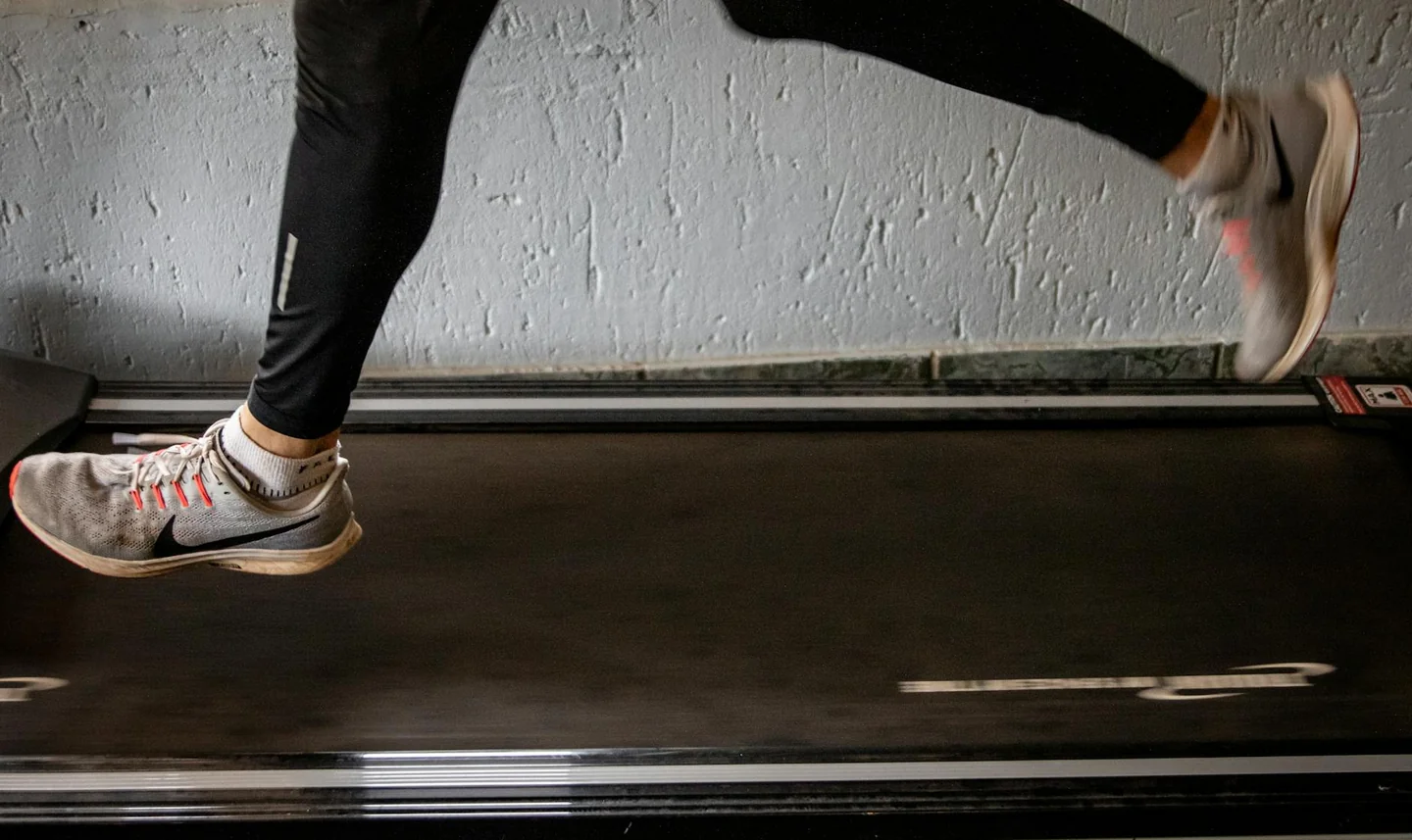
Imagen: Magda Ehlers / Pexels
Summer does not treat the runner who heads out to the park the same as the one who climbs onto a treadmill in a gym. The difference is not just the scenery. The temperature changes, the way you hydrate changes, fatigue changes, technique changes, and even the way the body distributes effort changes. On hot days, that choice stops being a matter of taste and becomes a question of safety, performance, and, in many cases, simple training continuity.
In practical terms, the street demands more from the body when the thermometer rises and the sun beats down on the asphalt; the treadmill, on the other hand, offers control, shade, and a kind of climatic refuge that can save a session. Neither option is perfect in July or August. The best one depends on the time of day, physical condition, the day’s goal, and how each body responds to accumulated heat.
Heat rewrites effort
Running in summer is nothing like running in spring. Ambient temperature, humidity, and solar radiation alter the perception of pace, even when the watch shows the same number. The heart works harder to send blood to the skin, where the body tries to dissipate heat through sweat and evaporation. That redistribution of resources takes margin away from the legs, which feel the load sooner and take longer to hold the same speed.
Out on the street, heat also does not stay still. The asphalt gives back part of the temperature it has absorbed for hours, the façades create corridors of air that are more or less suffocating, and the wind, when it appears, does not always cool; sometimes it only moves hot air around like the breath of a hair dryer. That is why the same session can feel reasonable at dawn and excessive at midday.
The treadmill reduces that environmental friction. It does not cool on its own, but it does eliminate direct sun, headwind, outdoor humidity, and exposure to surfaces that hold heat. In a climate-controlled room, the body focuses less on defending itself from the environment and more on sustaining the planned work. That margin is valuable in summer, especially for those who want to keep consistency without fighting the weather every day.
What the street brings when the heat is on
Training outside still has one clear advantage: it prepares you for reality. A steady run on asphalt, through a park, or along urban paths forces you to manage tiny pace changes, turns, surfaces, shadows, and crossings. All of that sharpens attention and makes the stride adapt to terrain that is less predictable than the moving belt of a treadmill. When the goal is to run a race outdoors, that transfer matters a lot.
In summer, moreover, the street lets you choose moments with a less aggressive thermal load. Getting up early is still the runner’s great currency in summer. First thing in the morning, the ground still holds some of the night’s coolness and the city breathes with a little less harshness. At dusk, depending on the area, the air may still feel heavy, but the low light and the absence of direct sun ease the thermal sensation. Anyone who lives on the Valencian coast knows that a route by the sea, with real breeze and not imagined breeze, changes the experience completely.
There is also a neuromuscular gain that the treadmill does not fully replicate. Outside, the small stabilizers of the ankle, hip, and trunk are activated more, because the ground is not a laboratory lane. The runner corrects, compensates, and reacts. That micro-management of balance strengthens running economy in real situations. The body does not just move forward; it negotiates with the environment.
However, the street in summer also multiplies the risks if you push the clock. Heatstroke, dehydration, and excessive sun exposure are not minor details. On days of intense humidity, the feeling that everything is fine can be misleading for minutes. When the tachycardia, weakness, or dizziness arrive, it is already too late to think about times. Summer forces you to lower expectations and read the body’s signals with almost mountain-like caution.
The treadmill as a refuge when the thermometer takes over
The treadmill offers one advantage that is worth gold in summer: control. You can set the pace, adjust the incline, and train in a stable environment. That makes it possible to do intervals, pace changes, or easy runs without depending on traffic lights, traffic, overheated pavement, or stretches without shade. For those who work in the afternoon or live in areas where the heat hits hard for much of the day, the treadmill saves workouts that outside would be difficult or unsafe.
Impact also changes. Many treadmills cushion a bit more than asphalt, and that softness can be useful when there are joint issues or when you are going through a phase of greater physical fragility. It is not a miracle shield, but it is a kinder surface for accumulating minutes without so much mechanical load. In summer, when the body is already stressed by temperature, that reduction in demand helps maintain continuity.
The other great strength of the treadmill is precision. The pace stays with a stability that is harder to achieve outside. That makes quality work easier in structured sessions, especially for runners who are still learning to recognize sensations or who need clear references so they do not start too fast. In the heat, that accuracy prevents effort from spiking in the first half of the workout and then collapsing later.
But it also has limits. The treadmill can make the footstrike more repetitive and the runner settle into a too-linear mechanics. With no changes of direction or real terrain variation, the body receives fewer different stimuli. That is why, even though it is an excellent tool in summer, it does not fully replace the outdoor experience. It works better as part of a combination than as the only territory.
Biomechanics: the detail that explains many sensations
The quietest difference between both scenarios is how the body moves. On the street, the runner generates all the propulsion and has to adapt to every stride. On the treadmill, the ground moves under the feet and part of that work is redistributed. That can make the stride feel a little shorter and the technical gesture change subtly, sometimes almost invisibly to the runner, but noticeably when they later go outside.
That variation is not necessarily negative. In fact, for people with less experience or a tendency to overload, the treadmill can serve as a space for control. The problem appears when uniformity is overused. A runner who only trains on a treadmill may develop less tolerance for irregularities, curves, changes in incline, and small surprises. In summer, when going outside already demands a lot on its own, that lack of adaptability is felt more.
Out on the street, the body works more like a complete system. Calves, glutes, hamstrings, hips, and core take part more clearly to stabilize each landing. That does not mean the treadmill is inactive, but rather that the fixed surface trims part of those demands. In the middle of the hot season, that difference matters because the runner is already spending resources on cooling down. Every saving or overload counts.
There is also an important nuance with incline. A slight incline on the treadmill can better approximate the feeling of outdoor running, especially in steady-pace sessions. The point is not to imitate the street exactly, because the environment will never be identical, but to avoid turning the machine into an artificial flatland that misleads real effort. A small adjustment is enough for the workout to feel more coherent.
Pace, fatigue, and perceived effort in summer
In the heat, pace is deceptive. Two runners can hold the same pace on a watch and feel very different things. Fatigue appears earlier when the body devotes more energy to cooling itself. That happens both on the treadmill and outside, but on the street the sensation is usually harsher because direct exposure to the environment is added. The result is a higher perceived effort, even in moderate sessions.
The treadmill, being indoors, usually extends the useful life of the legs a little. Not because it makes the workout easy, but because it reduces the sum of uncomfortable stimuli. There is no sun on the neck, no scorching wind, no unexpected hills, and no changes in texture under the shoe. That cleanliness of the environment can make the runner focus better and manage energy more logically.
Still, monotony also weighs on you. The mind perceives fewer stimuli and the session can feel mentally longer. Some runners notice fatigue earlier on the treadmill precisely because the brain finds no distractions. The scenery does not change, the kilometer does not break up, and the clock becomes an unforgiving mirror. In summer, when patience is already running thin, that can be both an advantage and a burden.
The street, by contrast, offers small milestones: a shadow, a fountain, a crossing, a turn, a stretch of trees. They are simple signals, but they help divide the effort. That is why many runners tolerate an outdoor run better than an indoor one, even if the heat is greater. Perceived effort does not depend only on temperature; it also depends on how time is counted.
Safety, hydration, and common sense when temperatures rise
Summer punishes anyone who confuses training with heroics. Hydration does not start at kilometer three, but before you leave. On hot days, it is wise to arrive at the workout with the tanks reasonably full and accept that water, sometimes, will matter more than pace. Outdoors, if the session goes long, shade and the possibility of access to fluids during or at the end of the effort also become more important.
On the street, safety also means choosing the time and route well. Areas with less traffic, more trees, or a seafront promenade are usually more bearable than open asphalt with no relief. Avoiding the middle of the day is not a minor tip or an empty obviousness; it is the difference between a useful run and a bad experience with physical consequences. Summer, in that sense, does not forgive improvisation.
The treadmill also demands caution. A climate-controlled indoor space does not eliminate the risk of dehydration or overexertion. If ventilation is poor or the ambient humidity is high, the body can accumulate heat without the runner noticing at first. In addition, attention should not relax: a misstep, an uncoordinated stride, or a sudden increase in intensity can end badly even in the most controlled environment.
The key is to accept that the choice does not depend on some supposed superiority of one option over the other, but on the relationship between the body and the day. A runner with a history of joint discomfort, for example, may get more out of the treadmill on extreme heat days. Another, with a competitive goal outdoors, will need more street running to adapt legs and mind to what will come in the race. There is no universal recipe, and summer makes that clearer, and harsher, than other seasons.
What should be prioritized according to the training goal
If the session is meant to add kilometers without fighting the weather, the treadmill wins ground. It allows you to hold an easy run, control cadence, and avoid a heat wave ruining the week. On especially hard days, that stability is worth more than heroics. Keeping consistency through July and August is usually more useful than chasing spectacular workouts and breaking continuity through excess ambition.
If the goal is to prepare for a road race or get the body used to real conditions, the street remains essential. Running outside teaches you to read the wind, manage your pulse in the heat, and live with the wear of less forgiving surfaces. In addition, light, humidity, and time of day influence the way you run in a way no machine can fully reproduce.
The strongest runners do not choose a side; they alternate settings. The treadmill can solve the hottest days and fine-tune specific sessions. The street brings strength, adaptation, and a more honest reading of effort. In summer, that mix makes a lot of sense because the body appreciates variety and the mind appreciates breaks from monotony. The result is usually a more complete preparation and one less exposed to the whims of the weather.
There is also a strategic advantage: alternating spaces reduces psychological dependence on just one. Someone who only runs outside may freeze up in a heat wave; someone who only uses the treadmill may feel lost on the first long outdoor run. Splitting the work between both environments not only improves training, it also reduces the fragility of the habit. And in the hardest months of the year, keeping the habit alive is already a quiet victory.
Summer tests adaptation, not the runner’s ideology
The discussion should not revolve around which environment is better in the abstract, but which one solves each hot week better. In the middle of summer, the street offers specificity, stimulus, and a more complete experience, but it punishes more. The treadmill offers control, relative safety, and continuity, though with less variability and less contact with the outside world. Neither fully replaces the other.
That is why the honest comparison does not end in a clear victory. It ends in a more useful idea: the runner who understands summer as a changing context makes better decisions. Sometimes it is time to take refuge in an air-conditioned room; other times, to head out before dawn and take advantage of the empty city. The difference is marked less by the surface than by the intelligence with which it is chosen.
In that alternation lies the true maturity of summer training. The street forges, the treadmill sustains. One exposes; the other protects. Together they make it possible to get through summer without the heat turning every outing into an impossible negotiation. And in a sport that is so simple in appearance, that ability to adapt to what is there is worth almost as much as the legs.
Este artículo contiene enlaces de afiliado: si compras a través de ellos, se genera una pequeña comisión sin coste adicional para ti. Más información.



How to prevent thigh chafing: causes and real solutions

Women’s running windbreakers: seven jackets and how to choose

Do more workouts get rid of soreness? A guide for runners

Jaén Half Marathon 2026: Record 3,800 Runners Registered

Men’s short running tights: how to choose the right pair

World Triathlon confirms data breach involving medical data

Izan Edo targets podium at Miyazaki World Cup

María Pérez ranks ninth in World Athletics’ 2026 top ten

Dos Santos, Duplantis and Sawe: World Athlete of the Year finalists

San Silvestre Vallecana 2026: 42,000 places, prices and start times

 Races4 months ago
Valencia Half Marathon 2027: date and registration

 Races4 months ago
Valencia Marathon 2026: entry, ballot and course

 Reviews and Comparisons4 months ago
Asics Gel-Roadmiles 3 for men: review and current price

 Reviews and Comparisons4 months ago
Asics Gel Sonoma 8 Gore-Tex: complete analysis for trail and rain

 Sneakers4 months ago
Saucony Endorphin Pro 4: full review and verdict

 News5 months ago
Strava API 2026: what changes for clubs, challenges and runner apps?

 Reviews and Comparisons5 months ago
Nike Alphafly 3: opinions, sensations, and real key points

 Reviews and Comparisons4 months ago
Under Armour running shoes review 2025-2026: models and key features

 Sports Equipment4 months ago
Shoe sizes in cm: a clear guide to getting the right fit for your footwear

 Sneakers3 months ago
Skechers GO RUN Consistent 2.0 analysis: comfort and limits

 News5 months ago
Valencia Marathon 2026 route: key tips to train and run better

 Sneakers4 months ago
Adidas Adizero Boston 13 for men: review and verdict