News
Races today in Madrid: schedule, areas, and how to get it right
The Madrid calendar mixes asphalt, trail, and urban events with very different schedules, distances, and neighborhoods.

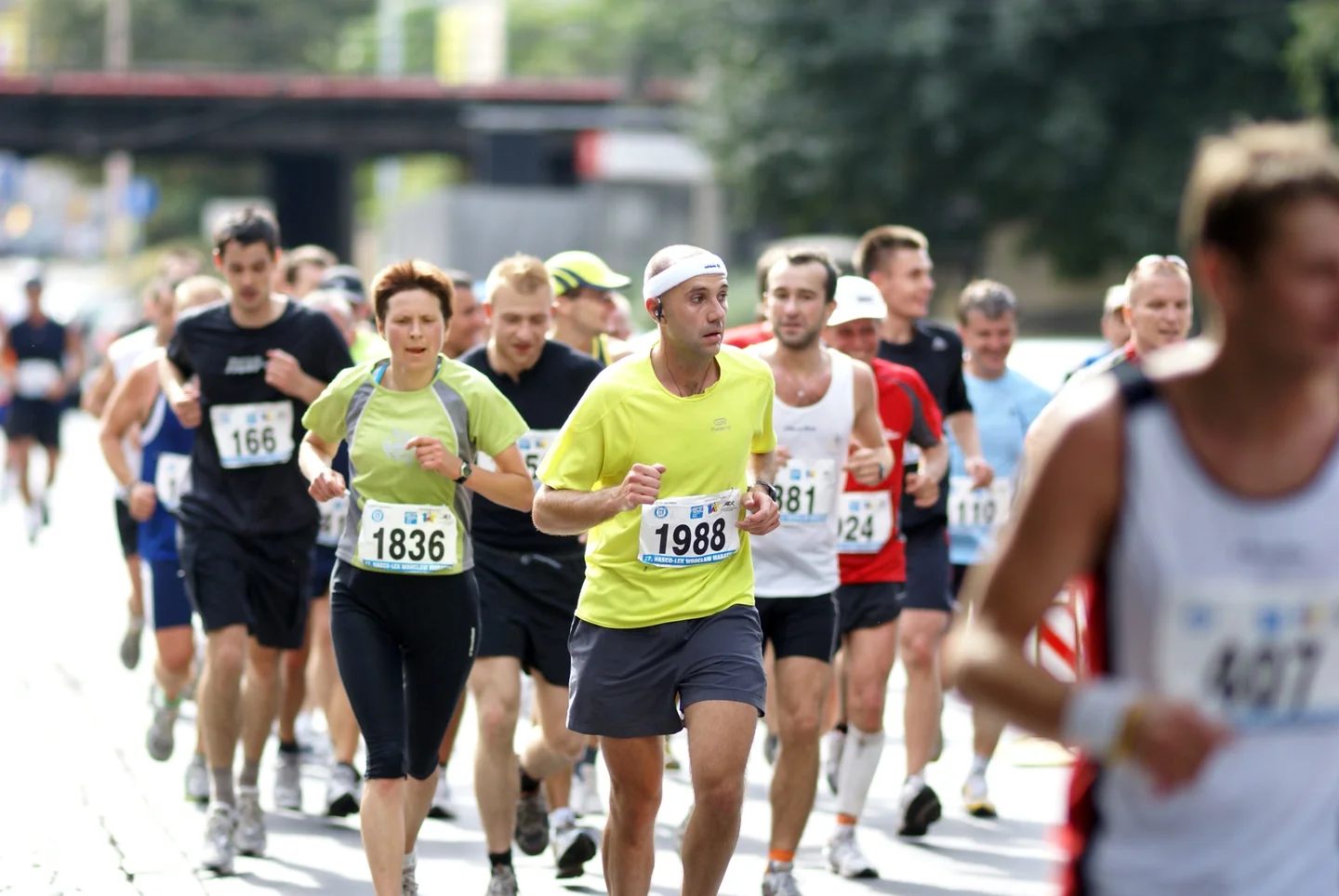
Madrid wakes up every day with a different sports map. On the same day, a popular 10-kilometer race in the city center, a trail race in the mountains, an urban mile in a northern neighborhood, or a sanctioned event at the Hipódromo de la Zarzuela can all take place at once. The answer to what race is happening today in Madrid changes with the season, the weekend, and the type of calendar you look at, but the pattern is clear: the capital and its surroundings concentrate continuous activity that turns running into an almost daily schedule.
The key is not only knowing whether there is a start today, but understanding what kind of event is driving the city. In Madrid, popular races, club events, track meets, road courses, and mountain races very close to the Sierra all coexist. There are also hybrid formats that are already part of Madrid’s sports landscape, such as urban miles, night races, or mass-participation competitions that close avenues and fill squares with hundreds or thousands of runners.
The real snapshot of the Madrid calendar
The race calendar in Madrid is broader than a quick search might suggest. In the heart of the city, road popular races stand out, usually with distances between 5 and 10 kilometers, although there are also half marathons and marathons on special dates. In the Community of Madrid, the offering expands toward mountain races, uphill races, race walks, and events in nearby towns, where runners find routes with more elevation gain, less traffic, and a different competitive rhythm.
This range explains why such a specific question can have different answers depending on the time of day. A random morning may be taken up by a school race, a sanctioned start, or a closed-course event; a spring afternoon, by an urban mile; a June night, by a night race or a popular event in Alcobendas, Tres Cantos, or the metropolitan corridor. Madrid does not operate with a single calendar, but with several overlapping layers that intersect, complement one another, and create a very lively schedule.
The scale of the phenomenon is evident in the variety of formats. It is not all about chasing a personal best over 10 kilometers. There are races of 1,609 meters, others of 4.8 or 9.5 kilometers, many of exactly 10,000 meters, and longer distances such as half marathons, marathons, or mountain courses that far exceed 20 kilometers. This mosaic attracts runners with different goals: first-timers, those seeking pace, those competing for local rankings, and those who simply want to run in a group, with bib and timing.
The events that most often move the city
The popular race remains the queen of the Madrid calendar. Its appeal is not just the distance or the bib, but the feeling of the city being taken over by sport. The most visible races usually run along major avenues, boulevards, and central stretches with passage through recognizable areas. Urban logistics come into play there: traffic closures, public transport access, changes to bus routes, and careful management of starts and finishes so thousands of people can run without paralyzing the city.
Among the most recognizable events is the Movistar Madrid Medio Maratón ecosystem, one of the strongest references in the capital’s calendar, with a course that crosses emblematic points and attracts a very large number of runners. Its importance is no accident: in Madrid, long and well-organized races function as sports showcases and also as a barometer of interest in urban running. When a half marathon brings together tens of thousands of participants or hopeful entrants, the impact goes beyond sport and becomes part of the city’s conversation for days.
Classic 10-kilometer races also carry a lot of weight. They are the ideal distance for broad participation, for testing fitness, and for filling races with runners of very different levels. Madrid has established itself in this area with races that have a long history, fast courses, and routes that combine wide stretches with more technical sections. Some of these events have become known for their atmosphere and for their ability to bring together the popular runner and the regular track athlete, the pace chaser and the person who only debuted a few weeks ago.
What you may find today depending on the area
In the capital, geography matters as much as distance. A race in Retiro is not the same as a start in Alcobendas, an event near the Hipódromo de La Zarzuela, or a competition at IFEMA. Each location shapes the type of runner, the ease of access, and the overall atmosphere. In central Madrid, races tend to have more exposure and more spectators; on the outskirts, events gain space, flow, and room for longer courses or routes less affected by traffic lights and tight turns.
Some northern areas, such as those near La Moraleja, San Sebastián de los Reyes, or Alcobendas, have gained prominence in the calendar thanks to their convenience for fast races and routes with lower urban density. In other places, such as the surroundings of the racetrack or the IFEMA area, the scenic component matters a lot: wide spaces, more predictable layouts, and the feeling of a major event that fits well with mass-participation races or the return of major brands to the Madrid calendar.
The Community of Madrid adds another layer: the mountains and trail running. Just a few kilometers from the center, the logic changes completely. The mountains bring elevation gain, more uneven terrain, more changeable weather, and different runner profiles. On specific days, races may appear in the Sierra de Guadarrama, classic uphill races, or endurance events on paths and forest tracks. It is a reminder that Madrid is not limited to asphalt; around it beats one of the most accessible trail environments in Spain.
How to identify which event is active on a given day
The most reliable way to answer what race is happening today in Madrid is to combine date, location, and type of event. The calendar is not well understood if you only look at a headline. You need to check whether the race is confirmed, whether registration is open, whether it takes place that same day, or whether it belongs to a circuit using a date published months in advance. In industry listings, many races from outside Madrid, from different years, or with historical records appear, so the local filter and the exact day are decisive.
In practice, the local runner usually checks three elements: the municipality, the distance, and the terrain. If the event is marked as road, mountain, track, cyclocross, or race walk, a good part of the offering can already be ruled out. Then comes the distance, ranging from 1,609 meters to marathon and ultradistances. Finally, the location helps define the experience: the historic center, the metropolitan ring, or the mountain area do not offer the same kind of race or the same logistical difficulty.
The schedule also matters a lot. In Madrid, morning starts are abundant, especially on spring and autumn Sundays, but afternoon races and night events are not uncommon in warmer months. This detail is no small matter: a night race completely changes the temperature, visibility, the type of audience, and even the feeling of effort. In June, for example, a late-evening start may feel more pleasant than one at midday, even if the asphalt still holds heat and the environment remains demanding.
The weight of major events and their ripple effect
Big races pull the rest of the running ecosystem along with them. When a huge half marathon or a large-format urban race makes headlines, it also boosts training, friend groups, specialty stores, pre-race expos, and interest in smaller events. Madrid relies heavily on its flagship calendar, but also on neighborhood races, club events, and competitions that may not make headlines even though they support the base of popular running.
The recent edition of the Madrid Medio Maratón left a clear sign of that phenomenon: an attractive course, massive participation, and a city that naturally accepts thousands of runners taking over its streets for a few hours. Events like this have raised the organizational standard. It is no longer enough to have a bib and a finish line; runners now expect refreshments, signage, starting corrals, net time, reasonable access, and a course that lets them run without fighting every turn as if it were a knockout round.
That standard also raises the bar for smaller events. Urban 5- and 10-kilometer races have learned to care more about the runner experience, especially in a capital where competition for bibs is high. Although today’s question has an immediate angle, the reality is that Madrid’s calendar has become highly professionalized and no longer depends on improvisation. There are regulations, published calendars, sponsors, rankings, and a machine that keeps everything moving all year long.
Which types of races appear most often
Short distances remain the most common entry point. The urban mile, the 5-kilometer race, and the 10,000 meters form the backbone of much of Madrid’s offering. They are more accessible events for beginners, but also useful for experienced runners who want to test pace. The mile, in particular, retains a classic air, almost athletic in the strict sense, and usually appears in urban circuits or meets with a more technical flavor.
Higher up the scale are the half marathon and the marathon, with emblematic events in and around the capital. Their presence is not just sporting; it also marks seasons. Spring usually concentrates a significant part of the road calendar, while trail and mountain events find better room in months with milder weather. Autumn, meanwhile, tends to mix comebacks, calendar reopenings, and the feeling of a new start after summer.
The terrain also defines each race’s character. Asphalt dominates in the center and at major events; dirt and mountain terrain dominate in the outskirts and the Sierra. Added to that are canicross, orienteering, triathlon, or duathlon events, which sometimes appear on the Madrid calendar and broaden the concept of racing beyond pure running. This diversity means a local search does not produce a single picture, but several, layered like the pages of an old map.
What to check before heading to a start in Madrid
Practical information matters as much as the bib. In a Madrid race, runners usually need to know the pickup point, metro or commuter rail access, the recommended arrival time, and whether the course requires leaving the car far from the start. Madrid is forgiving athletically, but can be quite demanding logistically if you do not plan ahead. A neighborhood can be very well connected and, at the same time, inconvenient for parking or for arriving calmly if there are traffic closures.
It is also worth distinguishing between open races and closed events. Some races require pre-registration and others sell out weeks in advance. Some are advertised as open to the general public, while others belong to clubs, federations, or competitions with more restricted access. The finish area, bag check, starting corrals, or chip distribution often make a real difference in the experience, especially in heavily attended races.
The Madrid calendar rewards those who arrive with context. Knowing whether the race is fast or demanding, whether the course favors a personal best or enjoyment, whether the atmosphere will be massive or neighborhood-like, whether you’ll be running flat or with elevation gain — all of that changes how the event is perceived. Madrid has a rarely mentioned virtue: it almost always lets you choose between running for pace, for atmosphere, or for scenery. Few major cities offer that mix so often and in spaces so close to one another.
Why Madrid never has just one race, but many at once
Today’s question usually hides a broader reality. Madrid does not live off a single start or one isolated major event, but off a constellation of races spread across neighborhoods, municipalities, and entire weeks. There can be an urban race in the capital, a popular race in the Henares corridor, a trail race in the mountains, and a walk or endurance event on the outskirts on the same day. The calendar does not empty out; it fragments and expands.
This fragmentation explains why Madrid runners have such a direct relationship with the schedule. They are not only looking to compete, but to choose the setting that best fits their current form, available time, or idea of effort. Some prefer the noise of the city and others escape to the dirt; some want a fast course and others prioritize a calmer experience. Madrid, with its size and network of municipalities, offers room for almost all these ways of running.
That is why the useful answer is not a single race, but a reading of the day. Today there may be a race in the center, another in the metropolitan area, and a third in the mountains, each with its own audience and logic. The Madrid calendar works like a moving board: it fills up, shifts, and changes again. Those who follow this dynamic discover that running in the capital is not a succession of dates, but a way of occupying the territory with shoes, a stopwatch, and a city that, for a few hours, becomes a track, an avenue, or a trail.
And that is the true journalistic answer to the search. In Madrid there is always movement, but not always the same race. The exact information depends on the day, the neighborhood, the municipality, and the type of event. What does remain is a dense, varied, and very lively sports agenda, capable of turning any day into a small snapshot of Spanish running.



How to prevent thigh chafing: causes and real solutions

Women’s running windbreakers: seven jackets and how to choose

Do more workouts get rid of soreness? A guide for runners

Jaén Half Marathon 2026: Record 3,800 Runners Registered

Men’s short running tights: how to choose the right pair

World Triathlon confirms data breach involving medical data

Izan Edo targets podium at Miyazaki World Cup

María Pérez ranks ninth in World Athletics’ 2026 top ten

Dos Santos, Duplantis and Sawe: World Athlete of the Year finalists

San Silvestre Vallecana 2026: 42,000 places, prices and start times

 Races4 months ago
Valencia Half Marathon 2027: date and registration

 Races4 months ago
Valencia Marathon 2026: entry, ballot and course

 Reviews and Comparisons4 months ago
Asics Gel-Roadmiles 3 for men: review and current price

 Reviews and Comparisons4 months ago
Asics Gel Sonoma 8 Gore-Tex: complete analysis for trail and rain

 Sneakers4 months ago
Saucony Endorphin Pro 4: full review and verdict

 News5 months ago
Strava API 2026: what changes for clubs, challenges and runner apps?

 Reviews and Comparisons5 months ago
Nike Alphafly 3: opinions, sensations, and real key points

 Reviews and Comparisons4 months ago
Under Armour running shoes review 2025-2026: models and key features

 Sports Equipment4 months ago
Shoe sizes in cm: a clear guide to getting the right fit for your footwear

 Sneakers3 months ago
Skechers GO RUN Consistent 2.0 analysis: comfort and limits

 News5 months ago
Valencia Marathon 2026 route: key tips to train and run better

 Sneakers4 months ago
Adidas Adizero Boston 13 for men: review and verdict