Races
Alpina Sierra de Gádor 2026: route, schedules and distances
Dalías hosts a mountain event with two routes, a 9:00 a.m. start, and fast, narrow, and demanding terrain.

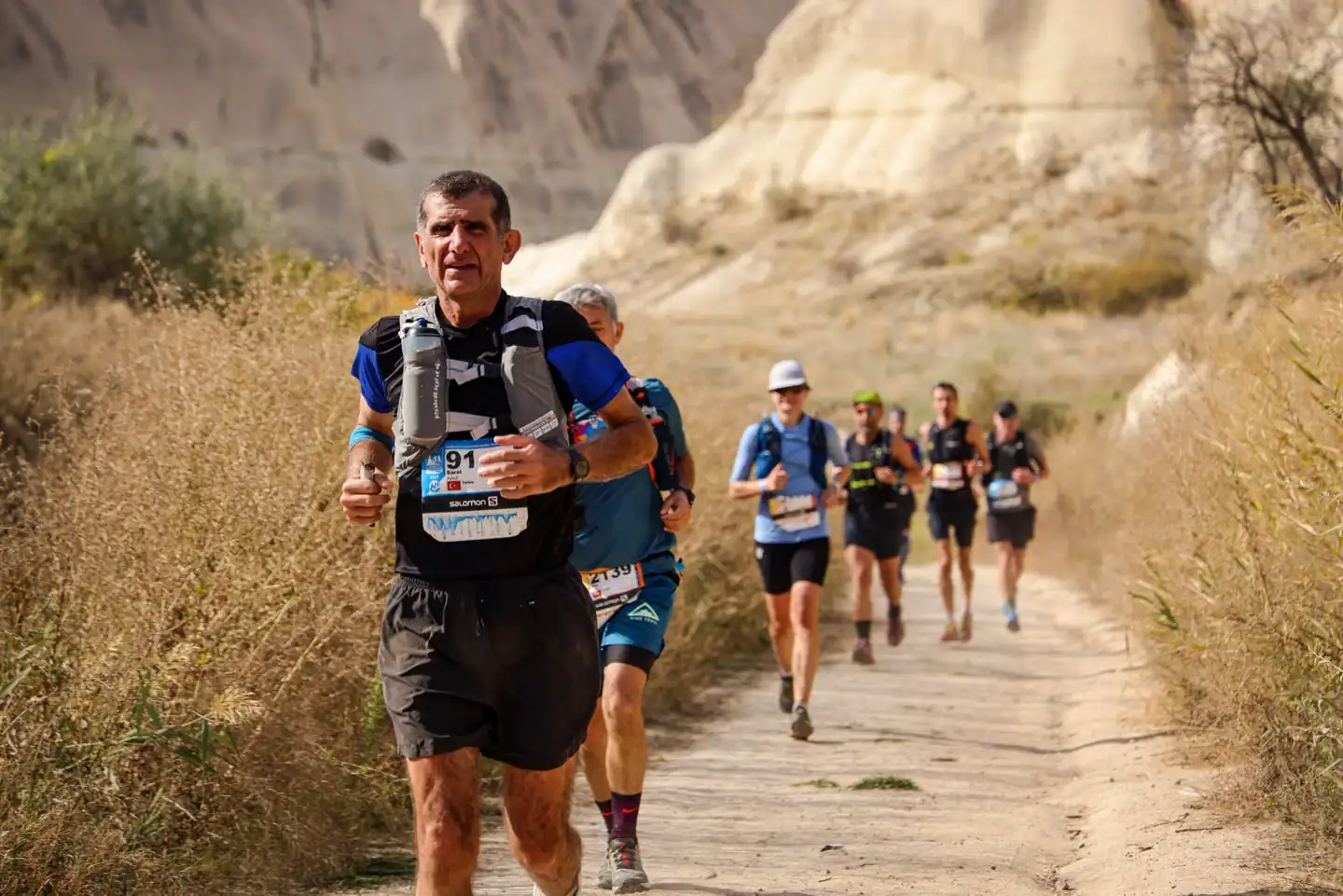
Dalías returns to the map of Andalusian trail running with a race that combines dry landscape, narrow paths, and a profile made for runners accustomed to reading the mountain meter by meter. The event starts from the town hall square and concentrates much of its appeal in a mid-mountain route with very runnable terrain in some sections and technical terrain in others, a mix that explains why the Sierra de Gádor still holds such strong appeal among mountain race enthusiasts.
The start is set for 9:00 and the organizers offer two route options, a main 21-kilometer course and another 13-kilometer one designed for lower categories, beginner participants, and walkers. The sporting context is clear: a long-standing event, born in 2014, which has had weight in regional and national circuits and retains that small-town race feel with the ambition of a serious mountain event.
A route that combines legs, terrain reading, and endurance
The Sierra de Gádor does not give away free meters. Although it is not a mountain of major Alpine heights, its terrain forces runners to sustain effort with their heads, because the trails narrow, the incline appears at the least expected moment, and the runner goes from a lively pace to a short stride in a matter of seconds. In races like this, heart-rate management matters as much as leg strength.
The main route, identified in different calendars as 21 kilometers and in other records as 28.2 kilometers depending on the edition or platform listing, takes place in a mid-mountain setting with a surface dominated by trails and tracks. The most repeated reference speaks of 80% narrow paths and 20% wider stretches, a proportion that makes the race’s personality very clear: technical enough to prevent distractions, but also with sections where you can run smoothly if the legs respond.
The short version, 13 kilometers, adds around 700 meters of positive elevation gain and is open to cadets, youths, juniors, beginner mountain runners, and hikers. That design is not just a minor add-on; in fact, it broadens the sporting scope of the day and means the event is not reserved only for runners with experience in elevation and fast descents.
Dalías as a starting point and as a sporting setting
Dalías town hall square serves as the center of the day. The start in the urban core gives the race a recognizable, very Mediterranean image before the pack heads into the mountains. That contrast between stone, the initial asphalt, and mountain earth is one of the defining features of races well integrated into their territory: the runner leaves the town almost as if opening a door and stepping into another climate.
Dalías, in Almería, also provides a very particular geographic base. The Sierra de Gádor offers terrain that transitions between slopes, mid-height paths, and more open areas, with conditions that can change quickly depending on the time of day and the season. November usually brings mild and relatively dry conditions to the area, a combination that favors sustained pacing, although the terrain remains the true judge of the race.
In practice, that location shapes the race as much as the mileage does. A mountain course is not explained only by meters and elevation gain: also by the texture of the ground, visibility, the way wind enters exposed sections, and the kind of stride it demands. Here the runner adapts to a landscape of scrubland, dirt tracks, and ridges where effort is divided between climbing, descending, and recovering without losing concentration.
What the technical sheets say and why they do not all match
Race platforms do not always show the exact same distance. In the case of this event, there are references to 21 kilometers, 28.2 kilometers, and 28 kilometers, plus the short 13-kilometer option. That kind of variation is not unusual in mountain events, where the measurement can be updated, one edition may modify the route, or different websites may label the same distance slightly differently.
For the runner, the important thing is to understand the race’s overall structure: a long course around an extended half-marathon distance, with plenty of elevation gain and a shorter, more accessible alternative. It is also worth noting the data that do remain stable, such as the 9:00 start, the starting point in Dalías, and the predominant terrain profile. Those elements matter more than a difference of a few tenths of a kilometer when preparing for a mountain day.
The event’s recent history itself helps explain that context. Mountain races in Andalusia have evolved a lot over the last decade, and the listings for a single race often coexist with archives from different seasons, calendars, and results platforms. That is why the most useful detail for the reader is not only the exact figure, but the sporting nature of the event: a mountain race with two routes, technical terrain, and both competitive and popular appeal.
The importance of a race with history in the Andalusian calendar
The first edition was held in 2014, a date that already places the Alpina Sierra de Gádor among the races with enough continuity to have built an identity. It is not an improvised race or a one-off experiment. Its repeated presence in specialized and federation calendars shows that it has managed to stay alive in a very competitive ecosystem, where trail events are easy to start but not all survive the passing years.
Records also mention that it was twice the Spanish Mountain Running Cup and twice the Andalusian Mountain Running Cup, a detail that raises the event’s sporting value. That history does not automatically turn each edition into an epic final, but it does speak of an organization capable of meeting relevant standards and of an environment that has convinced federations and athletes in different seasons.
The tenth edition, held in 2024 according to the federation reference, also confirms the accumulated anniversary character that usually strengthens this kind of race. In races like this, tradition matters. Some runners return for the route, others for the local atmosphere, and others because the Almerían mountains offer a different experience from that of northern Spain: drier, brighter, and with an almost mineral color in certain months of the year.
What kind of runner best fits this race
The race demands mountain experience, but not just elite level. The main course favors those who know how to pace themselves on moderate climbs, maintain technique on descents, and keep rhythm on narrow trail sections. It is a runner profile that understands the value of every turn and every change in gradient, someone able to run with their head more than with impulse.
The short distance opens the door to young participants and to those making their first attempt at this type of event. That breadth of audiences explains part of the event’s success, because the day is not reduced to a single competitive language. The ambition of those chasing time and position coexists with the calmer experience of those who simply want to complete a mountain route safely and at a good pace.
There is also an interesting element in the composition of the terrain: the trail line predominates over the wide track, which usually penalizes runners too dependent on a uniform pace. Here ankle agility, constant attention, and the ability to change support without hesitation matter. It is the kind of race that rewards movement economy, almost as if every turn required paying a toll.
The tactical reading of a short but demanding course
You do not need an extreme distance for the mountain to bite. The Alpina Sierra de Gádor sits in that point where a fast start may seem tempting, but ends up taking its toll if the pace is pushed too soon. Effort in mountain racing is not distributed like on the road: you have to hold back, anticipate, and accept that changes in gradient break stride continuity.
The narrow sections force runners to stay alert, especially if there are large groups at the start. Add to that the presence of mid-mountain trails, where the surface can alternate between loose stones, compact earth, and small natural steps. This is not a race to navigate on autopilot. The runner who adapts best is usually the one who stays calm in the first kilometers and speeds up when the profile allows it, not before.
The 13-kilometer version, with its 700 meters of positive elevation gain, has its own character too. Even though it is presented as an alternative, it remains a real mountain distance, with enough elevation gain to demand minimum preparation and some familiarity with continuous climbing. In races like this, the word “short” can be misleading. Short in the mountains is rarely easy.
The setting, the weather, and the start time
The 9:00 start time is no minor detail. In a mountain race, starting in late morning can soften the initial November cold, but it also means heat or sun exposure may become noticeable if the day is clear. In the Almería area, November is usually a mild month with relatively low rainfall, a combination that is quite favorable for racing.
Typical seasonal weather records point to a mild and dry November, with moderate highs and cool nights. That duality has concrete effects on the runner: the start may require a light layer, but once moving the need changes quickly. Clothing, hydration, and effort management must adapt to air that, at that time of year, is usually kind but not indulgent.
The landscape adds its own rhythm too. The Sierra de Gádor, with its Mediterranean mid-mountain character, offers a different brightness from other more humid settings. The race moves through a kind of stage of pale earth and restrained vegetation, where the sound of footsteps and the passage of runners stands out more than in forested environments. It is a visual and physical experience at once, austere and highly recognizable.
A name that already carries weight in Andalusian trail running
Alpina Sierra de Gádor is not just another name on the calendar. For much of the Andalusian trail community, it represents a race that brings together territory, history, and a certain way of understanding competition: close, mountainous, and unpretentious. The event has coexisted with different generations of runners and with the growth of a sport that is no longer marginal, but one of the major families within running in Spain.
Its permanence also says a lot about the evolution of trail running in the south. For years, many of these races had to build prestige with limited resources and a great deal of local commitment. Today the ecosystem is broader, more technical, and more visible, but it still rewards events that remain true to their landscape. In that sense, Dalías and the Sierra de Gádor make a very recognizable pair.
The race also connects with something trail running especially values: the identity of the place. It could not be held in the same way anywhere else, because its personality comes precisely from that mix of town, mountains, and mid-mountain trails. That uniqueness is what makes interest year after year depend not only on the bib number, but on the complete experience of running there.
What this event leaves for those following the mountain calendar
The key information is simple and useful: start in Dalías, at 9:00, two main distances, and a mountain course with a strong presence of trails and elevation gain. From there, the race speaks for itself. It does not need embellishments or grand narrative fireworks to attract those looking for a real race, with terrain and character.
The Alpina Sierra de Gádor has moved naturally between the sporting and the popular, between the demands of trail running and the accessibility of a shorter distance. That balance explains its staying power. In an increasingly crowded calendar, the races that survive are usually those that offer a clear experience: a specific place, a recognizable profile, and a route that leaves its mark on the legs.
Dalías, the Sierra de Gádor, and the 9:00 start are enough to define the scene. The rest is provided by the elevation gain, the terrain, and the memory of a race that is already part of the Andalusian mountain map. In a sport where the surroundings matter as much as the stopwatch, this event still has that rare value of something authentic, measured, and repeatable, but never exactly the same.
You may also like: Algimia de Almonacid Jabalí Trail: route, distances and key details.



How to prevent thigh chafing: causes and real solutions

Women’s running windbreakers: seven jackets and how to choose

Do more workouts get rid of soreness? A guide for runners

Jaén Half Marathon 2026: Record 3,800 Runners Registered

Men’s short running tights: how to choose the right pair

World Triathlon confirms data breach involving medical data

Izan Edo targets podium at Miyazaki World Cup

María Pérez ranks ninth in World Athletics’ 2026 top ten

Dos Santos, Duplantis and Sawe: World Athlete of the Year finalists

San Silvestre Vallecana 2026: 42,000 places, prices and start times

 Races4 months ago
Valencia Half Marathon 2027: date and registration

 Races4 months ago
Valencia Marathon 2026: entry, ballot and course

 Reviews and Comparisons4 months ago
Asics Gel-Roadmiles 3 for men: review and current price

 Reviews and Comparisons4 months ago
Asics Gel Sonoma 8 Gore-Tex: complete analysis for trail and rain

 Sneakers3 months ago
Saucony Endorphin Pro 4: full review and verdict

 News5 months ago
Strava API 2026: what changes for clubs, challenges and runner apps?

 Reviews and Comparisons5 months ago
Nike Alphafly 3: opinions, sensations, and real key points

 Reviews and Comparisons4 months ago
Under Armour running shoes review 2025-2026: models and key features

 Sports Equipment4 months ago
Shoe sizes in cm: a clear guide to getting the right fit for your footwear

 Sneakers3 months ago
Skechers GO RUN Consistent 2.0 analysis: comfort and limits

 News5 months ago
Valencia Marathon 2026 route: key tips to train and run better

 Sneakers4 months ago
Adidas Adizero Boston 13 for men: review and verdict