Races
Arrankudiaga-Zollo Mountain Half Marathon 2026: date and distance
The Arrankudiaga-Zollo race offers mountains, elevation gain, and two routes with technical details and prices already set.

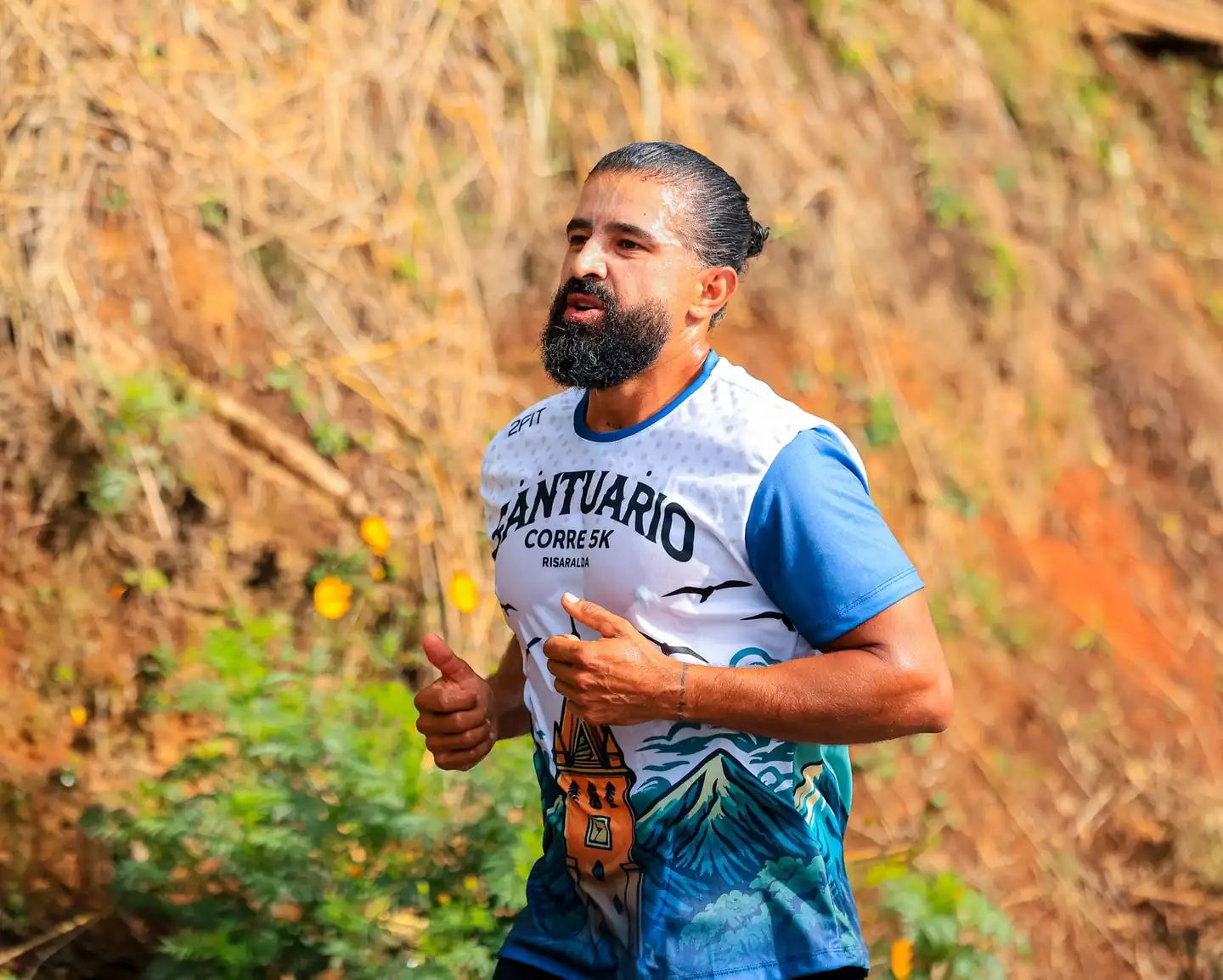
Arrankudiaga-Zollo mountain half marathon returns on October 24, 2026 with the exact blend of toughness, scenery, and logistics that defines well-organized mountain races. The main event, covering 21.1 kilometers and 970 meters of positive elevation gain, will start at 15:30 from Arrankudiaga square, with the finish at the same point and a route that alternates asphalt, roads, and mountain trails.
The day is not limited to a single distance. Alongside the mountain half marathon, there is a short course of 7.9 kilometers and 410 meters of elevation gain, designed for a more popular profile, but with the same trail character. Both events share 450 bib numbers across the two categories, a detail that shapes the atmosphere and makes it important to check registrations, bib pickup times, and fee changes in advance.
A mountain race with its own identity in Arrankudiaga-Zollo
The race has become one of those events that neatly sums up northern trail running: changing terrain, sustained uphill sections, technical but manageable passages, and an organization highly attentive to safety. It is not a race designed to hide its difficulty; it announces it from the technical sheet. The long course includes 20% road, 9% track or dirt road, and a dominant 71% of trails and mendi bidea, a combination that explains why the pace rarely resembles that of an urban half marathon.
The value of this kind of race lies in the fact that it forces runners to read the terrain. On asphalt, the runner usually dictates the rhythm; in the mountains, the path sets the rules. Here, the variation between a more straightforward track, a narrow trail, or a prolonged climb changes the perception of effort within minutes. That is also part of the appeal of the race: it depends not only on speed, but on the ability to pace, choose footholds, and accept that running in the mountains is more about negotiation than domination.
The 2026 edition is the 13th and keeps the dual format that already identifies the event. In the language of popular races, that means a solid offering for those seeking distance and elevation gain, but also an entry point for runners who prefer a shorter experience without giving up the trail atmosphere. That coexistence usually gives these race days a very particular tone: staggered starts, shared sections, and a finish where different efforts mix beneath the same arch.
Dates, times, and starting location
The mountain half marathon is set for Saturday, October 24, 2026 at 15:30, while the popular trail will start at 16:00. Both starts and finishes are located in Herriko plaza, in Arrankudiaga, a place that centralizes logistics and concentrates the day’s atmosphere. For anyone arriving early, that detail matters more than it may seem: it makes bib pickup, pre-race waiting, and the return after the finish much easier.
The autumn schedule adds a practical layer that should not be underestimated. At this time of year the light changes quickly and the afternoon can go from mild to cool with relative ease. That is why the mid-afternoon start time affects both clothing and strategy: a light technical T-shirt, an extra layer for before the race, and attention to thermal sensations in the first kilometers. In trail running, a beautiful start can also be a demanding one if the body does not warm up in time.
Bib pickup is scheduled at Oxinburu bizigunea. According to the official information, it will be available on Friday between 18:30 and 20:00, and on Saturday until half an hour before each start. This kind of wide window reduces last-minute stress, but it also reflects an organization that aims to spread out runner flow and avoid unnecessary queues just before the race.
Distances, elevation gain, and course overview
The main event, the Mendi Maratoi Erdia, combines 21.1 kilometers with 970 meters of positive elevation gain. That amount of climbing places the race firmly in mountain territory, while still remaining accessible for runners with moderate trail experience. It is not an extreme profile, although it is serious enough to punish an overly enthusiastic start or a climb taken beyond reason.
The short course, Trail Herrikoia, adds up to 7.9 kilometers and 410 meters of positive elevation gain. The distance is shorter, but the elevation gain is still demanding in proportion. In other words: this is not a gentle race or a stroll along trails. The short event keeps the mountain DNA of the race and requires technical precision on climbs, descents, and footing, with the added factor of greater relative intensity for anyone tackling it at a fast pace.
The technical sheet helps imagine the real effort. Road sections account for barely a fifth of the total in the half marathon, and trails clearly dominate. That usually translates into a fragmented race, with constant changes in muscular pattern. What would be a succession of regular blocks in a road half marathon becomes here a series of small battles: accelerate a little on the flat, save your legs on the climb, protect your quads on the descent, and then settle the breathing again on the runnable sections.
Registrations, prices, and participant limit
The event sets a combined cap of 450 participants across both distances, a figure that helps explain the usual demand for well-received popular mountain races. Registrations are handled through Sportmaniacs and opened on May 18. In an increasingly crowded calendar, this kind of limit requires early decisions and prevents the entry process from becoming a last-minute affair.
The half marathon costs 15 euros until July 31, rises to 18 euros from August 1 to October 22, and allows in-person registration the day before and on race day for 25 euros. The popular trail costs 10 euros until July 31, goes up to 13 euros in the second period, and allows late registration for 16 euros. This tiered structure rewards those who organize ahead of time and mildly penalizes improvisation.
The refund policy is also clearly defined. Until July 31, the full amount is refunded to those who request it. From August 1 until October 22, only a name change is allowed in the registration. In addition, switching from the half marathon to the popular trail is permitted without refund of the difference, while moving in the opposite direction requires paying the additional amount. It is a common formula in races with limited places, designed to organize demand and reduce empty spots.
What the course is like and what it demands from runners
The terrain in Arrankudiaga-Zollo cannot be reduced to a single image. It has some local roads, some tracks, and a lot of mountain trail, a mix that especially punishes anyone who runs without energy economy. The 71% trail share in the half marathon points to a race in which you will need to watch the ground, choose your line, and accept that every turn may hide a change in gradient.
In races like this, technique becomes a form of energy saving. It is not just about running fast, but about not wasting energy where the course does not give it back. An aggressive downhill in the first kilometers can cost minutes later; a climb taken walking with purpose can save the legs and keep the race alive until the end. That kind of management is one of the reasons trail running remains so popular among runners looking for more than pace charts.
The presence of kilometer markers, signage, ribbons, and tiger marks provides safety, but also reduces uncertainty. In the mountains, trust in the route is no small detail; it affects your pulse, your form, and your mindset. Knowing that the route is well marked allows you to focus on the effort instead of spending attention at every fork. In a popular race, that balance between adventure and clarity is worth almost as much as the elevation gain.
Refreshments, checkpoints, and race services
The half marathon will have three refreshment stations. The first is at Madalena, at kilometer 5.1, with liquids; the second at Basakoetxe, at 11.3, with solids and liquids; and the third at Zollo, at 17, again with liquids. At the finish there will also be a finish-area refreshment station for all categories. The distribution fits a short mountain endurance race: enough support, but not excessive, and with stations placed where fatigue usually starts to change shape.
Those checkpoints are also tactical references. Passing through Madalena marks the race’s first filter; Basakoetxe usually coincides with the moment when the legs start asking for more than willpower; and Zollo, near the final stretch, serves as the last adjustment before the return. The time limits for the half marathon are set at: 1 hour for Madalena, 1 hour and 40 minutes for Basakoetxe, and 2 hours and 30 minutes for Zollo. These are not arbitrary cutoffs, but a way to preserve safety and organize the race.
In the popular trail, the refreshment station is located at Madalena, at the highest point on the route, and will offer liquids only. There is also a finish-area station at the line. This more modest setup reflects the nature of the shorter distance: fewer kilometers, fewer checkpoints, and a level of demand that, while lower in volume, still has all the authenticity of mountain racing.
Safety, rules, and popular participation
The organizers stress that the races are of a popular nature, so no license is required to take part. This is important because it broadens access and places the race within the Basque tradition of open events, with clear rules but no federation barriers. A sports medical check-up is also recommended, a sensible warning in a context of prolonged effort and accumulated elevation gain.
Volunteers will be present along the course to handle safety, along with medical staff and an ambulance at strategic points. Runners may be withdrawn if they show fatigue or other conditions that make continuing inadvisable. In a sport like trail running, where the environment and fatigue move forward together, these measures are not secondary; they are part of the basic agreement between organizers and participants.
The rules also make other points clear: competing without a bib or with someone else’s bib is forbidden, the use of headphones is not recommended, and a minimum age of 18 years is set, with participation allowed from 16 if the corresponding authorization is handed in at bib pickup. For those under 16, the organizers decide on a case-by-case basis. These are rules designed to protect runners while also preserving the traceability of the event in a mountain setting where an incident can quickly become complicated.
What this race brings to the Basque trail calendar
The autumn calendar in the north is full of races competing for attention, but not all of them offer the same balance of route, price, proximity, and format. Arrankudiaga-Zollo stands out precisely because of that combination. It is not a major mountain marathon with an epic aura, nor is it a minor event without personality. It sits in a very useful middle range for popular runners: long enough to demand effort, close enough to be manageable, and technical enough to leave a mark.
The start in a small town, the finish in the same center, and the mix of distances create a very recognizable scene in Euskadi: neighbors near the arch, volunteers spread along the course, runners who know each other from other events, and a crowd that understands the logic of effort. It is the kind of race that does not need gimmicks to work. It only needs a natural setting, clear organization, and a course that truly makes you sweat.
There is also an element of continuity. The presence of overall women’s and men’s classifications, trophies, txapelas, and local recognition reinforces the sense of belonging. It is not all about the stopwatch; the social fabric around the race matters too. In races like this, local identity still carries weight, and that helps explain why the event maintains its own place within the Basque mountain scene.
The race that measures autumn form without disguises
The best way to understand Arrankudiaga-Zolloko mendi maratoi erdia is to see it as a race that does not hide behind slogans. It presents its elevation gain, sets its times, publishes its terrain percentages, and limits its places. Everything is clear from the start. That transparency, in the end, is both a journalistic and a sporting virtue: it lets you know what you are signing up for, how much it costs, how you run it, and what level of effort the day will require.
In a calendar full of races competing for attention, this proposal keeps the advantage of being concrete. 21.1 kilometers, 970 positive meters, 450 places, and a start in Herriko plaza sum up its personality quite well. The rest is provided by the terrain: mud, stone, pace changes, high breathing, and that very trail-specific feeling that the mountain always takes something in exchange for what it gives.
That is why the race works beyond the statistics. It serves as a season thermometer, as a late-October appointment, and as a reminder that running in the mountains is still a way of reading the landscape with your legs. In Arrankudiaga-Zollo, that reading is done with a bib, with elevation gain, and with a watch in hand, but also with a very simple idea: the mountain is in charge, and that is precisely its value.
You may also like: Arrankudiaga-Zolloko Mendi Maratoi Erdia 2026: race guide.



How to prevent thigh chafing: causes and real solutions

Women’s running windbreakers: seven jackets and how to choose

Do more workouts get rid of soreness? A guide for runners

Jaén Half Marathon 2026: Record 3,800 Runners Registered

Men’s short running tights: how to choose the right pair

World Triathlon confirms data breach involving medical data

Izan Edo targets podium at Miyazaki World Cup

María Pérez ranks ninth in World Athletics’ 2026 top ten

Dos Santos, Duplantis and Sawe: World Athlete of the Year finalists

San Silvestre Vallecana 2026: 42,000 places, prices and start times

 Races3 months ago
Valencia Half Marathon 2027: date and registration

 Races3 months ago
Valencia Marathon 2026: entry, ballot and course

 Reviews and Comparisons4 months ago
Asics Gel-Roadmiles 3 for men: review and current price

 Reviews and Comparisons4 months ago
Asics Gel Sonoma 8 Gore-Tex: complete analysis for trail and rain

 Sneakers3 months ago
Saucony Endorphin Pro 4: full review and verdict

 News5 months ago
Strava API 2026: what changes for clubs, challenges and runner apps?

 Reviews and Comparisons5 months ago
Nike Alphafly 3: opinions, sensations, and real key points

 Reviews and Comparisons4 months ago
Under Armour running shoes review 2025-2026: models and key features

 Sports Equipment4 months ago
Shoe sizes in cm: a clear guide to getting the right fit for your footwear

 Sneakers3 months ago
Skechers GO RUN Consistent 2.0 analysis: comfort and limits

 News5 months ago
Valencia Marathon 2026 route: key tips to train and run better

 Sneakers4 months ago
Adidas Adizero Boston 13 for men: review and verdict