Races
Bilbao Triathlon: history, course, and key aspects of the event
The Bilbao race combines estuary swimming, urban cycling, and running with an identity closely tied to the city.

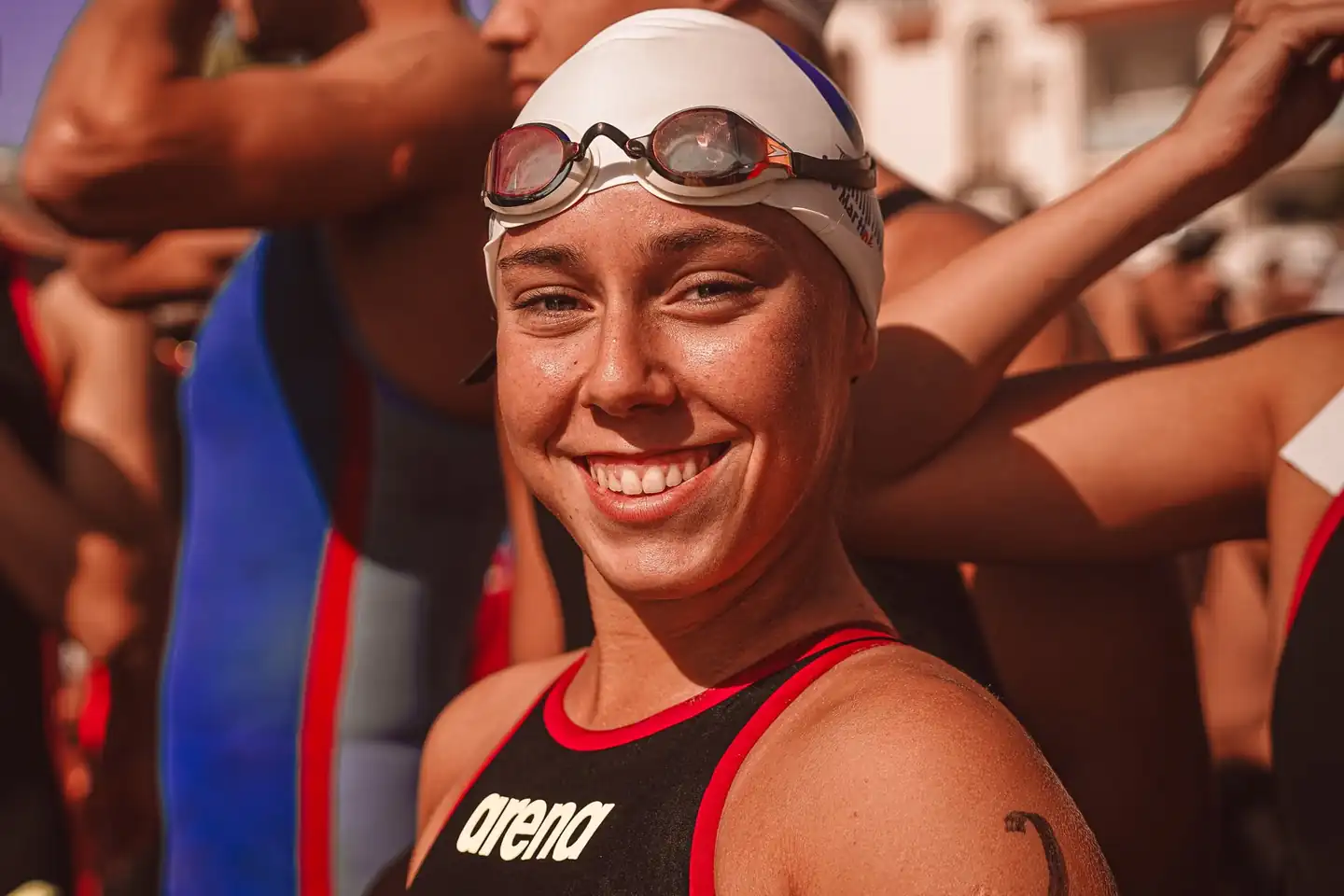
Bilbao’s Triathlon has become one of the most recognizable events on the Basque calendar thanks to its blend of urban scenery, sporting challenge, and connection to the estuary. It was born in 2011 as a middle-distance race and soon gained its own personality: swimming in the Nervión, cycling through very distinctive parts of the city, and running with Bilbao’s skyline as a backdrop gave it a different identity within Spanish triathlon.
Its evolution has been constant. After the main Half-type distance, an Olympic-format race was later added, broadening the competitive range and opening the door to different athlete profiles. That growth speaks not only to organizational ambition, but also to the race’s ability to fit into a city that lives sport intensely and has turned the estuary into a symbolic space for activity, renewal, and spectacle.
A race shaped by the estuary and the city center
The swim is the event’s first major defining feature. The water segment takes place in Bilbao’s estuary, a setting that provides a highly recognizable image and, at the same time, a special emotional weight for the participant. Swimming in urban waters, with the banks as a visual guide and the city noise in the background, creates a different feeling from coastal or lake triathlons. Here the course is not only technical; it is also narrative.
Then comes the cycling leg, which is usually the part that most tests patience and the ability to hold pace. In a city like Bilbao, where traffic, bridges, and avenues draw a very specific geography, cycling takes on a tactical character. It is not just about covering kilometers, but about managing effort in an environment where every turn, every straightaway, and every transition zone affects the final time. The run, finally, closes out the race with a very powerful visual element, because the athlete returns to the urban heart while the crowd follows the finish closely.
The organizers have used that setting as a hallmark. This is not a neutral triathlon that could easily be swapped with another. Bilbao appears in the runner’s experience directly, almost physically: in the estuary’s humidity, the hardness of the asphalt, the width of the avenues, and the way the city opens itself to sport during the race. That relationship with the surroundings explains much of the appeal it holds for triathletes and fans alike.
Distances, format, and participant profile
The original distance was middle distance. The Half format, with 1,900 meters of swimming, 90 kilometers of cycling, and 21 kilometers of running, turned the event into a demanding endurance race designed for those seeking prolonged effort balanced across the three disciplines. It is a combination that requires endurance, pace control, and very fine mental transitions: going too fast at the start usually comes at a high price in the final half marathon.
With the addition of the Olympic distance in 2016, the race opened a second competitive avenue. That format, with 1,500 meters of swimming, 45 kilometers of cycling, and 10 kilometers of running, shortens the exposure time but increases the average speed. The change broadened the event’s appeal for clubs, specialists, and recreational athletes who prefer a more contained duration without giving up the full triathlon experience. In journalistic terms, the event stopped being just an endurance race and became a competition with a dual sporting perspective.
The economic dimension of the podium also changed. In 2016, prize money was announced for both categories, men’s and women’s, with €3,000 for the winner of the middle distance and €1,000 for the winner of the Olympic distance. That figure does not make the race a major stop on the international circuit, but it does show an effort to build a competitive field and to recognize the level of those who travel to Bilbao to compete in a very unique urban setting.
An event that has steadily grown in importance on the calendar
Since its debut in 2011, the race has established itself as a reference in triathlon in Euskadi. The history of the Bilbao Triathlon is not understood only through its winners, but through the continuity of the event and its ability to remain alive in an increasingly crowded calendar. Endurance sport depends on repetition, but not mechanical repetition; it needs a recognizable identity, and Bilbao has built one through a formula closely tied to its geography.
The debut also brought early recognition: in 2011 it received the GOLD award for best sports event of the year at the Eventoplus awards. That detail, often overlooked outside the organizing circuit, was important because it validated the event’s ability to combine logistics, city image, and sporting experience. It is not common for a new race to generate so much positive buzz in such a short time.
The trajectory has also been linked to format changes and growing participation. In recent years, the event has been described in terms of hundreds of athletes, with editions that easily surpassed 500 registered participants and others that hovered around the half-thousand mark. In 2025, the race brought together more than 700 athletes across three disciplines, a sign that its momentum remains strong. That volume, in a city with very specific spaces and complex mobility, requires meticulous organization and almost millimeter-precise coordination with traffic, security, and the public.
Winners and names that have left their mark
The men’s roll of honor shows a sequence of winners that is very representative of the competitive level the event has had. Mikel Elguezabal won the first two editions, in 2011 and 2012, and later the spotlight passed to names such as Aimar Agirresarobe and Gustavo Rodríguez, the latter winning in 2014 and 2015. The repetition of some surnames shows that the race has been especially demanding in the long segment, where experience makes a clear difference.
In the women’s category there has also been continuity and variety. Virginia Berasategui dominated the first two editions, in 2011 and 2012, while later victories came from Asa Lundstrom, Maider Gaztañaga, and Gurutze Frades. That spread gives an idea of the quality of the field and of Bilbao’s ability to attract triathletes with international experience and strong standing on the national circuit.
In recent years, the race has continued to make headlines with very close results and leading names in Basque triathlon. Pello Osoro and Helene Alberdi shone in the 2024 edition, on a sunny day that strengthened the event’s sporting image. That kind of victory, along with the coverage it receives in the local press, reinforces the race’s status as a showcase for triathlon in Bizkaia, beyond the purely sporting result.
Urban logistics and the pulse of a city that stops
Bilbao does more than host the triathlon; it reorganizes itself for a few hours. Traffic closures, changes to usual routes, and coexistence with other city events are part of the race just as much as the bib number or the bike. In 2025, for example, the coincidence with a concert by the estuary required visual guides to help people move through affected areas. That blend of sport and city in real time is one of the reasons the event draws so much attention.
The race has a particularly strong impact on areas such as Deusto, Olabeaga, Abandoibarra, and the estuary surroundings, where mobility becomes more sensitive. For spectators, that means planning movements more carefully; for runners, competing in a partially closed environment adds intensity to the day. The city becomes a stage, but also infrastructure. And that dual condition is not minor: it requires coordination that goes far beyond simply setting up a start and a finish.
That logistical context reinforces the feeling of a major urban event. This is not a hidden triathlon on the outskirts, but a race that enters Bilbao’s daily life and leaves its mark on its avenues, bridges, and banks. That public exposure, inevitable in a dense and busy city, helps explain why the Bilbao Triathlon is seen as more than a race: it is a day when the city sees itself through sport.
What makes the course special compared with other Spanish races
Comparing it with other national triathlons makes it clear that Bilbao plays in a different aesthetic league. There are faster races, flatter ones, some with larger fields, and many with spectacular coastal settings. Bilbao, by contrast, combines a transformed industrial identity, a very present estuary, and an urban architecture that creates an atmosphere difficult to replicate. It does not aim for postcard scenery; it aims for its own personality, more understated and more tied to the real city.
In sporting terms, that has consequences. The triathlete does not find an anonymous circuit, but a route that demands constant attention. Swimming in the estuary requires adaptation to the space; cycling demands reading the terrain and concentration; the run requires psychological as well as physical endurance. It is the kind of race that punishes improvisation and rewards the complete athlete, the one who knows how to manage energy without losing references.
The choice of setting has also influenced its reputation. The event has often been described as a way to bring the estuary to life, an idea that connects sport, urban regeneration, and the civic use of space. That phrase captures much of the meaning of the event: not just competing, but activating a part of the city that becomes, for one day, a kind of open-air stadium.
The Bilbao Triathlon’s place in Basque triathlon
Within Basque triathlon, the event occupies a reference position because of its history, visibility, and location. Euskadi has been fertile ground for endurance sport, with well-followed events and a demanding fan base. Bilbao adds to that ecosystem a powerful urban brand, capable of attracting local athletes and participants from elsewhere who are looking for a recognizable and competitive experience. The presence of the Basque Triathlon Federation in the organization also underlines that institutional connection to the territory.
The race coexists with other nearby events in Bizkaia and Gipuzkoa, which has helped consolidate a small network of triathlons and duathlons throughout the year. On that map, Bilbao is not necessarily the hardest race or the fastest, but it is one of the most visible. And in a sport where prestige is built as much through the clock as through image, that visibility matters a great deal.
Local media coverage has helped reinforce its relevance. Reports, images of the estuary, profiles of winners, traffic closures, and the urban atmosphere have kept the conversation around the race alive. The result is a very journalistic combination of sport, city, and calendar, where interest does not end with the standings but extends to the event’s collective impact.
A race that sums up Bilbao’s relationship with sport
The Bilbao Triathlon condenses several ideas at once: endurance, city, landscape, and recent memory. Its birth in 2011 coincided with a period in which Bilbao was strengthening its image as a modern capital, capable of combining culture and physical activity in a single narrative. The race took advantage of that momentum and turned it into an event with its own identity, recognizable by the estuary, the city center, and an organization designed so that the city is not left on the sidelines.
The value of the race lies not only in its times or winners, but in what it represents for both runner and spectator. Watching people swim, cycle, and run in a space so closely identified with the city creates an almost theatrical impression, as if Bilbao were unfolding an accelerated version of itself for a few hours. Sport, in that context, acts as both mirror and showcase.
That is why its name no longer refers only to a competition, but to a way of understanding triathlon in a very clearly defined urban environment. The race has managed to grow without losing its character, maintain its demands without giving up its image, and establish itself without becoming indifferent. In an era when interchangeable races are everywhere, that uniqueness is worth as much as a good finishing time.



How to prevent thigh chafing: causes and real solutions

Women’s running windbreakers: seven jackets and how to choose

Do more workouts get rid of soreness? A guide for runners

Jaén Half Marathon 2026: Record 3,800 Runners Registered

Men’s short running tights: how to choose the right pair

World Triathlon confirms data breach involving medical data

Izan Edo targets podium at Miyazaki World Cup

María Pérez ranks ninth in World Athletics’ 2026 top ten

Dos Santos, Duplantis and Sawe: World Athlete of the Year finalists

San Silvestre Vallecana 2026: 42,000 places, prices and start times

 Races3 months ago
Valencia Half Marathon 2027: date and registration

 Races3 months ago
Valencia Marathon 2026: entry, ballot and course

 Reviews and Comparisons4 months ago
Asics Gel-Roadmiles 3 for men: review and current price

 Reviews and Comparisons4 months ago
Asics Gel Sonoma 8 Gore-Tex: complete analysis for trail and rain

 Sneakers3 months ago
Saucony Endorphin Pro 4: full review and verdict

 News5 months ago
Strava API 2026: what changes for clubs, challenges and runner apps?

 Reviews and Comparisons5 months ago
Nike Alphafly 3: opinions, sensations, and real key points

 Reviews and Comparisons4 months ago
Under Armour running shoes review 2025-2026: models and key features

 Sports Equipment4 months ago
Shoe sizes in cm: a clear guide to getting the right fit for your footwear

 Sneakers3 months ago
Skechers GO RUN Consistent 2.0 analysis: comfort and limits

 News5 months ago
Valencia Marathon 2026 route: key tips to train and run better

 Sneakers4 months ago
Adidas Adizero Boston 13 for men: review and verdict