Races
Boulder Rez Marathon 2026: route, schedules, and prices
The Boulder Reservoir event combines scenery, a fast pace, and various distances in a very well-organized day.

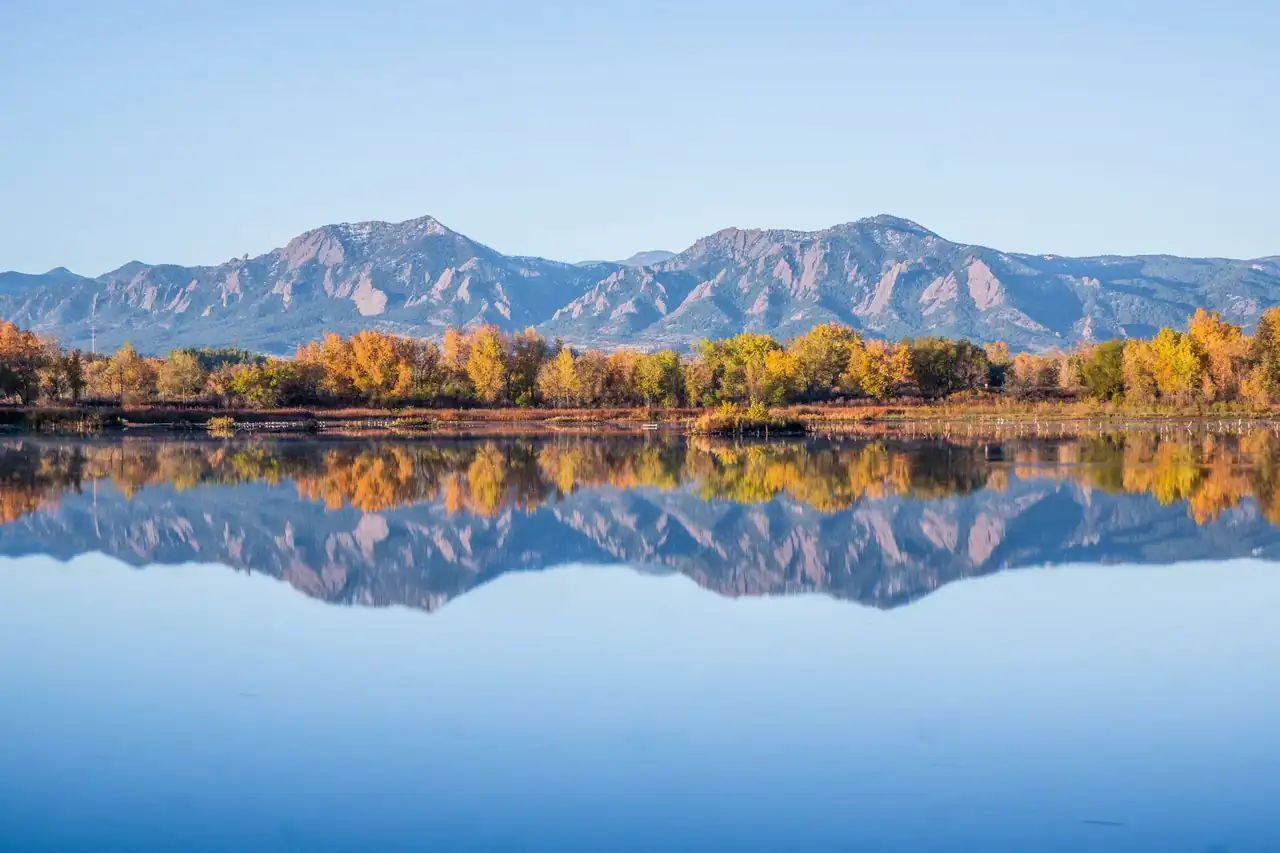
Boulder Rez Marathon once again places Boulder Reservoir on the map of fast and scenic races in Colorado’s calendar. The 2026 edition is scheduled for Saturday, August 15, with the main start at 7:15 and a program that brings together the marathon, relay, three-quarter marathon, half marathon, and 10K in a single lakeside setting that is spacious and instantly recognizable.
The race has earned its own identity through an uncommon combination: a mostly dirt-and-trail course, very limited elevation gain, and a constant return to the open landscape of the lake and the foothills of the Rocky Mountains. This is not an event for seeking vertical drama; it is a race for running at pace, reading your legs well, and taking advantage of a forgiving surface that still retains the character of light trail and park paths.
A fast course around Boulder Reservoir
The route unfolds alongside Boulder Reservoir, in the Boulder, Colorado area, and combines dirt roads, wide trails, and some firmer sections. That mix makes the course feel more natural than a purely urban route, but also more stable than a technical trail. The total elevation gain is around 200 feet, a low figure for a marathon and even more notable in a race that takes place outdoors, with long views and a constant sense of openness.
The appeal of this course lies in its dual nature. On the one hand, it allows for a relatively smooth stride, with fewer interruptions than on a classic mountain profile. On the other hand, the terrain is not a carpet of asphalt, so it requires some attention to foot placement, footing, and running economy. That balance explains why the race attracts both runners chasing times and those who prefer a more scenic challenge than an urban one.
The scenery matters too. The waterline, the open stretches to the west, and the presence of the Rocky Mountains make the effort visually richer than a city loop. On clear days, the surroundings act like a still backdrop that keeps pace with every step. It does not distract, but it does shape the experience: here the race does not feel enclosed, but exposed to a broad, bright geography.
Distances, start times, and the rhythm of the day
The 2026 edition offers a broad lineup designed for different profiles: 10K, half marathon, three-quarter marathon, full marathon, and relay. That variety makes the event feel like a shared day for runners with very different goals. Some arrive for a short, manageable distance; others for a full marathon on a summer date that demands discipline, hydration, and calm effort management.
The schedule concentrates activity from very early in the morning. Bib pickup and same-day registration run from 6:00 to 7:30. Then come the staggered starts: marathon at 7:15, three-quarter marathon at 7:20, half marathon at 7:25, and 10K at 7:30. That order reduces early congestion and helps each distance find its own rhythm from the outset.
The ceremonies and awards are spread throughout the morning, with the course closing at 14:00. That window not only marks the operational end of the day; it also defines the kind of experience it is. It is a summer race, yes, but organized with a logic that tries to avoid unnecessary hours of exposure to heat. The runner finishes early, or at least before the day truly becomes heavy under the August sun.
Tiered registration and price bands
The fee structure reflects a tiered pricing policy by date, common in races with steady demand. For the 10K, the cost ranges from $50 in the earliest window to $70 in the final window. The half marathon goes from $70 to $100, while the three-quarter marathon ranges between $80 and $110. The full marathon moves between $90 and $120, and the relay between $130 and $160, depending on when you register.
Beyond the amount, that structure makes it clear that the event rewards early commitment and penalizes hesitation. The difference between signing up early or at the last minute can be significant, especially in the marathon and relay. In this kind of race, the entry fee does not just buy a spot; it also signals commitment to a specific date, a limited field, and logistics that must fit together with near-mechanical precision.
It is also worth noting what the bib explicitly includes: participant shirt, finisher medal, reliable results, and a well-measured and well-marked course. These are basic elements, but in a race like this they matter just as much as the scenery. A well-run race is evident in the details that do not make noise: clear signage, stable timing, and a start that does not become a bottleneck.
What sets the race-day experience apart
The event prides itself on being USATF sanctioned and on offering an accurately measured course. That matters for those chasing a serious time, but also for the recreational runner who wants to know their effort took place on reasonably fair ground. Reliable results and a well-marked route reduce mental friction, something especially useful when you are stacking up miles on packed dirt and mixed terrain.
The organization also emphasizes bib pickup logistics. The packet can be collected on the Friday before, from 15:00 to 18:30, at Fleet Feet Boulder, at 2775 Pearl, or on Saturday itself between 6:00 and 7:30 at the Boulder Reservoir finish area. That flexibility eases race morning and avoids some of the last-minute rush, a detail runners appreciate when the clock is ticking and breakfast still sits heavy.
The post-race atmosphere is usually one of the most talked-about features: food, music, awards, and a sense of community that depends not on field size, but on the intimacy of the format. This is not a mega-event with huge crowds, but a race with a contained field of between 100 and 500 runners, where the feeling is more of a well-rooted local gathering than a sprawling spectacle. That gives the end of the day a different tone, more relaxed and less industrial.
An event designed for performance without giving up the scenery
In the August calendar, Boulder Rez Marathon occupies an interesting place. It arrives when many runners are either building fitness or sharpening for fall goals. Its flat profile, mixed surface, and generous schedule make it work as a tune-up race, a preparation race, or, for some, a personal best attempt. It does not demand the extreme toughness of a major mountain race, but it also does not hand out mileage without personality.
The course description helps explain its appeal: it circles the reservoir, stays largely on dirt roads and trails, and keeps the water and mountains in view for much of the race. That visual continuity has something of a natural metronome. The runner moves forward while the landscape changes little, but enough to hold attention. It is a race for looking far ahead while managing what is closest: footstrike, breathing, cadence.
That is why the race is especially appealing to those who prefer fast routes that are not asphalt. Pure asphalt has a different kind of toll, drier and more repetitive; here the ground changes texture, and that variation can feel kinder to the legs, provided you accept that dirt also demands stability and focus. Speed is there, but it does not come alone: it has to be built on a foundation of control.
The role of the relay and the range of participants
The presence of a relay marathon broadens the event’s appeal and makes it a more flexible option for groups, clubs, and running pairs. The shared format allows the effort to be divided over a distance that might otherwise be out of reach for some participants. In the context of a calm day and a flat course, the relay adds a social layer without compromising the event’s sporting identity.
It also helps explain why the race brings together such different profiles. Some come chasing a time; some want to finish their first half marathon; some want a quality summer 10K; and others prefer to experience the event as a team. That coexistence of motivations does not always work well in large races, but here it fits naturally because the event is built not around the crowd, but around the route and the landscape.
The awards system completes the competitive framework with a simple logic: it recognizes the top three men and women overall and also age-group categories from 19 and under to 80 and over. It is a classic, straightforward, and fairly transparent setup that gives visibility both to local elites and to veteran runners who continue to take on the clock with the same determination as always.
What to expect at the August start line
The date brings a set of predictable conditions. In Boulder, August can bring dry heat and intense light, with highs around 86 degrees Fahrenheit and lows near 57, according to the typical climate profile noted for the event. That means the morning must be read well: start cautiously, hydrate carefully, and understand that the useful pace is not always the ideal pace on a warm day.
Even with its fast profile, the race is not decided in the first miles alone. The combination of dirt, trail, and mixed sections is less punishing than a long climb, but it can still take its toll if the terrain is underestimated. Footing, fueling, and body awareness matter just as much as in any summer marathon. In that sense, the race rewards those who know how to negotiate with the environment without turning every decision into a battle.
There is also a visual element worth noting. The image of a line of runners moving alongside the water, with the outline of the mountains in the background, has something of a very specific sports postcard, almost instantly recognizable. This is not an exhibition race; it is a landscape race. And in a calendar saturated with asphalt, that makes a difference. Boulder Rez Marathon does not aim to surprise with gimmicks, but to deliver a clean, measurable, and enjoyable experience on a setting that already works in its favor.
An event that gains weight through its balance of challenge and accessibility
The key to this race lies in its balance. It is not extreme, but neither is it flat in the dullest sense of the word. It is not massive, but it is structured enough to offer a solid day. It is not technical, but it retains the texture of dirt and trail. That combination of nuances explains why the Boulder Reservoir event has become a steady name in Colorado’s summer running scene.
The sense of scale also matters. Taking part in a race like this is not about getting lost among thousands of bibs, but about moving within a small, well-ordered community. The atmosphere, early start, age-group awards, flexible bib pickup, and mid-afternoon course closure all define a practical race. Everything revolves around running with a certain level of comfort, without giving up a visually powerful setting.
In that mix of speed, scenery, and organization lies the appeal of Boulder Rez Marathon. The race offers distance, clear data, and an easy-to-read event structure. And it does so in a place where water, dirt, and mountain silhouettes coexist without excess ornament. A formula that seems simple, but is hard to match when you want more than a bib: a route that leaves a mark without needing to raise its voice.



How to prevent thigh chafing: causes and real solutions

Women’s running windbreakers: seven jackets and how to choose

Do more workouts get rid of soreness? A guide for runners

Jaén Half Marathon 2026: Record 3,800 Runners Registered

Men’s short running tights: how to choose the right pair

World Triathlon confirms data breach involving medical data

Izan Edo targets podium at Miyazaki World Cup

María Pérez ranks ninth in World Athletics’ 2026 top ten

Dos Santos, Duplantis and Sawe: World Athlete of the Year finalists

San Silvestre Vallecana 2026: 42,000 places, prices and start times

 Races3 months ago
Valencia Half Marathon 2027: date and registration

 Races3 months ago
Valencia Marathon 2026: entry, ballot and course

 Reviews and Comparisons4 months ago
Asics Gel-Roadmiles 3 for men: review and current price

 Reviews and Comparisons4 months ago
Asics Gel Sonoma 8 Gore-Tex: complete analysis for trail and rain

 Sneakers3 months ago
Saucony Endorphin Pro 4: full review and verdict

 News5 months ago
Strava API 2026: what changes for clubs, challenges and runner apps?

 Reviews and Comparisons5 months ago
Nike Alphafly 3: opinions, sensations, and real key points

 Reviews and Comparisons4 months ago
Under Armour running shoes review 2025-2026: models and key features

 Sports Equipment4 months ago
Shoe sizes in cm: a clear guide to getting the right fit for your footwear

 Sneakers3 months ago
Skechers GO RUN Consistent 2.0 analysis: comfort and limits

 News5 months ago
Valencia Marathon 2026 route: key tips to train and run better

 Sneakers4 months ago
Adidas Adizero Boston 13 for men: review and verdict