Races
Bound for the Boston Marathon Atlanta: complete guide to the event
Johns Creek hosts a quick, limited test with in-person and virtual options for the marathon and half marathon.

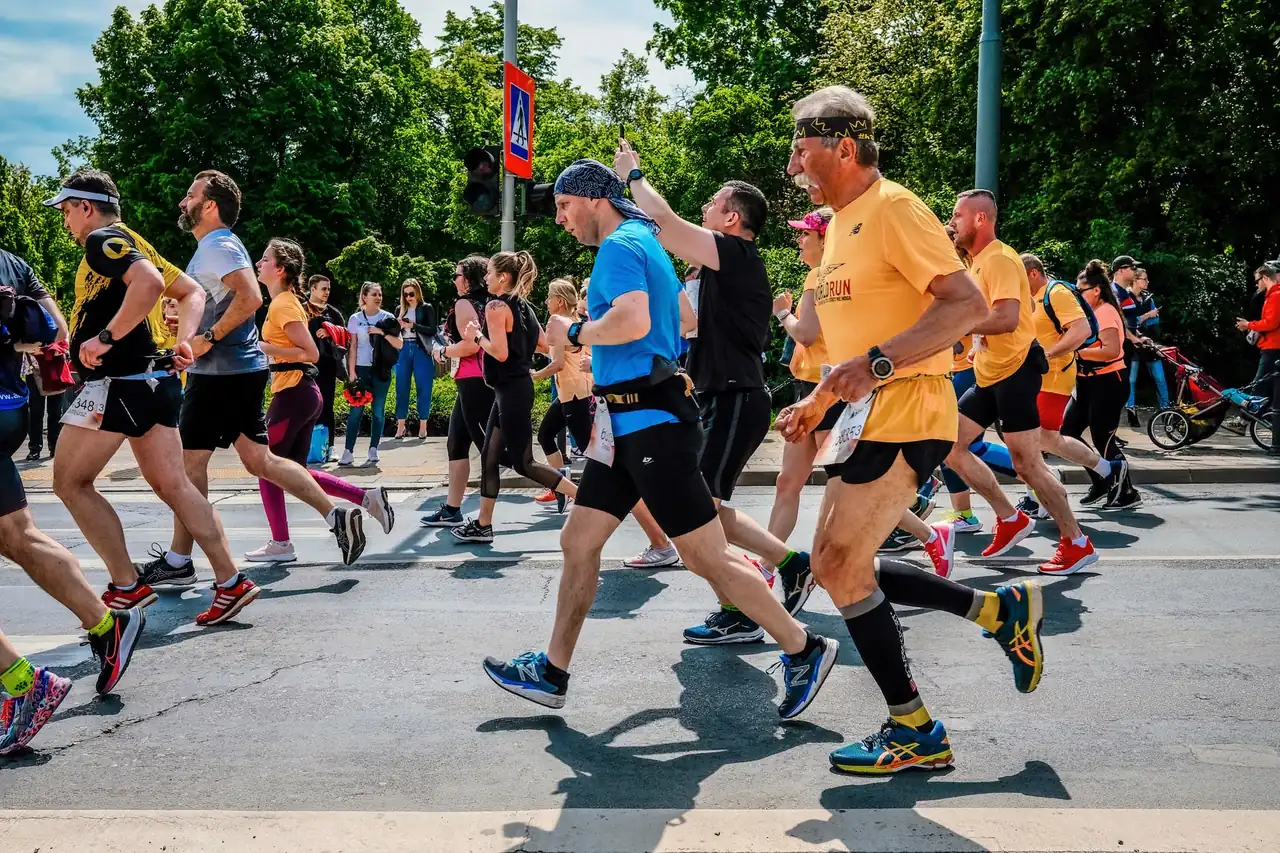
Johns Creek will once again put the clock to the test with a race designed for fast paces, personal bests, and Boston Marathon hopefuls. The Bound for Boston Marathon & Half Marathon – Atlanta will take place on Sunday, September 6, 2026 on a one-mile loop, completely flat and fast, designed to keep the pace steady and fatigue from finding too many places to hide. The event combines a marathon, half marathon, virtual format, and a space for dedicated cheer support, an unusual mix that gives it a very recognizable profile within the Atlanta area calendar.
The organizers have capped the total field at 175 participants, a figure that completely changes how the event reads: this is not a mass-participation race or a large festival, but rather a near-surgical competitive event where every detail matters. The marathon and half marathon are USATF certified, the marathon serves as a Boston qualifier, and the course includes aid stations, chip timing, and wave starts, all on Johns Creek Parkway, with start and finish at 4030 Johns Creek Pkwy.
A short circuit for chasing fast paces
The defining image of this race is the one-mile loop. There are no long straight stretches of road with no return and no climbs that break the rhythm; repetition, precision, and pace control rule here. The course has been described as superflat and super fast, two adjectives that in running are not decoration but a concrete promise: minimal elevation change, a favorable layout, and a surface that helps sustain pace. For anyone chasing a time, the terrain leaves fewer excuses and less room to get distracted.
That format has an obvious consequence: the runner sees the same points pass by again and again, hears the same footfall on pavement, and keeps crossing paths with familiar faces. It may seem monotonous from the outside, but in reality it has a very useful logic for performance. A short circuit helps correct pace, read effort by feel, and react sooner to any drift in rhythm. In races like this, the clock doesn’t just measure; it also teaches.
The end of each lap adds a bit of extra tension too. The full mile is not the exact finish, because the final stretch to the line continues a few more yards. That may seem minor, but in a marathon and half marathon, details weigh like bricks. Clean lines, good breathing management, and the ability not to lose seconds in turns, braking, or cadence changes can become a tangible difference in the final result.
Boston, qualifying times, and a label that carries weight
The main competitive draw is clear: the marathon is a Boston Qualifier. That means the course is certified and the time achieved can count toward entry into the most iconic marathon in the United States, always within the current qualification rules. The race is also presented as useful for other events that require qualifying marks, including Peachtree Qualification, a detail that broadens its appeal beyond merely trying to finish strong.
USATF certification is not a decorative stamp. In road races, course validity is the foundation on which the credibility of a performance is built. Here the cited certification number is GA17053WC, a detail that acts as a technical guarantee for ambitious runners. A certified course, chip by chip, with mile splits, turns effort into something measurable and comparable, which is exactly what someone pursuing a serious result needs.
The half marathon shares that same certification, even if it does not offer the same direct route to Boston. Still, its appeal is no less important. In practice, many runners use a fast half as a test run for a later marathon or as a fitness check. In Johns Creek, the terrain invites exactly that: running with the feeling that the body can hold on a little longer, that the asphalt is helping, and that the race does not punish you too much when the heart rate settles near the limit.
Wave starts, flow control, and very measured organization
The official start is set for 6:30 in the morning, but the race opens with two additional waves at 5:30 and 6:00. This is not a whim, but a way to reduce pressure on the course and keep the race clean, less congested, and safer. The first two starts are limited to 50 participants each, and those who choose them must pick up their bib and race packet at the early packet pickup the day before. The setup reveals a race that prioritizes order over volume.
There is also an economic and operational logic behind these time slots. Starts before the official time carry a $5 surcharge for every 30 minutes earlier, a system that reflects the extra cost of extending operations and controlling traffic for longer. At the same time, bib pickup begins one hour before the start on race day, although there is an early pickup scheduled for September 5 between 4:00 and 6:00 p.m. at the same venue.
The finish line will close at 10:30, which sets a maximum race time of four hours. That window defines the real profile of the event: this is not a marathon for spending the whole morning savoring the experience, but one designed for runners who can sustain lively paces. In races like this, the cutoff is not a dramatic threat; it is part of the rules of the game. From the start, the runner knows that every minute counts and that the race is not designed for waiting, but for execution.
Registration, pricing, and a field as small as it is demanding
The fee structure also confirms the compact nature of the event. Early registration starts with a preview tier, then moves into an early bird phase, a regular stage, a late fee, and finally race-day pricing. For the marathon, prices range from $75 in the preview period to $115 on race day; for the half marathon, from $45 to $85; and for the virtual options, from $25 to $45 depending on the stage. The stepped increase rewards planning and penalizes improvisation.
Beyond the price, the most revealing figure is the absolute cap of 175 participants. In the ecosystem of U.S. road races, that number is very low. In runner terms, it means less crowding, more space on the course, and a very focused experience. It also suggests that entries may move quickly during the good stretches of the calendar, especially in an event that promises a fast course and a prestige mark for those seeking competitive validation.
Race gear is also tied to the calendar. Those who register before August 27 are guaranteed their shirt size, while after that date gear is distributed while supplies last. The finisher medal is guaranteed for all participants, a detail that in serious events often serves as the tangible memory of a day worked down to the millimeter. The prize here is not a spectacle, but a physical proof of having completed something demanding.
Aid stations, personal support, and the role of the cheer crew
The race includes a very particular support system. There will be water and electrolyte drink at the main station, but participants can also bring their own personalized nutrition to leave at tables along the course. That option changes race strategy quite a bit, because it allows gels, fluids, or salts to be tailored to a familiar routine. In a race with repeated laps, your own aid setup can make a real difference in energy stability.
The format also encourages the presence of a cheer crew, a group of supporters who can set up in a section of the course with chairs, a table, and their own materials to cheer on the runner and, if desired, help with race support. Participation in that cheering section is free, and registration also helps estimate how much noise and support will be needed on the course. This is not just a festive add-on: on such a short loop, cheering becomes an emotional metronome, a kind of sound wave that appears every time the athlete comes around again.
The race has even thought about volunteer logistics in an unusual way. Volunteers may opt for a $50 gift card and, in another promotional arm of the organization, there is even mention of the possibility of earning several free races in other Five Star circuit events. However, the essential condition is clear: you must register, complete the full day, and also meet the age and recruitment requirements set by the organizers. Everything is designed so that the support around the runner is as measured as the course itself.
Prizes, categories, and precision timing
The prize structure follows a classic but sufficient logic: top 3 overall male and female, top 3 masters, top 3 grand masters from age 50, top 3 senior grand masters from age 60, and age-group categories reaching 75 and over. This structure rewards both raw speed and consistency with age, a balance that keeps competition alive at different stages of a runner’s journey. This is not just about running fast, but about running well within your own competitive bracket.
Timing, meanwhile, uses chip technology at both start and finish, with mile splits visible on race clocks during the event. That detail matters much more than it may seem. On a one-mile circuit, where the runner repeats the same scene dozens of times, the split becomes a compass. It shows whether the effort is being sustained, whether the start was too fast, or whether there is still room to push in the final stretch.
The race also includes entertainment along the route. Music and cheering help break up the loop sensation, which in a race like this can feel like a mirror always returning the same image. The effect is subtle, but important: a small repeated circuit needs outside stimuli to keep the mind alert, especially when fatigue starts looking for shortcuts.
Virtual mode and a version without travel
Anyone who cannot make it to Johns Creek in person has an alternative: the virtual format. The organizers allow registration for a virtual marathon or half marathon, running anywhere and then uploading the time on the corresponding platform before midnight on race day. Results are published the following day. It is a simple solution for keeping the medal, the shirt, and the connection to the race without the burden of travel.
The virtual race does not replicate the physical course experience, of course, but it does preserve the symbolic element. There is a downloadable bib, tracking of your own route, and a participation framework that keeps the connection to the event alive. In an increasingly hybrid calendar, this kind of format has gone from emergency response to a logical extension of in-person races. For some, it is the only possible option; for others, a way to add miles in a different context.
The price difference compared with the physical race is also significant. At $45 in the regular phase, the virtual format offers a lighter entry point without the logistical pressure of travel, parking, or bib pickup. Even so, the organizers keep the same registration deadlines and the same time limit for submitting results. In other words, virtual here is not an improvised add-on, but a formal part of the event.
What this race reveals about the competitive runner’s calendar
Bound for Boston Marathon & Half Marathon – Atlanta is not trying to please everyone. That is precisely its strength. It is designed for runners who value speed, uniform terrain, and the chance to measure a performance with guarantees. Compared with mass events, there is more air here, more control, and less external spectacle. Compared with scenic courses, there is a much barer idea: run as efficiently as possible.
The Johns Creek profile fits anyone who needs a clean, almost surgical day. The short loop reduces uncertainty, staggered starts organize athlete flow, personal nutrition allows fine-tuning, and the 10:30 cutoff makes it clear the organizers do not intend to prolong the experience any more than necessary. Everything points to a precision race, not an ornamental one. And in the end, that honesty is often a virtue.
There is also a broader reading. At a time when many races are built around mass participation, this commitment to a very limited field and a specific technical identity is a reminder that road running still has room for compact formats. Fewer runners, more control, and a clear objective: that is the triangle supporting Atlanta at this event. Whoever enters it will do so knowing that the clock here does not forgive, but it also does not lie.
The race therefore sits on an interesting boundary between drama and exactness. It has the tension of an important time goal, the added value of a possible Boston qualification, and the logistical comfort of a small, almost laboratory-like event. It does not make noise because of its size; it does so because of its ambition. And in a calendar crowded with generic promises, that is already a lot.
For Georgia’s running community and for runners looking for a setting without dramatic turns or excess, Johns Creek offers a rare combination of clarity and demand. A one-mile circuit, a fixed date, limited spots, and a goal that carries more weight than the name suggests. Sometimes, the most interesting race is not the biggest one, but the one that forces you to run with your head as awake as your legs.



How to prevent thigh chafing: causes and real solutions

Women’s running windbreakers: seven jackets and how to choose

Do more workouts get rid of soreness? A guide for runners

Jaén Half Marathon 2026: Record 3,800 Runners Registered

Men’s short running tights: how to choose the right pair

World Triathlon confirms data breach involving medical data

Izan Edo targets podium at Miyazaki World Cup

María Pérez ranks ninth in World Athletics’ 2026 top ten

Dos Santos, Duplantis and Sawe: World Athlete of the Year finalists

San Silvestre Vallecana 2026: 42,000 places, prices and start times

 Races3 months ago
Valencia Half Marathon 2027: date and registration

 Reviews and Comparisons4 months ago
Asics Gel-Roadmiles 3 for men: review and current price

 Races3 months ago
Valencia Marathon 2026: entry, ballot and course

 Reviews and Comparisons4 months ago
Asics Gel Sonoma 8 Gore-Tex: complete analysis for trail and rain

 Sneakers3 months ago
Saucony Endorphin Pro 4: full review and verdict

 News5 months ago
Strava API 2026: what changes for clubs, challenges and runner apps?

 Reviews and Comparisons5 months ago
Nike Alphafly 3: opinions, sensations, and real key points

 Reviews and Comparisons4 months ago
Under Armour running shoes review 2025-2026: models and key features

 Sports Equipment4 months ago
Shoe sizes in cm: a clear guide to getting the right fit for your footwear

 Sneakers3 months ago
Skechers GO RUN Consistent 2.0 analysis: comfort and limits

 News5 months ago
Valencia Marathon 2026 route: key tips to train and run better

 Sneakers4 months ago
Adidas Adizero Boston 13 for men: review and verdict