Races
Buenos Aires Marathon: history, course, and key aspects of the race
The Buenos Aires race combines fast pace, history, and records on a very popular street circuit.

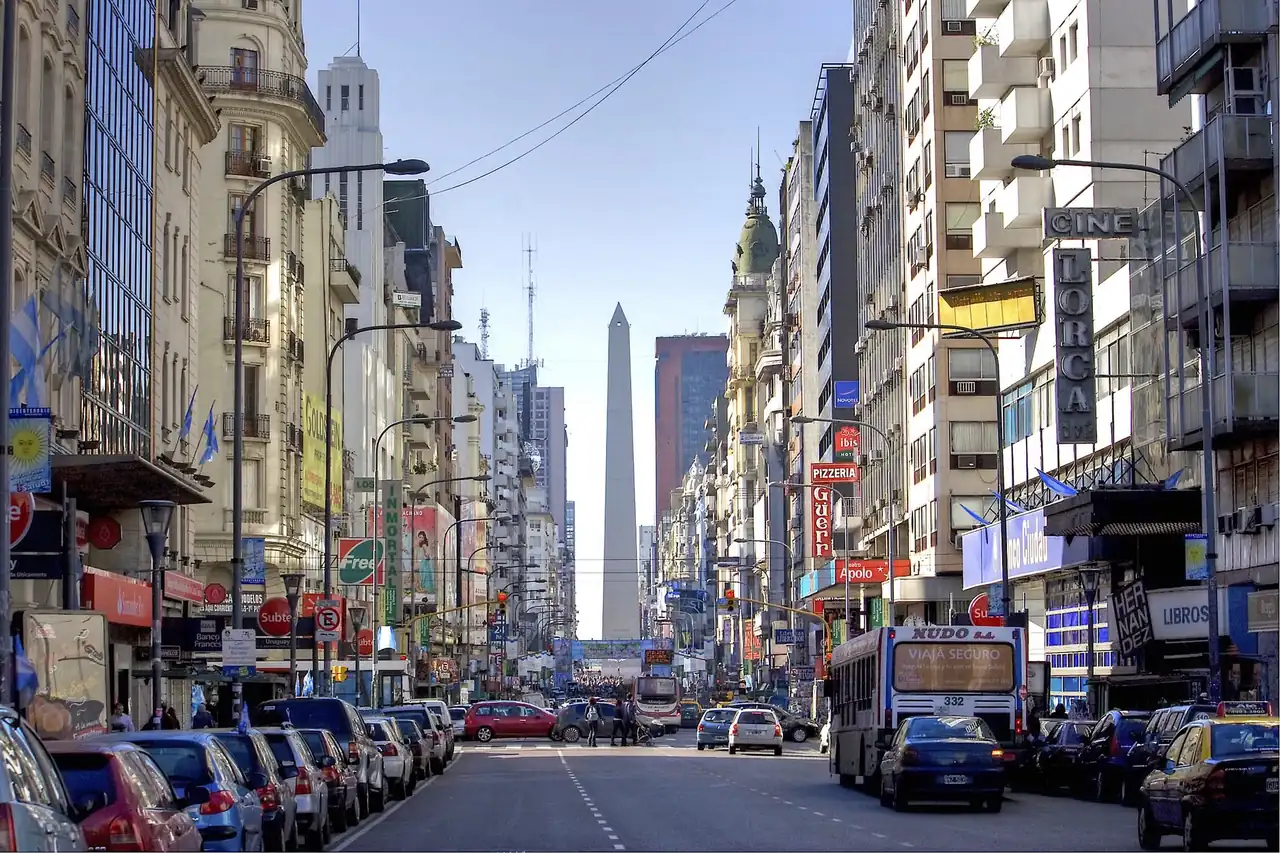
The Buenos Aires Marathon has established itself as one of South America’s most influential road races for a simple and powerful reason: it brings together a fast course with a city that opens itself to runners like a moving stage. It began in 1984 and, since then, has gone from being a national event to becoming a benchmark race for elite athletes and amateurs from many countries.
Its appeal is not based on the stopwatch alone. There is also the feeling of running through a huge capital, with wide avenues, recognizable neighborhoods, and a profile that is almost always favorable for maintaining pace. In a season where every second counts, the Buenos Aires course has earned a reputation for its flat terrain, official certification, and ability to produce internationally competitive marks.
A marathon with its own identity in the South American calendar
The race was born with a long-term vocation and is now organized by the Asociación Civil Carreras y Maratones Ñandú. That continuity matters as much as sporting prestige, because an urban marathon is built not only with a start and a finish, but with years of logistics, permits, traffic management, and a community of runners that returns edition after edition. Buenos Aires has managed to sustain that structure with remarkable consistency.
From its very first editions, the race kept growing in size and prestige. The debut in 1984 drew modest participation compared with today’s figures, but it left a clear sign: the city had the potential to host a major marathon. Over the decades, the event grew to easily surpass 10,000 entrants in several recent editions and come close to record participation numbers, placing it among the continent’s largest races.
That growth also transformed the international perception of the event. It is no longer just a local race with foreign guests, but a meeting point for runners seeking an uncommon combination: speed, urban scale, and a major-event atmosphere. In the Latin American circuit, that mix has real value and explains much of its popularity.
A course designed for fast running
The current route starts and finishes in the area of Avenida Figueroa Alcorta and Dorrego, in Palermo, a location that fits the logistics of a major city race very well. From there, the course traces a broad map of the Argentine capital and passes through very recognizable places: Recoleta, the Obelisk, Corrientes, Plaza de Mayo, San Telmo, La Boca, Puerto Madero, and the green surroundings of Palermo on the way back. It is not a sightseeing tour; it is a succession of urban landmarks that accompany the effort without breaking the rhythm.
The technical key lies in the profile. The course is mostly flat, with few undulations and long straight stretches that make stride stability easier. For recreational runners, that means fewer abrupt changes in effort; for high-level athletes, it offers a real chance to go after a personal best, a course record, or qualification for major races. The event’s recent history confirms that reputation: the best marks have dropped to very competitive times in both men’s and women’s races.
In practical terms, the course favors a sustained-pace race. There are no major climbs or elevation changes that invite mountain-style heroics; here, another narrative dominates, quieter but demanding: control. Buenos Aires rewards those who know how to pace themselves. It is a marathon for a precise stopwatch, where wind, temperature, and managing the long avenues matter just as much as the legs.
Records, winners, and the evolution of the elite field
The list of winners tells a story of sporting transformation. In the early years, Argentine and South American runners dominated, reflecting a race that was still building its international profile. Over time, the presence of athletes from Kenya, Ethiopia, Bolivia, Brazil, and other countries consolidated the leap in level and raised the competitive standard. It is the classic pattern of major marathons: first local roots, then internationalization, then a mature mix of elite and mass participation.
Recent records clearly show that evolution. The current men’s record stands at 2:05:00, set by Evans Chebet in 2019, while the best women’s mark is 2:25:46, achieved by Rodah Tanui that same year. These are times that speak for themselves and explain why the race is among the fastest in the region. In a sport where the course profile can decide entire minutes, a circuit like this becomes a magnet for benchmark performances.
The victories have also helped measure the pulse of the race over the years. There were iconic Argentine wins, national comebacks that lifted the crowd, and a recent period of clear African dominance, very common in the world’s major marathons. That blend of trajectories keeps the competition alive and prevents the story from becoming monotonous. Each edition adds another layer to a long story that is still expanding.
Organization, control, and rules that sustain the experience
Behind an urban marathon lies much more engineering than the public usually sees. In Buenos Aires, the organizers have refined aspects that seem invisible until they fail: road closures, hydration stations, cutoff times, expo access, and bib pickup. The race demands a precise machine, because the city does not stop and runners need a safe, clear, and measured environment.
Registration is handled online, and the race requires the usual conditions for high-level marathons. A medical certificate is one of them, along with a minimum age of 18 on race day. This is not mere bureaucratic decoration, but a way of organizing mass participation over a 42.195-kilometer distance, where physical overload can be serious. In a race of this scale, the health screening is part of the event’s identity.
There is also a competitive structure that makes the start easier to understand. The organizers work with corrals and estimated paces to sort the field, something essential when elite runners, recreational runners, and participants with different expectations all gather together. That mix does not work by itself: it requires disciplined starts, clear signage, and a system that reduces chaos in the early kilometers, where marathons often set their tone.
The Buenos Aires race after the pandemic
Like so many races around the world, Buenos Aires felt the impact of the pandemic. The 2020 edition was postponed, and the 2021 edition had a smaller field, marked by health protocols and restrictions that altered the race’s usual character. Even so, the event maintained continuity and later recovered its natural rhythm, something not all marathons managed at the same speed.
The subsequent recovery was decisive. Participation numbers rose again and the course regained its status as a mass event. In 2024, the race reached a very high level of participation and confirmed that interest was not temporary, but structural. The Buenos Aires marathon once again became, in every sense, a major city event, capable of attracting both serious runners and those looking to complete the 42.195 kilometers in a safe and lively setting.
That post-pandemic rebound matters because it shows the resilience of the model. Large urban races depend on delicate factors: sponsorship, permits, public health, tourism, international image. Buenos Aires managed to rebuild that network and, in doing so, strengthened its position on the map of the most important road races in the Southern Hemisphere.
What runners see between Palermo and La Boca
Anyone moving through the city at marathon pace is crossing more than a sporting route. The start in Palermo offers openness, green spaces, and an initial sense of freedom; later, Recoleta and downtown provide the monumental scale of avenues and buildings; then La Boca brings color, contrast, and a more neighborhood feel; Puerto Madero restores the sense of wide, modern space. The whole thing works like a kind of urban story written in running shoes.
That scenic value does not replace performance, but it does accompany it. In a marathon, the surroundings can be a psychological ally if the runner knows how to read them. A wide, straight stretch helps with stability, a distant visual reference helps gauge sensations, and a recognizable neighborhood provides that emotional lift that sometimes carries runners through the toughest kilometers. Buenos Aires understands that interplay between landscape and effort very well.
The city, moreover, lends itself to a visually rich race without becoming whimsical. There is no elevation change that forces mechanics to break down, nor a succession of turns that fragment the pace. That is why the race has long been classified as one of the fastest in Latin America, a label that is not handed out freely. It is earned through design, certification, and organizational consistency.
Why it still attracts thousands of runners
The Buenos Aires marathon combines several elements that rarely appear together without conflict: history, speed, international scale, and a city that offers spectacle. For an experienced runner, that is almost a perfect equation. For a marathon debutant, it offers a familiar and relatively friendly technical setting, though no less demanding physiologically. Forty-two kilometers always command respect.
Its calendar timing also matters. Held in the austral spring, the event usually benefits from milder temperatures than those of Buenos Aires’ summer, something decisive for endurance. The weather does not guarantee a great performance, but it helps keep the effort from becoming a battle against the heat. In long races, that difference can be as important as good hydration or a well-calculated pace.
Its international popularity is also fueled by its accumulated reputation. When a marathon has proven that it can organize thousands of bibs, attract strong athletes, and produce quality times, it enters a different category. It is no longer chosen only for the destination, but for trust. And in the running world, that trust is worth gold.
A marathon that measures both the city and the person who runs it
Buenos Aires is not just the name of a race. It is a way of understanding the urban marathon as a dialogue between avenues, neighborhoods, and sporting pulse. The race measures the fitness of the person running it, but also the city’s ability to host a large-scale event without losing personality. That double measure is what gives it character.
With more than four decades of history, solid records, and a route that favors performance, the race has gone from being just another date on the calendar to becoming a regional standard. It remains a marathon with the soul of a city and the ambition of a record, a combination that is rare. And that is precisely why it remains so compelling: because amid the asphalt, the spring air, and the distant noise of the metropolis, Buenos Aires continues to offer something difficult to manufacture by decree, a race with memory and speed.
On the map of international marathons, few races manage to condense so clearly the energy of a capital, the tradition of stable organization, and the real promise of fast running. Buenos Aires does so with almost deceptive naturalness. It seems simple from the outside; on the clock, it never is. That is part of its magnetism.



How to prevent thigh chafing: causes and real solutions

Women’s running windbreakers: seven jackets and how to choose

Do more workouts get rid of soreness? A guide for runners

Jaén Half Marathon 2026: Record 3,800 Runners Registered

Men’s short running tights: how to choose the right pair

World Triathlon confirms data breach involving medical data

Izan Edo targets podium at Miyazaki World Cup

María Pérez ranks ninth in World Athletics’ 2026 top ten

Dos Santos, Duplantis and Sawe: World Athlete of the Year finalists

San Silvestre Vallecana 2026: 42,000 places, prices and start times

 Races3 months ago
Valencia Half Marathon 2027: date and registration

 Races3 months ago
Valencia Marathon 2026: entry, ballot and course

 Reviews and Comparisons4 months ago
Asics Gel-Roadmiles 3 for men: review and current price

 Reviews and Comparisons4 months ago
Asics Gel Sonoma 8 Gore-Tex: complete analysis for trail and rain

 Sneakers3 months ago
Saucony Endorphin Pro 4: full review and verdict

 News5 months ago
Strava API 2026: what changes for clubs, challenges and runner apps?

 Reviews and Comparisons5 months ago
Nike Alphafly 3: opinions, sensations, and real key points

 Reviews and Comparisons4 months ago
Under Armour running shoes review 2025-2026: models and key features

 Sports Equipment4 months ago
Shoe sizes in cm: a clear guide to getting the right fit for your footwear

 Sneakers3 months ago
Skechers GO RUN Consistent 2.0 analysis: comfort and limits

 News5 months ago
Valencia Marathon 2026 route: key tips to train and run better

 Sneakers4 months ago
Adidas Adizero Boston 13 for men: review and verdict