Races
Kona Marathon 2026: route, distances, and key details of the event
The Hawaii race combines several distances and a postcard-perfect coastal setting, with the start and finish at Waikoloa Beach Resort.

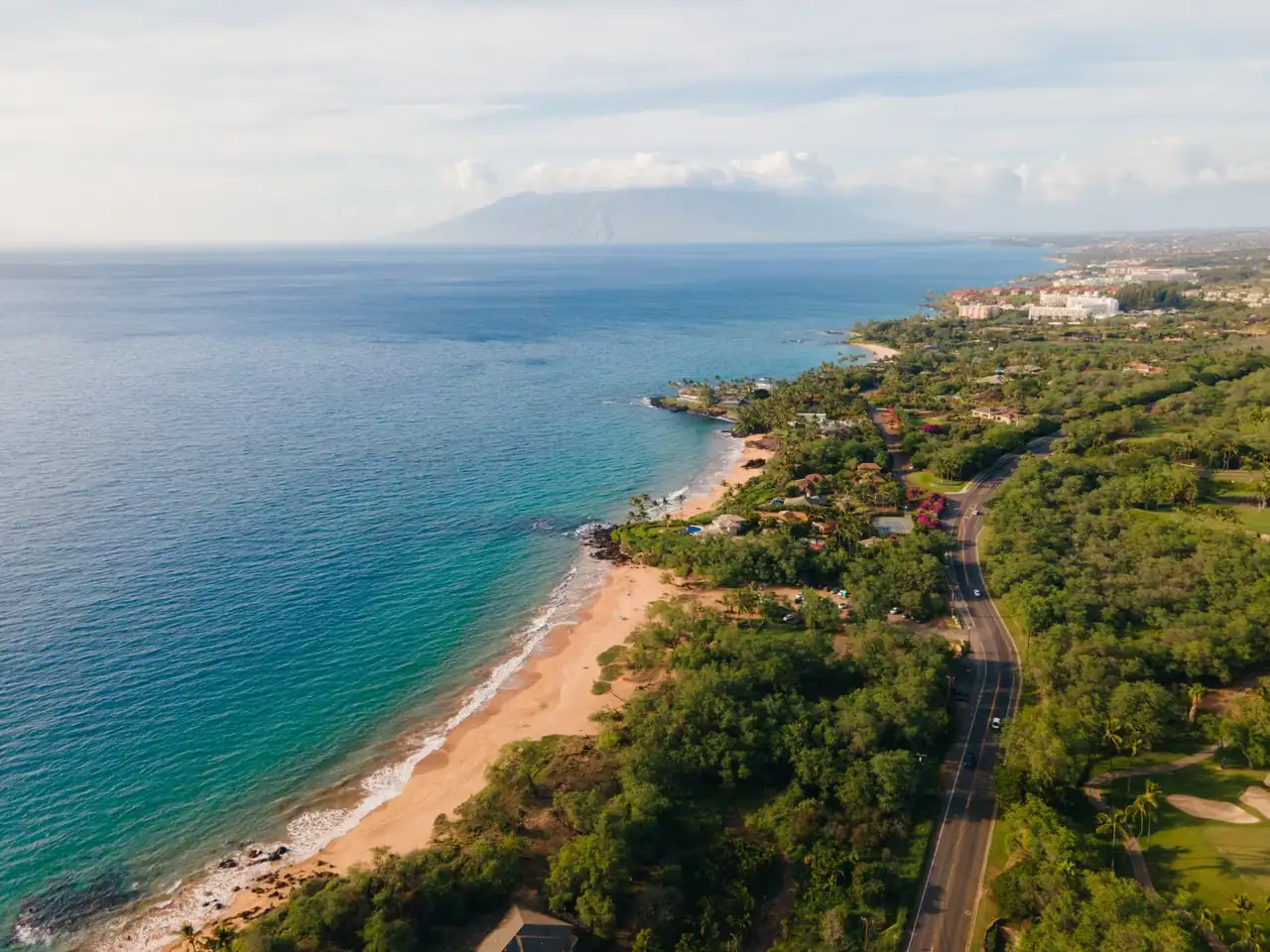
Kona Marathon puts Hawaii back on the running map with an offer that is as scenic as it is accessible: four distances, a fast course, and a coastal setting that turns every kilometer into a moving postcard. The 2026 edition will take place on Saturday, July 4, with start and finish at the Waikoloa Bowl at Queen’s Garden, inside Waikoloa Beach Resort on the island of Hawaii.
The event maintains a clearly festive and sporting profile at the same time. Around it, runners, families, visitors, and volunteers share a day that is not limited to running: there are also finisher medals, aid stations, a community atmosphere, and, in this edition, a schedule marked by its coincidence with Independence Day in the United States. That detail adds a distinctive note to a race that already stands out for its mix of scenery, weather, and resort logistics.
A race born to make the most of the Kohala coastline
The heart of the event is the Kohala coast, a stretch of the island where the sea, the wind, and the light combine with uncommon clarity. The route unfolds around Waikoloa Beach Resort, a setting known for its lagoons, open views of the Pacific, and runner-friendly layout, with long straight sections and a sense of space that is uncommon in more urban marathons.
The organizers have built the event around that natural advantage. It is not aiming for a course with major elevation changes or a mountain race, but for an asphalt experience in which the surroundings matter just as much as the clock. The result is an event designed for those who value both a personal best and the finish-line photo, the island atmosphere, and the feeling of running in a vacation destination that takes sport very seriously.
In addition, the fact that both the start and finish are at the Waikoloa Bowl at Queen’s Garden simplifies the day and concentrates the activity in one place. That helps runners and companions alike, but it also gives continuity to the event: the race does not spread across multiple settings, but is experienced as a single long scene, almost like a ribbon moving in front of the ocean.
The official distances and the type of runner it attracts
The 2026 edition includes a marathon, half marathon, quarter marathon, and 5K. In approximate terms, that equals 42.16 km, 21.08 km, 10.54 km, and 4.99 km. The lineup is broad and strategic: it covers experienced runners, first-timers looking for a manageable distance, and also those who want to take part in a short race during a stay in Hawaii.
The long race remains the main reference, but the other formats are by no means minor additions. The half marathon opens the door to a full experience without demanding the same toll as the marathon; the quarter marathon serves as a bridge for many recreational runners, and the 5K works as an entry point, including for families and companions who want to be part of the atmosphere without taking on a prolonged effort. That mix gives the event a broader profile than a conventional marathon.
In practical terms, the race attracts very different profiles, but they all find something in common: a flat course, concentrated logistics, and a landscape that softens the effort. It is not a race for elevation changes or technical difficulty; above all, it is an asphalt race with the feel of a tourist destination, where distance is experienced almost to the rhythm of the coastline.
Start times and the rhythm of the morning on the island
The organizers place each distance in its own time slot, which structures the day quite clearly. The marathon starts at 05:30, the half marathon at 06:00, the 10.54 km at 06:45, and the 5K at 06:50. These are early hours, but they make sense in Hawaii’s climate and in the logic of a race that aims to take advantage of the morning before the heat builds.
That pre-dawn start is not just an operational whim. On an island where humidity and temperature can rise quickly, starting early is a way to protect performance and make the effort more manageable. It also allows the experience to finish with plenty of the day left over, which fits well with the event’s vacation-like character. Those crossing the finish line can stay for the atmosphere, attend the parade planned by Historic Kailua Village, or, in other editions, watch the fireworks over Kailua Bay.
The schedule also reinforces the impression of a well-organized race. There is no single massive, homogeneous wave, but rather a distribution that reduces congestion and allows each distance to find its own rhythm. In a race with multiple formats, that decision not only improves safety and comfort, but also preserves a certain competitive intimacy for each group.
A flat course that favors consistency
One of the clearest details in the reference information is the course profile: flat course. That feature completely changes the way the race is read. Compared with mountain marathons or urban routes broken up by turns and elevation changes, the priority here is to maintain cadence, avoid abrupt changes in stride, and let the runner settle into a steady pace from the start.
For the marathon and half marathon, a flat course does not guarantee an easy time, but it does reduce the fatigue associated with elevation gain. In a race by the sea, wind can become the factor that replaces hills: invisible, changeable, and sometimes more demanding than the terrain itself. That is why this type of event tends to reward those who know how to pace themselves calmly, without obsessing over pushing too hard too soon.
The available information places much of the action around the resort and its views over the Pacific. That suggests an open, bright asphalt experience, with broad stretches where the scenery matters almost as much as the pace per kilometer. In a marathon like this, the stopwatch coexists with a more sensory image: the horizon line, the shimmer of the water, and the feeling of running through an exceptionally clear morning.
Waikoloa Beach Resort as a sporting and tourist setting
Waikoloa Beach Resort is not just a backdrop. It defines the race’s identity. Its lagoons, golf courses, and proximity to the ocean give the event a very recognizable aesthetic, in which the green of the grass, the blue of the water, and Hawaii’s volcanic stone create a powerful visual palette. Few races can boast such an environment so closely tied to the idea of a getaway.
That has obvious advantages for the event’s image, but also for the participant experience. Landmarks are easier to remember when the surroundings stand out: a lake, a turn by the resort, a straightaway facing the sea. All of that helps make the race more memorable and ensures that, in the end, it is remembered not just as a finishing time, but as a specific morning in a specific place.
The combination of sport and tourist destination explains, in part, the event’s popularity among runners traveling from outside Hawaii. It is not only about competing, but about turning the trip into a complete experience. In that sense, the race acts as a bridge between the running calendar and the logic of long-distance travel, with a celebratory component that sets it apart from other marathons with a more rigid profile.
An edition marked by July 4
The 2026 date adds an element of uniqueness: the race takes place on July 4, a public holiday in the United States. That timing gives the event a special tone because the day carries added symbolic weight, both for local runners and for visitors. Sport blends with a date usually associated with parades, gatherings, and community celebrations.
The organizers themselves emphasize that festive character with the idea of running, collecting the medal, and then staying for the Historic Kailua Village parade and the fireworks display over Kailua Bay. It is an approach that turns the finish line into the beginning of another scene, something unusual in races where everything ends as soon as the clock stops. Here, by contrast, the day stretches on and the finale has a second life.
That detail is no small matter from an editorial standpoint. A marathon that coincides with such a recognizable date gains a powerful narrative element: it is not only about running in Hawaii, but about running on a day that amplifies the atmosphere, the crowd, and the sense of collective celebration.
How the event is experienced beyond the stopwatch
The Kona Marathon does not end with the official result. The organizers’ own language speaks of celebration, community, and volunteering, a trio that often makes the difference between a decent race and a memorable one. The presence of families, local businesses, nonprofit organizations, and visitors creates a social mix that gives texture to the day.
That community aspect is especially visible in destination races. The runner is not only competing; they are also engaging with a place that makes an effort to present itself as welcoming, orderly, and open. The finisher medal, snacks, on-course support, and post-race atmosphere are all part of an experience meant to feel complete, not purely competitive.
The tourist dimension, moreover, does not dilute the sporting value. On the contrary, it makes the race more accessible for anyone wanting to combine vacation and running without giving up a well-organized event. In that context, the marathon feels less like an isolated feat and more like a central piece within a long weekend in which sport sets the pace, but does not take over everything.
What to keep in mind before pinning on a bib
Public information confirms that the race takes place in an environment of asphalt, early heat, and a flat course, three features that define the strategy of any runner arriving in Waikoloa. The start time matters just as much as the distance, and the coastal setting can influence the perception of effort more than it might seem. It is not unusual for a race like this to be run cautiously at first and with a certain discipline in hydration and pace control.
It is also worth choosing the distance carefully. The quarter marathon, for example, is not a standard official distance in every race calendar, but here it is presented as a perfectly integrated option within the event’s lineup. That opens an interesting door for those who want a longer, but not full, experience in an environment that can be demanding because of weather and logistics even if the course profile is friendly.
In short, the race rewards consistency. It does not require mountains, but it does demand respect for the Hawaiian morning, for the humidity, and for effort management in a setting where beauty can be distracting. And in an event with such a strong visual component, getting distracted too early usually comes at a cost in the final stretch.
An Hawaiian event that blends sport, scenery, and celebration
The value of the Kona Marathon lies in that uncommon combination of elements: a flat route, several distances, a resort as the base, and a date that gives it a strongly festive tone. It is not just a marathon well placed in the calendar; it is a race that draws on geography and community to build its own identity.
That balance explains why it continues to attract runners looking for more than a bib. Here there is coastline, local history, island atmosphere, and a sense of a race that extends beyond the asphalt. The event starts very early, but its memory lasts longer: at the finish, in the parade, in the blue of the Pacific, and in the certainty of having run in one of the Pacific’s most recognizable settings.
In a calendar saturated with similar races, Kona retains a clear personality. Its strength lies not in toughness or extreme epic drama, but in the clarity of its proposition: to run by the sea, in Hawaii, on an orderly course and in an environment that turns the sporting experience into something broader. Few races summarize so well the idea that running can also be landscape, celebration, and memory.
You may also like: Kauai Marathon: course, date, and key details of the race.



How to prevent thigh chafing: causes and real solutions

Women’s running windbreakers: seven jackets and how to choose

Do more workouts get rid of soreness? A guide for runners

Jaén Half Marathon 2026: Record 3,800 Runners Registered

Men’s short running tights: how to choose the right pair

World Triathlon confirms data breach involving medical data

Izan Edo targets podium at Miyazaki World Cup

María Pérez ranks ninth in World Athletics’ 2026 top ten

Dos Santos, Duplantis and Sawe: World Athlete of the Year finalists

San Silvestre Vallecana 2026: 42,000 places, prices and start times

 Races3 months ago
Valencia Half Marathon 2027: date and registration

 Races3 months ago
Valencia Marathon 2026: entry, ballot and course

 Reviews and Comparisons4 months ago
Asics Gel-Roadmiles 3 for men: review and current price

 Reviews and Comparisons4 months ago
Asics Gel Sonoma 8 Gore-Tex: complete analysis for trail and rain

 Sneakers3 months ago
Saucony Endorphin Pro 4: full review and verdict

 News5 months ago
Strava API 2026: what changes for clubs, challenges and runner apps?

 Reviews and Comparisons5 months ago
Nike Alphafly 3: opinions, sensations, and real key points

 Reviews and Comparisons4 months ago
Under Armour running shoes review 2025-2026: models and key features

 Sports Equipment4 months ago
Shoe sizes in cm: a clear guide to getting the right fit for your footwear

 Sneakers3 months ago
Skechers GO RUN Consistent 2.0 analysis: comfort and limits

 News5 months ago
Valencia Marathon 2026 route: key tips to train and run better

 Sneakers4 months ago
Adidas Adizero Boston 13 for men: review and verdict