Races
Marquette Marathon: complete race guide and key facts
The Michigan race brings together a marathon, half marathon, and 5K on a fast course, with the start in Ishpeming and the finish in Marquette.

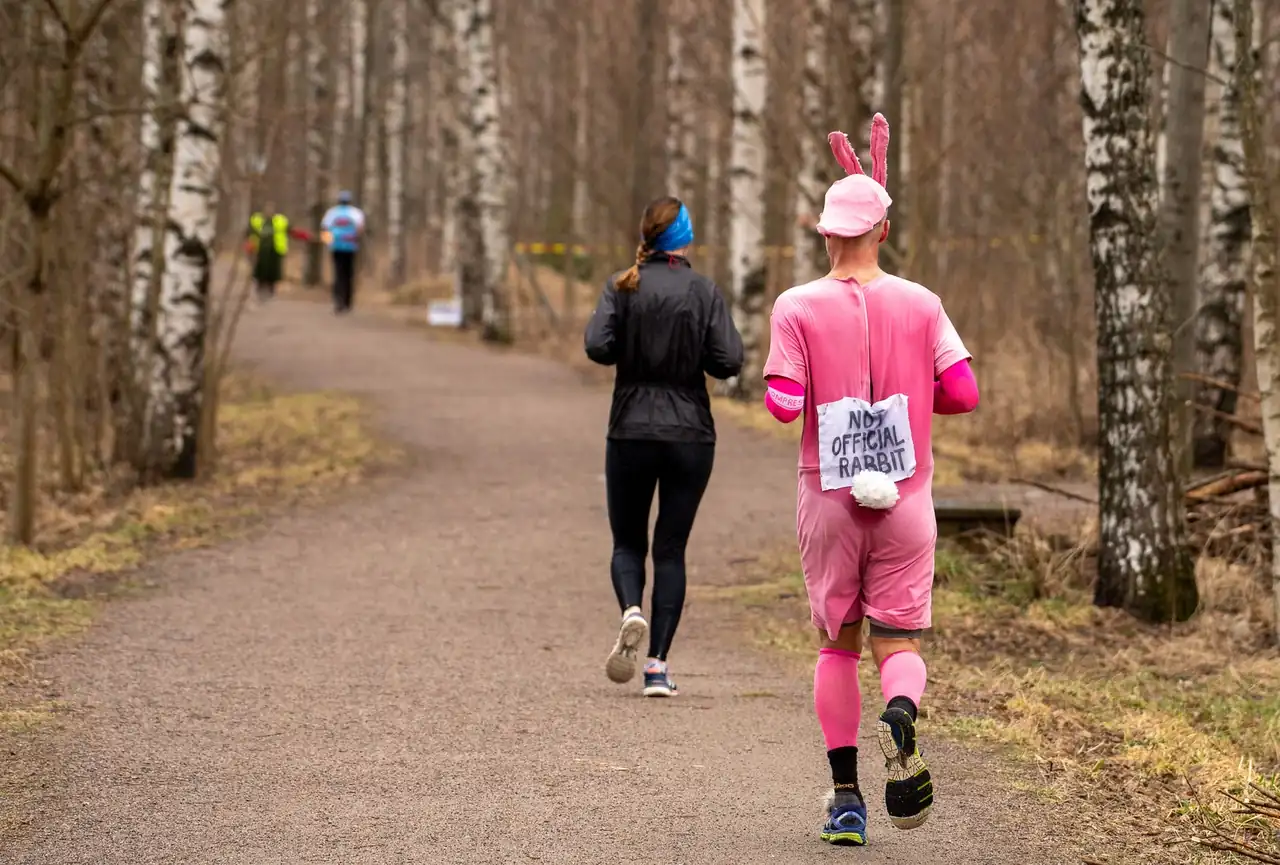
The Marquette Marathon has established itself as one of the most distinctive road races in the American Midwest: point-to-point, with a notable downhill and a finish at the Superior Dome that has already become part of its identity. Born in 1977, the event blends local history, university tradition, and a course that attracts both first-timers and runners chasing a fast time. Its current edition is held on Labor Day weekend, with the marathon at 7:30 in the morning on Saturday, the half marathon in Negaunee, and the Wildcat 5K as the complement to a long and very concentrated day.
The race does not live only on its past. In recent years it has regained momentum with a stabilized course and an organization that has known how to market what really sets it apart: a net drop of nearly 814 feet, stretches along the Iron Ore Heritage Trail, and a finish beside Lake Superior that turns the last miles into a cold, bright, and recognizable postcard. That explains why the name appears repeatedly in conversations about fast races in the United States, with Boston qualifying times that reinforce its reputation as a course friendly to the stopwatch.
A race born in Michigan’s mining geography
The origin of the Marquette Marathon is tied to a territory that shaped the economy and landscape of Michigan’s Upper Peninsula. The first edition was held in 1977 and brought together 49 finishers, a modest figure that today sounds almost handcrafted, but one that fits the spirit of many races from that era: less spectacle and more community. Since then, the race has changed name, organization, and route, though without losing the geographic base that makes it recognizable: Ishpeming on one side, Marquette on the other, and between them the old pulse of iron.
That continuity with place matters. Ishpeming was a mining town built on a stretch of hills and forests, and Marquette grew facing Lake Superior, with a very marked relationship between industry, climate, and human movement. Running there is not like running on a big urban avenue or on a mass-event highway. The runner moves through a textured landscape: a gravel path on the Iron Ore Heritage Trail section, wooded areas, long descents, and open horizons as the coast approaches. The race speaks of the landscape before it even speaks of the time.
Its history has included interruptions and moves, something common in local races that depend on volunteers, sponsorship, and the university calendar. There were stages under the name Northern Shufflers Marathon and, later, a relaunch in 2010 that gave the event a clearer identity. The finish at the Superior Dome, adopted permanently since 2021, helped complete the story: mining start, crossing of a historic trail, and finish under a large university structure that serves as finish line, shelter, and symbol.
A fast course that demands respect
The main sporting appeal lies in the profile. The full marathon covers the standard distance of 26.2 miles, 42.2 kilometers, and does so with a total downhill of nearly 800 feet in the first miles. In practical terms, that usually translates into a more favorable pace than in other marathons with positive elevation gain or broken terrain. That does not mean it is a walk in the park. A sustained descent punishes the quadriceps, alters stride, and forces runners to run smart so they do not pay for it when the body reaches the second half.
The race has earned its fast-race label because the course favors momentum and continuity, but also because of the quality of the surfaces. The stretch along the Iron Ore Heritage Trail runs on a gravel path that enters the forest, and then the landscape opens up with views of Lake Superior. That mix of firm ground, favorable straightaways, and late-summer weather creates a race that can seem gentle on the map and yet demands precision in execution. A long downhill does not forgive impatience: you do run faster, yes, but not necessarily easier.
The course also has an interesting tactical reading for those chasing a personal best. The start in Ishpeming allows a smooth progression toward Marquette, and the finish at the Superior Dome offers a broad, very recognizable ending with the feeling of entering a campus space rather than a simple finish arch. That helps logistics and adds a certain solemnity to the final line. The race does not end on a narrow street or in a closed square, but in a venue with the feel of a major university sporting event.
Schedules, distances, and the weight of the weekend
The weekend structure is designed to spread out the crowd and keep the atmosphere alive over two days. On Friday, the race expo is held at the Superior Dome, a logical space because of its proximity to the finish and its ability to gather bibs, information, and pre-race activity. That same day also features the Pebble Run, a one-mile children’s race that introduces families to the event atmosphere and reinforces the community character of the whole occasion.
Saturday concentrates the main action. The marathon starts at 7:30 in the morning, an early time that helps manage temperatures, traffic, and the runners’ return. The half marathon begins in Negaunee at 9:00, while the Wildcat 5K also gets underway at 9:00 and finishes at the Superior Dome. The simultaneous start times do not reduce the clarity of the schedule, because each race occupies its own place on the map and in the runner’s experience. The day unfolds like a sequence of waves, from marathoners to those who only need a 5K to feel part of the event.
There is a smart idea behind that arrangement: not everyone travels to Marquette for the same reason. Some are after the marquee distance; others prefer a half marathon with the atmosphere of a major event; others sign up for the 5K to run in a festive setting without the physiological load of a long effort. The variety of distances broadens the weekend’s reach and explains much of its longevity. A race with multiple entry points has a better chance of bringing together very different generations, paces, and motivations.
Why so many runners look at this race with interest
The reputation of the Marquette Marathon does not come only from its times. It comes from a rare combination: fast course, attractive setting, and a history that does not feel fabricated at the last minute. In a calendar saturated with events that look very similar to one another, this race retains a very marked personality. It has the tone of a regional race, one of those that remain connected to their territory and do not dissolve into an interchangeable aesthetic.
The practical data also matters. The event often ranks among the fastest Boston qualifiers in the United States, something that is achieved not through marketing, but through geometry and elevation. The initial drop of around 240 meters in the first 8 kilometers offers valuable room for those chasing a competitive time, provided they know how to control the start. Anyone who accelerates too much in the first half may find their legs emptying once the body shifts into defense mode. Speed here is a tool, not a gift.
Added to that is an almost atmospheric dimension. Running near Lake Superior, with the crisp air of September and the possibility of seeing forests, trails, and campus grounds all within one route, creates a different experience from that of a big city. This is not about glamour; it is about identity. And in distance running, identity sells better than many adjectives. The runner is not looking only for a medal, but for a story to remember when the fatigue is long gone.
The winners and the race’s memory
The names that have shaped the race help trace its evolution. Recent winners include solid and very varied performances, from Jesse Greenhagen and Grace Hayward in 2025 to Adam Martin Caldwell and Courtney Rouse in 2024. Before them appear Noah Jacobs, Violet Butts, Chris Scott, and Elizabeth Dollas, in a sequence that shows both the competitive level and the event’s continuity after the pandemic and the organizational changes of the last decade.
The half marathon has gained special prominence because of recent times. Ian Torchia posted a 1:09:57.8 mark in 2024 and then raised the bar with an even more striking run in 2025, while Kathy Vandehy set a very strong women’s record in 2023. The Wildcat 5K also features fast times and recurring protagonists, a sign that the race serves not only as a complement but as a true showcase of speed. The winners’ lists function as a sporting biography of the event, with its cycles, pauses, and small changes of era.
Looking at the history reveals something else: this is not a race built on novelty alone. The 1977 marathon, the later period under other names, the 2020 interruption, and the 2010 reactivation explain a path less linear than that of the major marathons, but more human and more fragile. That is part of its journalistic value. An event that survives changes of name, course, and calendar says a great deal about the relationship between a community and its race.
The race weekend as a complete experience
Anyone coming to the Marquette Marathon encounters more than just a bib and a start time. The event is built around the Friday expo, transportation logistics, staggered schedules, and the use of the Superior Dome as a reference point. For the runner, that reduces friction and turns the stay into a clear routine: arrival, bib pickup, course familiarization, and the Saturday dawn start. For companions and spectators, the organization offers several places to follow the day’s rhythm without getting lost in unnecessary travel.
The finish at the Superior Dome has a lot to do with that idea of clarity. A closed, spacious, and well-identified finish helps both the event production and the runner’s perception. The effort ends in a recognizable space, not in an improvised setting. And in a distance race, that matters. The memory of fatigue blends with the image of the place where it all ended, and the clearer that image is, the easier it is for the race to stay in the mind of whoever runs it.
The other interesting feature is the coexistence of paces. On the same morning, marathoners, long-distance half marathoners, 5K speedsters, and families with children in the Pebble Run all share the scene. That mosaic gives the event a different kind of breathing room, closer to an athletic community festival than to a simple linear competition. The Marquette Marathon works like a small ecosystem, with its elite runners, ambitious amateurs, and occasional participants.
What explains its staying power on the U.S. calendar
Its endurance comes from a very specific combination of factors: a favorable course, a history with local roots, an organization that has managed to stabilize the race, and a strategic date during Labor Day weekend. That set-up allows it to occupy a very particular place in the U.S. autumn calendar, when many runners are looking for one last chance to race fast before the season changes. The race benefits from that time of year, without the hardest summer heat and still far from Michigan’s winter severity.
The economic dimension also helps explain it. Various estimates place it as an event that brings a notable impact to the Marquette community, something common in mid-sized races that attract participants, companions, and local spending over a long weekend. Hotels, dining, and transportation all move in step with the runners. Distance races do more than measure times; they also move a modest economy that can be felt in bars, streets, and lodging.
At bottom, what keeps the event alive is a simple and difficult formula: geographic identity, classic distance, and a recognizable experience. It does not need excessive embellishment to justify its place. Its strength lies in the combination of forest, iron, lake, and well-designed asphalt. And in a discipline so crowded with stories, that mix still carries real weight.
A marathon best understood from the ground up
The Marquette Marathon is not just a date on the calendar or a list of winners. It is a race that can be read on the map and in the body of whoever runs it. The start in Ishpeming, the passage along the Iron Ore Heritage Trail, the initial descent, the finish at the Superior Dome, and the coexistence with the half marathon and 5K compose a very specific, almost cinematic scene that explains why the event continues to draw interest year after year.
Its journalistic value lies in the mix of tradition and utility. It has enough history to matter, enough data to measure it, and enough personality to set it apart. At a time when many races seem designed to resemble one another, this one still retains something harder to manufacture: a clear geographic footprint. And in running, that footprint is often the difference between just another race and a race with memory.
What emerges is a portrait of an event that combines the precision of the clock with the texture of place. Marquette offers more than kilometers; it offers context. And at the heart of that proposal is the reason for its staying power: a fast marathon, yes, but also a narrative of landscape, community, and endurance that continues to find runners willing to experience it.
You may also like: Paavo Nurmi Marathon in Hurley: guide, history, and route and Air Force Marathon: route, distances, and key aspects of the race.



How to prevent thigh chafing: causes and real solutions

Women’s running windbreakers: seven jackets and how to choose

Do more workouts get rid of soreness? A guide for runners

Jaén Half Marathon 2026: Record 3,800 Runners Registered

Men’s short running tights: how to choose the right pair

World Triathlon confirms data breach involving medical data

Izan Edo targets podium at Miyazaki World Cup

María Pérez ranks ninth in World Athletics’ 2026 top ten

Dos Santos, Duplantis and Sawe: World Athlete of the Year finalists

San Silvestre Vallecana 2026: 42,000 places, prices and start times

 Races3 months ago
Valencia Half Marathon 2027: date and registration

 Races3 months ago
Valencia Marathon 2026: entry, ballot and course

 Reviews and Comparisons4 months ago
Asics Gel-Roadmiles 3 for men: review and current price

 Reviews and Comparisons4 months ago
Asics Gel Sonoma 8 Gore-Tex: complete analysis for trail and rain

 Sneakers3 months ago
Saucony Endorphin Pro 4: full review and verdict

 News5 months ago
Strava API 2026: what changes for clubs, challenges and runner apps?

 Reviews and Comparisons5 months ago
Nike Alphafly 3: opinions, sensations, and real key points

 Reviews and Comparisons4 months ago
Under Armour running shoes review 2025-2026: models and key features

 Sports Equipment4 months ago
Shoe sizes in cm: a clear guide to getting the right fit for your footwear

 Sneakers3 months ago
Skechers GO RUN Consistent 2.0 analysis: comfort and limits

 News5 months ago
Valencia Marathon 2026 route: key tips to train and run better

 Sneakers4 months ago
Adidas Adizero Boston 13 for men: review and verdict