Races
Omaha Marathon: date, route, and key details of the 2026 edition
Omaha’s race returns with a marathon, half marathon, and 5K, a downtown course, and the support of the local club.

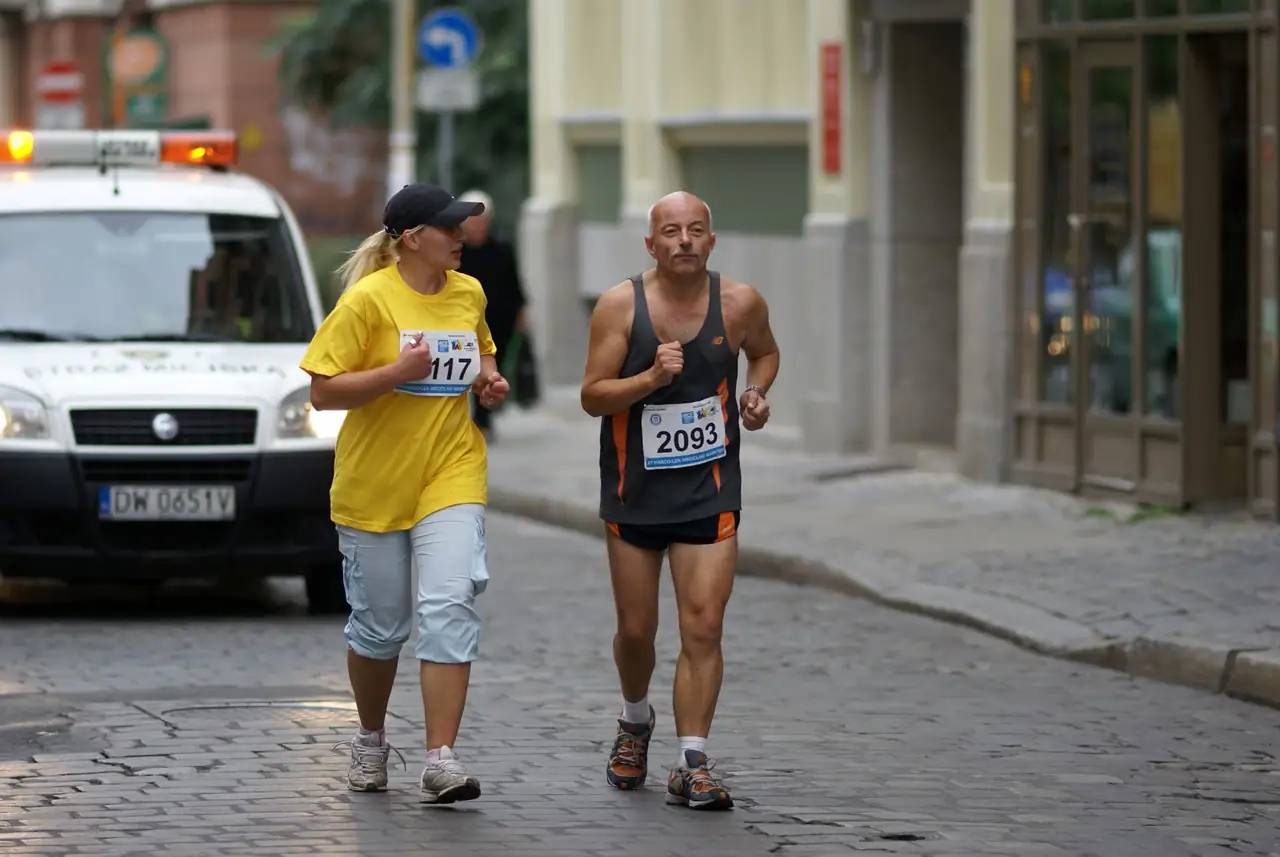
Omaha Marathon returns to the scene with a very unusual story in the U.S. calendar: a road race that blends tradition, local recovery, and sporting ambition. The 2026 edition is set for Sunday, September 27 and will bring together the marathon, half marathon, and 5K in the same event, with downtown Omaha as the main setting.
The race arrives with several elements that explain its appeal. It is Boston-qualifying, offers a course certified by USATF, and in its premier distance it also stands as the RRCA state marathon championship in 2026. Add to that a trait that carries a lot of weight in major urban races: the support of the local community, now once again in charge of the organization through the Omaha Running Club.
A race with deep roots and a carefully measured comeback
The history of this marathon begins in 1975, a fact that places it among the most established distance races in the Midwest. Its evolution has not been linear, as happens with so many urban races that depend on the city’s pulse, volunteer support, and the surrounding sports economy. But that is precisely where part of its value lies: it is not a product made up from one year to the next, but an event with memory.
In 2013 it passed into the hands of HITS, Inc. and became part of its running festivals, a phase that shifted the organizational center. Years later, the race returned to the local environment and is now once again managed by the Omaha Running Club, which emphasizes the event’s roots and its connection to the local running community. That return is not just a logo change; it affects the race’s tone, identity, and the way it presents itself to runners and volunteers.
The practical effect of that shift is noticeable in the event’s messaging. The race is no longer sold as a standalone machine, but as a race designed to showcase downtown Omaha, attract runners of different levels, and sustain a local network that goes far beyond race day. Club, city, and participants form a single narrative structure, something increasingly valued in long-distance races.
Date, distances, and sporting profile of the event
The 2026 edition will be held on September 27, a Sunday that fits the classic window for major fall races in the United States. The program includes a marathon, half marathon, and 5K, a combination that broadens participation without diluting the main focus. For recreational runners, that formula has an obvious advantage: it allows families, first-timers, and experienced athletes to share the day without competing for exactly the same goal.
The marathon remains the symbolic center of the event. Not only because of the distance, but because of its status as a Boston-qualifying race and the recognition it carries within the regional scene. The half marathon offers a more accessible entry point, while the 5K adds pace, atmosphere, and volume of participants. In calendar terms, the event works as a small urban running festival, not as a single isolated race.
The 2026 edition also keeps a message that the club clearly emphasizes: this is an event for first-timers and experienced runners. That mix usually produces livelier races, with more pace diversity and a less rigid atmosphere than other marathons dominated by a single athlete profile. In Omaha, the race seems to be aiming precisely for that balance between competitiveness and accessibility.
A flat, fast, and very urban course
The marathon route is defined by a feature many runners eagerly seek: flat terrain. Historical references speak of 17 miles of flat surface and a course made up mostly of concrete and asphalt. For anyone chasing a personal best, that combination matters more than it may seem; hard pavement is less punishing on pace than a broken-up route, but it demands well-honed running economy.
The course runs largely through downtown Omaha and passes through recognizable areas such as Carter Lake and the Missouri River. That blend of urban scenery and water opens up the route visually without turning it into a postcard-style scenic race. There are no big mountains or dramatic elevation changes, just a succession of wide streets, open stretches, and very clear geographic references. For runners, that often translates into a sense of control; for spectators, into an event that is easy to follow.
USATF certification for all three distances adds an important layer of reliability. In a marathon where the finishing time matters both for qualification and for chasing a personal best, knowing the course is officially measured removes any doubt about the validity of the result. Route accuracy is not an administrative detail; it is a central part of the event’s sporting value.
What it means to be a Boston qualifier
When a race serves as a Boston qualifier, its meaning changes. It does not automatically turn the event into an elite race, but it does place it in a different emotional and competitive league. For many runners, Boston remains almost mythical, so any certified fast marathon gains a special appeal. Omaha belongs to that group because of its flat profile, tradition, and organizational reliability.
That label also influences the makeup of the field. Athletes chasing a target time mix with others who simply want to finish and enjoy the journey. The result is usually a race with many layers: people fine-tuning their pace kilometer by kilometer, runners managing effort prudently, and participants turning the event into a city experience. The Boston qualifier adds prestige, but the local atmosphere keeps it from becoming as cold as some overly technical races.
The other notable distinction is its designation as the RRCA state marathon championship in 2026. That detail, though less known to the general public, works as a boost of legitimacy within the American amateur running ecosystem. It is a sign that the event is not only about participation; it also retains competitive weight and recognized sporting structure.
Organization, services, and the weekend experience
The information released for 2026 points to a race designed with a full weekend in mind. Bib pickup will take place on Saturday, September 26 between 10:00 a.m. and 6:00 p.m. at Millwork Commons, right in downtown Omaha, and there will be no race-day pickup. That detail requires advance planning for something as basic as getting your bib, but it also makes logistics more sensible for an event of this scale.
The event also has a dedicated race app, along with information on accommodations, prizes, and rules. Participants receive a finisher medal, and the organization mentions awards for specific categories, though the overall logic of the event seems more focused on the full experience than on the luxury of a major international circuit. That approach usually works well in urban races with local roots: enough infrastructure to be serious, without losing the feel of a community event.
Another relevant element is the presence of sponsors and charitable organizations linked to the event. The 2026 race will benefit organizations such as the Omaha Police Department Foundation, the Carter Lake Police Department, the Council Bluffs Police Department, and Heartland READY. In city marathons, this kind of connection to local causes strengthens the link between sport and place; the race does not just move runners, it also mobilizes resources and visibility.
The city as part of the course
Omaha is not just a backdrop. Its downtown, its streets, and its relationship with the water help create a recognizable race. The event also promotes the city as a weekend destination, with references to attractions such as the Henry Doorly Zoo, Lauritzen Gardens, and the Luminarium. That tourism dimension is not decorative; in an urban marathon, the surroundings always matter as much as the distance.
For visiting runners, this means the race is set in a city that makes it easy to arrive on Friday, pick up the bib on Saturday, and race on Sunday without major complications. Locating the logistics package in the city center reinforces that sense of convenience. Everything is reasonably close, a quality that reduces pre-race stress and usually improves the overall experience, especially for those tackling 42.195 kilometers for the first time.
The combination of downtown streets, hard surfaces, and broad urban stretches also suggests a race layout suited to solid times, as long as wind and temperature cooperate. September can bring favorable conditions in Nebraska, though in a marathon the weather is never just scenery. Runners know it: in an open city, the climate can turn a good morning into a demanding day or, on the contrary, into the perfect setting for a fast effort.
Who tends to find their race here
Omaha is especially well suited to three profiles. The first is the runner looking for a fast, certified marathon, with Boston or a serious personal best in mind. The second is someone who wants a half marathon with solid organization, atmosphere, and a less intimidating urban route than those found in major capitals. The third is the 5K participant who prefers to experience the atmosphere of a big race day without the demands of a long-distance effort.
The race is also attractive to athletes who value events with a comeback story. The return to local control and the consolidation of a club-led project add an almost civic dimension. Not everything is measured in bibs or times; sometimes a marathon becomes more interesting because it reflects the way a city understands itself. In Omaha, that idea is very much present.
The fact that the local club has more than 500 members and a history dating back to the 1970s reinforces that reading. It is not an improvised organization or a structure that appears only to run one race. It is a sporting network that supports races, training programs, and community actions. The marathon is a central piece of that ecosystem, not an isolated calendar product.
A marathon that combines heritage and ambition
Some marathons stand out for their scale, while others do so for their precision. Omaha belongs more to the second category, though it does not give up a very solid historic aura. Its value lies not in over-the-top spectacle, but in the consistency between what it promises and what it delivers: a serious course, a clear date, well-designed distances, and local-led organization.
That balance between heritage and ambition explains why the race remains on the radar of American runners and visitors. Tradition carries weight, but not as an anchor; rather, as a stable base on which to build a modern edition. And in an increasingly crowded calendar, that mix of reliability, accessibility, and prestige is especially valuable.
The 2026 Omaha Marathon thus arrives with a fairly well-defined identity: an urban, fast, certified marathon deeply tied to its city. It does not need to raise its voice to get noticed. A clean course, a long history, and the feeling that when the last Sunday in September arrives, Omaha once again measures its pulse by the thousands of shoes striking asphalt and concrete are enough.



How to prevent thigh chafing: causes and real solutions

Women’s running windbreakers: seven jackets and how to choose

Do more workouts get rid of soreness? A guide for runners

Jaén Half Marathon 2026: Record 3,800 Runners Registered

Men’s short running tights: how to choose the right pair

World Triathlon confirms data breach involving medical data

Izan Edo targets podium at Miyazaki World Cup

María Pérez ranks ninth in World Athletics’ 2026 top ten

Dos Santos, Duplantis and Sawe: World Athlete of the Year finalists

San Silvestre Vallecana 2026: 42,000 places, prices and start times

 Races3 months ago
Valencia Half Marathon 2027: date and registration

 Races3 months ago
Valencia Marathon 2026: entry, ballot and course

 Reviews and Comparisons4 months ago
Asics Gel-Roadmiles 3 for men: review and current price

 Reviews and Comparisons4 months ago
Asics Gel Sonoma 8 Gore-Tex: complete analysis for trail and rain

 Sneakers3 months ago
Saucony Endorphin Pro 4: full review and verdict

 News5 months ago
Strava API 2026: what changes for clubs, challenges and runner apps?

 Reviews and Comparisons5 months ago
Nike Alphafly 3: opinions, sensations, and real key points

 Reviews and Comparisons4 months ago
Under Armour running shoes review 2025-2026: models and key features

 Sports Equipment4 months ago
Shoe sizes in cm: a clear guide to getting the right fit for your footwear

 Sneakers3 months ago
Skechers GO RUN Consistent 2.0 analysis: comfort and limits

 News5 months ago
Valencia Marathon 2026 route: key tips to train and run better

 Sneakers4 months ago
Adidas Adizero Boston 13 for men: review and verdict