Races
Panama City Marathon 2026: date, route, and key details
The Panama race combines a fast asphalt course, certified route, and a full program for all distances.

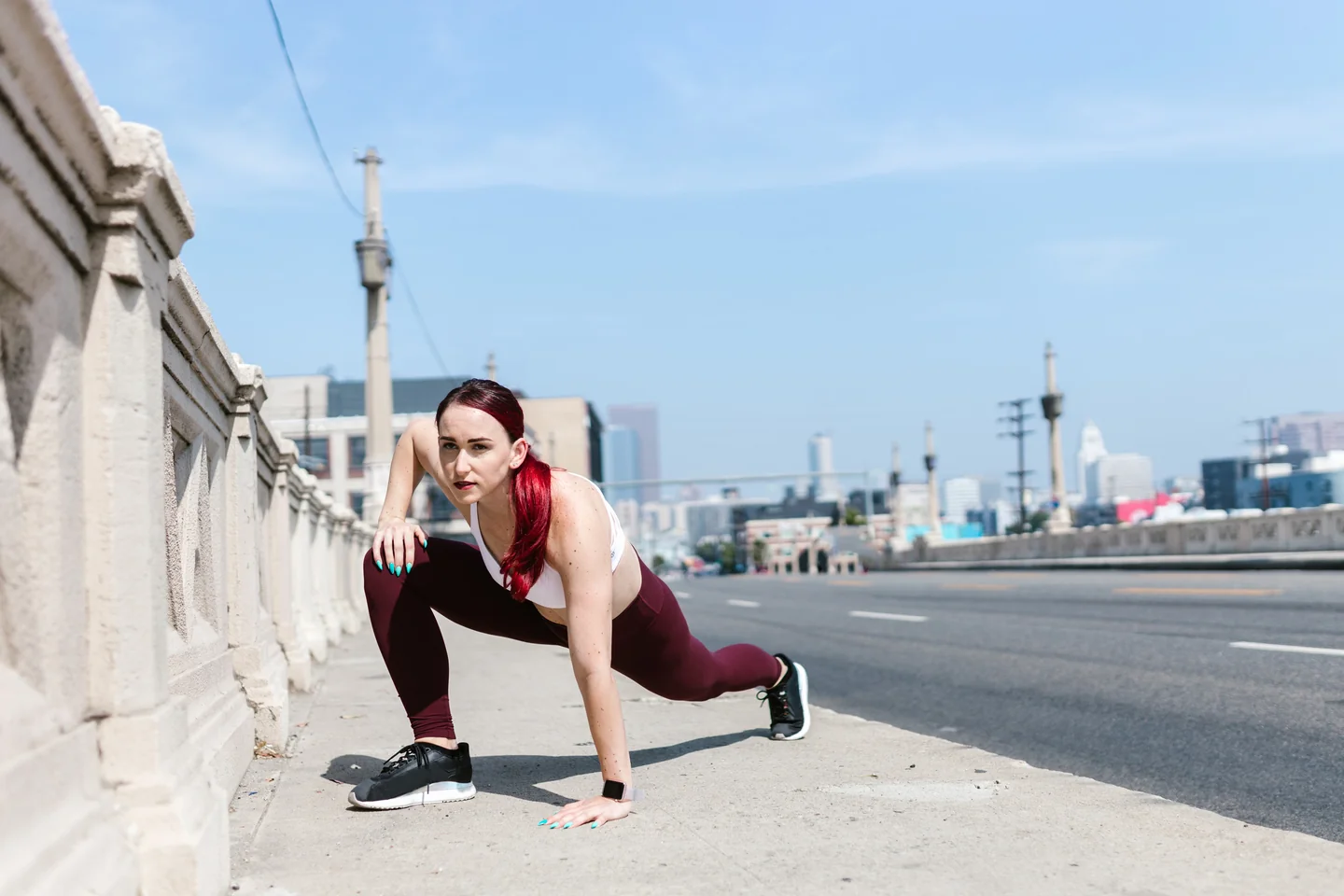
Panama City Marathon arrives in 2026 as one of the major urban events on the Latin American calendar, with a start in Panama City and a clearly competitive profile for those looking for a personal best, atmosphere, and a precisely measured course. The main race will be held on Sunday, September 20, 2026, with the marathon starting at 4:00 a.m., and it will be complemented by a half marathon, 10K, 5K, and a kids’ race.
The event is presented as a race designed to cross the city from end to end, with stretches along the Pacific, passage through wide urban arteries, and a finish that concentrates much of the festive atmosphere. The organization sets the start at ATLAPA and the finish in a highly visible area of the Panamanian capital, with logistics that include an expo, kit pickup, chip timing, and a timing system that distinguishes between official time and net time.
An urban event with international ambitions
The Panamanian race proposal is not limited to stacking up kilometers. Its value lies in the combination of setting, certification, and range of distances. The 42.195-kilometer marathon has a course certified by World Athletics and validated by AIMS, a detail that matters both to those chasing a fast time and to those who want a reliable benchmark for comparing efforts in other races.
There is also a fact that explains much of the interest it generates: the long distance serves as an official Boston qualifier. That places the event in a different category within the regional circuit and attracts runners who are not only looking to complete 42 kilometers, but to do so on a course recognized for its competitive validity. The half marathon, 10K, and 5K broaden the appeal and turn the event into a day open to different runner profiles.
The urban landscape plays a major role in the race’s identity. From ATLAPA, the route continues along Vía Israel and connects with the Cinta Costera, where the modern city opens onto the sea. That mix of asphalt, breeze, and skyline has been a central part of the event’s promotional narrative, but it also explains why the race is seen as a true city race: wide straightaways, visibility, crowd support, and an environment that is not reduced to the stopwatch alone.
Confirmed dates, times, and distances
The 2026 edition is defined with unusual precision for an event of this kind. The expo and kit pickup will take place on September 18 and 19, while Sunday the 20th will be reserved for the main competition. The marathon starts at 4:00 a.m., the half marathon at 5:00 a.m., and both the 10K and 5K share a start time of 6:00 a.m.. The Kids Run will be held on Saturday the 19th at 4:00 p.m..
That schedule reflects an organization focused on safety and traffic control. In the marathon, the time limit is 6 hours, with partial closures at cutoff points and progressive reopening of the road. The half marathon has 5 hours, while the 10K and 5K have a maximum of 4 hours. The children’s race, which is participatory in nature, does not have chip timing or an official classification.
The full program allows the event to be read as both a family and sporting day. The official distances are 42K, 21K, 10K, 5K, and 1K, with a clear logic: to offer an entry point for beginners and a serious platform for those aiming for a demanding result. Much of its appeal lies in that balance.
Certified course and race pace
The marathon is described as a two-lap course, which is no minor detail. For some runners, repeating part of the route makes it easier to control effort; for others, it creates a different mental challenge, because it requires energy management with greater discipline. In any case, the course certification adds a layer of confidence that is not always present in large urban races.
The long route passes through highly recognizable areas of the Panamanian capital and crosses symbolic points such as the seafood market, the coastal strip, and the visual surroundings of the historic district. The main turnaround is located at the Torrijos-Carter bridge, and that turn is not only a geographic marker but also a tactical one: the runner knows where to hold pace, where to save energy, and where to push again toward the finish.
The half marathon shares part of that design, though in a single-lap version. The 10K relies on the same urban corridor, but with a more explosive approach, aimed at those seeking sustained speed. The 5K, meanwhile, serves as an entry point for recreational runners and families, with a short and dynamic enough route to keep interest alive from start to finish.
Hydration is planned approximately every 1.5 to 2 kilometers, with water and isotonic drinks, as well as fruit, energy gels, and medical assistance at several points along the route. In a hot and humid climate like Panama’s, that setup is not decorative: it is part of the race’s real architecture and shapes the runner’s strategy from the first kilometers.
Registration, prices, and kit pickup
Registration is carried out exclusively on the event’s official platform and is structured in pricing stages. This formula, now common in major races, rewards early entry and penalizes waiting. In the information available for 2026, the marathon is listed at a fee of 110 dollars in one of its phases, compared with a previous price of 120 dollars; the half marathon appears at 85 dollars after a prior phase of 90; the 5K drops from 58 to 55 dollars.
The event’s pricing policy is clear: there are no refunds, bib transfers are not allowed without authorization, and there is no race-day registration. That rigidity may seem harsh from the outside, but it responds to a well-known logistical reality in large-format marathons: shirts, medals, chips, permits, and security devices are produced and coordinated long in advance.
Kit pickup is also tightly controlled. The expo takes place during a specific two-day window, with early pickup on Friday the 18th and Saturday the 19th, and the organization insists that the bib, shirt, and chip must be collected there. Kits are not handed out on race day, and identification must be personal, with original ID and registration confirmation. This measure prevents identity fraud and reduces data-control errors.
That protocol, often seen as just a formality, is actually an essential part of the race’s operation. Without an orderly pickup, the start becomes a bottleneck; with it, race day runs more smoothly. The message is clear: logistical punctuality matters as much as training in this type of event.
Prizes, categories, and runner services
The race’s competitive structure distinguishes between the overall category and age-group divisions, for both men and women. In the marathon, the organization offers prizes for overall winners, first national finisher, and age brackets ranging from 18-34 up to 60 and over. The half marathon, 10K, and 5K also award age-group categories, broadening the race’s sporting reach beyond the elite field.
The Kids Run deserves a separate mention. It is not a classic competition, but a participatory experience for children aged 5 to 11, with mandatory accompaniment for the youngest and a finisher medal for everyone who completes the course. That decision, far from being secondary, reinforces the idea that the event aims to build a pipeline and a sporting habit around the main race day.
Planned services include chip timing in the competitive distances, live tracking, medical assistance, and a recovery area at the finish. The organization also states that there will be a medal for all finishers in the marathon, half marathon, and 5K, along with an official shirt. Positioned in the calendar as it is, the marathon combines sporting quality with a full event experience.
The finish has a strong social component. The finish area connects with a post-race atmosphere that includes food and drinks for participants, always under access and credential rules. It is not a disorderly party, but an extension of the effort: that moment when the heart rate drops and the race turns into memory.
Race rules and conditions worth keeping in mind
As in any serious marathon, the rules matter. The bib must be worn visibly on the front of the torso, cannot be folded or altered, and is essential for access to services and classification. External assistance, use of unauthorized vehicles, support outside official aid stations, and any unsporting conduct that threatens fairness or safety are also prohibited.
The race is especially strict regarding identification and kit use. The bib is personal and non-transferable, and the organization warns that running with someone else’s bib may result in immediate disqualification. Doping controls are also included under World Athletics and the World Anti-Doping Agency regulations, a reminder that the race aims to meet international standards and not just the image of a major event.
On the practical side, there are important restrictions on supportive equipment. Strollers are only allowed in the 5K and Kids Race, and they must be placed at the back of the start area. Pets are not allowed, nor are dangerous objects, glass containers, sticks, drones, or unauthorized vehicles. These rules respond to a basic safety logic: more runners, more exposure, more need for order.
Environmental management is also included in the rules. Throwing trash outside the designated areas may result in a penalty, and that is no small detail on a busy urban course. Street events have become more sensitive to this issue because the impact on the city is no longer measured only in road closure hours, but also in cleanliness, coexistence, and respect for the surroundings.
Why this race is gaining ground on the calendar
The strength of the Panamanian race does not lie only in its date or its premier distance. It also lies in the way it combines sport, tourism, and international visibility. Panama City offers a recognizable backdrop of skyscrapers, coastline, and wide avenues, giving the race a powerful image on video and in photographs, but also a functional profile for the runner seeking a measurable and well-supported course.
The fact that the marathon is a Boston qualifier adds an element of legitimacy that often makes a difference. Not every urban race can offer that gateway, much less with an organizational framework that includes chips, checkpoints, time cuts, and technical validation. For experienced runners, that set of conditions matters more than any promotional speech.
There is also a broader reading. In Latin America, major urban marathons compete to attract runners from within and outside their country. In that competition, the balance between certification, logistics, and experience is decisive. Panama City Marathon seems to bet on that triangle with a proposal that does not disguise the marathon’s toughness, but does wrap it in an attractive urban landscape and a well-structured race day.
The result is clear: the race is not just about earning a medal or recording a time. It also serves as a showcase for a city presenting itself through running, with a language that blends performance and destination, street and coast, rigor and celebration. And in that intersection, the Panamanian marathon has found its own identity.
The final take on a race that brings together performance, city, and sea
What sets Panama City Marathon apart is its ability to sustain several layers at once. It is a race for those seeking qualification, for those wanting to debut at the distance, for those running as a family, and for those who value an urban setting with personality. That breadth does not usually come without organizational costs, and precisely for that reason it matters that the event maintains clear rules, defined schedules, and a certified course.
The marathon, in particular, is won in the details: early start time, regular aid stations, traffic cuts, medical control, a validated route, and a finish line that is not just an endpoint, but a meeting place. In a discipline where every second counts, predictability and a serious setup also count. The Panamanian race understands this and turns it into a competitive argument.
The image it leaves is that of an asphalt race with the pulse of a major city, a modern marathon that does not give up visual spectacle or technical demands. Between the start at ATLAPA, the stretch along the coast, and the final straight to the finish, the runner does not merely complete a distance: they cross a moving postcard. And that is probably why the event gains more space each year in the regional running conversation.



How to prevent thigh chafing: causes and real solutions

Women’s running windbreakers: seven jackets and how to choose

Do more workouts get rid of soreness? A guide for runners

Jaén Half Marathon 2026: Record 3,800 Runners Registered

Men’s short running tights: how to choose the right pair

World Triathlon confirms data breach involving medical data

Izan Edo targets podium at Miyazaki World Cup

María Pérez ranks ninth in World Athletics’ 2026 top ten

Dos Santos, Duplantis and Sawe: World Athlete of the Year finalists

San Silvestre Vallecana 2026: 42,000 places, prices and start times

 Races3 months ago
Valencia Half Marathon 2027: date and registration

 Races3 months ago
Valencia Marathon 2026: entry, ballot and course

 Reviews and Comparisons4 months ago
Asics Gel-Roadmiles 3 for men: review and current price

 Reviews and Comparisons4 months ago
Asics Gel Sonoma 8 Gore-Tex: complete analysis for trail and rain

 Sneakers3 months ago
Saucony Endorphin Pro 4: full review and verdict

 News5 months ago
Strava API 2026: what changes for clubs, challenges and runner apps?

 Reviews and Comparisons5 months ago
Nike Alphafly 3: opinions, sensations, and real key points

 Reviews and Comparisons4 months ago
Under Armour running shoes review 2025-2026: models and key features

 Sports Equipment4 months ago
Shoe sizes in cm: a clear guide to getting the right fit for your footwear

 Sneakers3 months ago
Skechers GO RUN Consistent 2.0 analysis: comfort and limits

 News5 months ago
Valencia Marathon 2026 route: key tips to train and run better

 Sneakers4 months ago
Adidas Adizero Boston 13 for men: review and verdict