Races
Tallinn Marathon: course, distances, and key aspects of the race
Estonia’s great athletic event takes in the old town, coastline, and parks over a very full weekend.

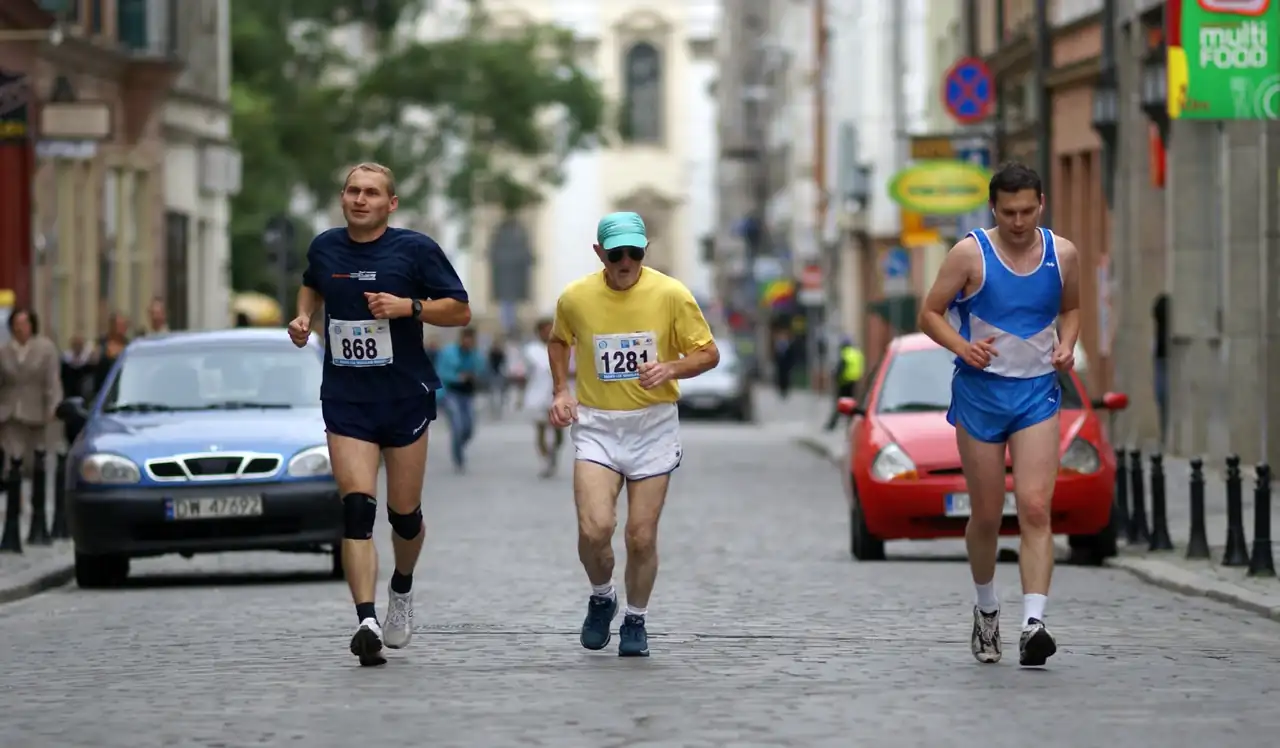
The Tallinn Marathon has established itself as Estonia’s premier athletics event and one of the most recognizable urban races in Northern Europe. Every September, the capital opens its avenues, old town, and waterfront to thousands of runners from dozens of countries, in an event that combines performance, scenery, and an organization designed for all kinds of participants.
The main race is run on an asphalt course that is fast and relatively flat, with the start and finish in the Falgi tee area, next to the historic heart of the city. Around it, a program unfolds that goes far beyond the marathon: half marathon, 10 kilometers, walks, and events for young people and children turn the weekend into a kind of festival of endurance, pace, and mass participation.
A race that has grown with the city
The modern history of the race began in 2010, when the marathon started to be held regularly after a more irregular previous period. The half marathon and 10K had already gained momentum since 2000, which allowed the event to build a solid foundation before taking the definitive leap. Since then, Tallinn has continued to strengthen its presence on the international running map.
Growth was gradual at first, but then it accelerated strongly. In just a few years, the race went from being a local or regional event to becoming Estonia’s largest marathon, with thousands of finishers and an increasingly strong foreign participation. In 2019, the event exceeded 21,000 finishers across all distances and, after the pandemic pause, it regained momentum until reaching more than 25,000 registered runners from 79 countries in 2024, a figure that confirms its tourist and sporting appeal.
Competitive prestige has also accompanied that evolution. The marathon and half marathon carry World Athletics Elite Label status, a mark that raises the technical and organizational level of the event. This is not just a beautiful race; it is also a controlled, certified event that is attractive to top-level athletes, with reliable timing, international standards, and an elite field accustomed to very fast times.
The route: Tallinn seen at running pace
The course is one of the reasons for its fame. The marathon runs through streets, avenues, and pedestrian paths that paint a very complete portrait of the Estonian capital. The old town, declared a UNESCO World Heritage Site, appears like a living postcard; then come the wooded areas, parks, the seafront, and stretches where the Baltic Sea can be felt through wind, cool light, and a clear horizon.
That contrast works almost like a visual signature. The runner moves from medieval stone to the open surfaces of the coast, from the density of the historic center to the breadth of Pirita and its surroundings, in a transition that is not only appealing for those running, but also for those watching. In the same race, the aesthetics of an old city and the feel of a modern, well-measured circuit designed to sustain steady paces coexist.
The marathon route is a single loop and offers a favorable profile for fast times. It is not completely flat like a table, but it is gentle enough that elevation does not become the main feature. The accumulated elevation gain is around 111 meters, a moderate figure for an urban 42.195-kilometer race. In practical terms, that means the runner encounters a fast course, better suited to effort management than to continuous climbing.
The start and finish on Falgi tee place the action in a highly recognizable point in the city, close to Toompea Hill and the historic central area. From there, participants spread out along a route that combines heritage with the coastline and brings the runner back to the starting point after a fairly complete visual journey. For spectators, the event has the charm of a great urban sporting procession; for competitors, the course offers clear reference points and environmental changes that help mentally break up the distance.
Distances for different runner profiles
The marathon is the main race, but the program is designed so that no one is left out because of level or experience. The half marathon, the 10-kilometer race, and the non-competitive variants allow the event to attract both athletes chasing personal bests and amateurs looking for a city experience with an international atmosphere. That breadth partly explains why the race has grown so much: it does not force a choice between elite and mass participation, but rather blends both worlds.
The half marathon is perhaps the most balanced distance in the lineup. It retains competitive appeal, but lowers the entry barrier and usually attracts a large number of participants. The 10K, meanwhile, is the most accessible gateway for those who want to experience the weekend atmosphere without undertaking long preparation. There is also a Nordic walking event over 10 kilometers, a format deeply rooted in Northern European countries and one that reinforces the idea of an open, almost civic event.
In addition, the program includes children’s races and a short event aimed at young people, giving the weekend a family dimension that is uncommon in major road marathons. This combination of distances means Tallinn is not limited to being a meeting point for specialists. It also works as a showcase for mass participation, with local runners, visitors, and companions sharing the city, atmosphere, and logistics for three days.
An event marked by African elite runners and fast records
The winning times in the marathon explain the reputation of the course very well. The men’s victory in 2017, set by Kiprotich Kirui in 2:09:22, still stands as the race’s men’s record. In the women’s category, Mercy Kwambai’s time of 2:31:09 in 2024 set a new benchmark and reinforced Tallinn’s image as a course where fast times are possible if conditions are right.
The dominance of Kenyan runners has been clear in recent years, although there have also been Estonian and Ethiopian victories in different editions. That mix gives the winners’ list a genuine competitive feel, without monotony. In the half marathon, the progression has also been notable: Collins Kipkorir lowered the men’s record to 1:00:23 in 2024 and Beatrice Cheserek set the women’s mark at 1:08:22 in 2023. These are times that place the race in a serious orbit within the European calendar.
The 10K is not far behind either. Tiidrek Nurme and other local names have shaped its history, but the level has become increasingly international in recent years with victories and records from athletes from Kenya, Latvia, Ukraine, and other neighboring countries. In 2024, Agate Caune set a women’s record of 32:09, while Deniss Šalkauskas took the men’s victory. The evolution of the 10K shows how the race has gone from a national showcase to a circuit with its own standing within the Baltic bloc.
These figures are not just statistical decoration. They say something important about the event: its course, the September date, and the organizational quality all favor serious racing, with steady pace and a technical level that does not depend solely on famous names. For recreational runners, this means a very well-measured environment; for elites, a real opportunity to chase a fast time.
September in Tallinn: weather, atmosphere, and logistics
The choice of month is no coincidence. September usually brings cool temperatures to Tallinn, often between 10 and 15 degrees Celsius, a range that is almost ideal for running. The possible presence of wind or light rain adds a typically Baltic layer of uncertainty, but also contributes to the sober and elegant character that surrounds the race. This is not a hot-weather marathon or a heavy-humidity festival: the climate generally works in favor of the effort.
The organization takes advantage of that window to deploy extensive logistics. The event spans an entire weekend, with half of the distances concentrated on Saturday and the marathon reserved for Sunday. That better distributes runner and spectator flows, while also allowing the city to breathe the event without everything happening at once. In mobility terms, it also helps the city center absorb the impact with less friction.
The race environment includes full services that are already part of the experience: aid stations, medical support, baggage storage, showers, massage therapists, personalized bibs, digital certificates, and free public transport for participants under certain conditions. These kinds of details do not always make headlines, but they explain why the race gains loyalty year after year. A marathon is measured not only by its times; it is also judged by how it treats the people who run it.
The presence of pacers, clear signage, and time limits contribute to the sense of order. In the marathon, the cutoff is around six hours; in the half marathon, three. These are standard margins for events of this level and help maintain course safety. The minimum age is also clearly defined: 18 for the marathon and 16 for the half marathon, which fits the logic of a serious, regulated race.
A city brand beyond sport
Tallinn has understood the race as an urban showcase. The course displays the historic center, green areas, and coastline with an effectiveness that no tourist brochure could fully match. In a single morning, the runner crosses stone, glass, water, and parks. The city does not merely lend its streets; it becomes the event’s narrative setting, with an identity captured in the photos, videos, and memories of those who take part.
That symbolic value matters a great deal in a marathon of this kind. The race is not only seeking fast times or high participation, but also projecting an international image of Estonia as a sporting and cultural destination. In fact, the combination of medieval architecture, coastal openness, and professional organization has turned the event into one of the best gateways to getting to know the capital from another angle, a calmer one but also a more demanding one.
The community element is no less important. Streets animated by residents, families, and curious onlookers create an atmosphere that helps the runner not feel alone even in the longer stretches. In urban races, that support can change the tone of the day: a timely cheer, an improvised band, a sidewalk full of voices. Tallinn is no exception. The race has earned a reputation for good organization and attentive crowds, two assets that matter as much as the stopwatch.
What sets Tallinn apart from other European marathons
Not all major urban marathons offer the same mix. Some live off monumental scenery; others, off sporting prestige; a few manage to balance both. Tallinn belongs to that small group for a simple reason: the city seems tailor-made to be run. It is neither an overwhelming metropolis nor a one-postcard backdrop, but a compact, walkable, and visually very coherent place.
The circuit benefits from that human scale. The runner does not spend hours on faceless avenues or cross endless peripheral industrial zones; on the contrary, they move through areas with visual character, historical memory, and natural transitions. That improves the experience without sacrificing competitiveness. Compared with other major European participation races, Tallinn offers a more intimate feeling, even though the number of entrants is now clearly international.
The regularity of the calendar also matters. Held in September, the race has become a late-summer benchmark for many distance runners. Halfway between returning to routine and the end of the season, it fits well into the plans of anyone looking for one last big road race. The Baltic calendar also adds extra value for runners seeking events outside the more crowded circuits of Western Europe.
That combination of date, course, weather, and technical prestige explains why the Tallinn Marathon has gained weight without needing flashy gimmicks. It does not need exaggeration to be attractive. Its appeal is enough: an old city, an open coast, an elite field ready to run fast, and thousands of participants turning September into a small map of strides.
An event that is already part of the big running map
The Tallinn Marathon has gone from being a national race to a reference event in Northern Europe. Its growth is understood not only through the number of entrants, but through the coherence of its concept: a certified marathon, a high-level half marathon, an accessible 10K, and a city that knows how to present itself without losing its authenticity. That balance is difficult and, precisely for that reason, valuable.
Its evolution leaves a very clear picture. The race has withstood changes, the pandemic, format adjustments, and the passage of time without losing its identity. It has kept its urban pulse and international vocation, added fast athletes and entire families, and made Tallinn a capital that moves to the rhythm of strides in September. The result is an event that can no longer be explained only by its winners, but by the human landscape gathered around them.
At heart, that is the race’s great strength: it is not limited to measuring times. It also measures a city’s ability to open itself to visitors, the power of an event to bring sport and heritage together, and the lasting relevance of a well-made marathon in an era where flashy races abound but few leave such a clear imprint. Tallinn achieves this with a blend of Nordic sobriety and international ambition that rarely fails.
You may also like: Vilnius Marathon 2026: route, dates, and key race details.



How to prevent thigh chafing: causes and real solutions

Women’s running windbreakers: seven jackets and how to choose

Do more workouts get rid of soreness? A guide for runners

Jaén Half Marathon 2026: Record 3,800 Runners Registered

Men’s short running tights: how to choose the right pair

World Triathlon confirms data breach involving medical data

Izan Edo targets podium at Miyazaki World Cup

María Pérez ranks ninth in World Athletics’ 2026 top ten

Dos Santos, Duplantis and Sawe: World Athlete of the Year finalists

San Silvestre Vallecana 2026: 42,000 places, prices and start times

 Races3 months ago
Valencia Half Marathon 2027: date and registration

 Races3 months ago
Valencia Marathon 2026: entry, ballot and course

 Reviews and Comparisons4 months ago
Asics Gel-Roadmiles 3 for men: review and current price

 Reviews and Comparisons4 months ago
Asics Gel Sonoma 8 Gore-Tex: complete analysis for trail and rain

 Sneakers3 months ago
Saucony Endorphin Pro 4: full review and verdict

 News5 months ago
Strava API 2026: what changes for clubs, challenges and runner apps?

 Reviews and Comparisons5 months ago
Nike Alphafly 3: opinions, sensations, and real key points

 Reviews and Comparisons4 months ago
Under Armour running shoes review 2025-2026: models and key features

 Sports Equipment4 months ago
Shoe sizes in cm: a clear guide to getting the right fit for your footwear

 Sneakers3 months ago
Skechers GO RUN Consistent 2.0 analysis: comfort and limits

 News5 months ago
Valencia Marathon 2026 route: key tips to train and run better

 Sneakers4 months ago
Adidas Adizero Boston 13 for men: review and verdict