Races
Vilnius Marathon 2026: route, dates, and key race details
Vilna blends history, rhythm, and a fast course in an event that is already a fixture of the Baltic calendar.

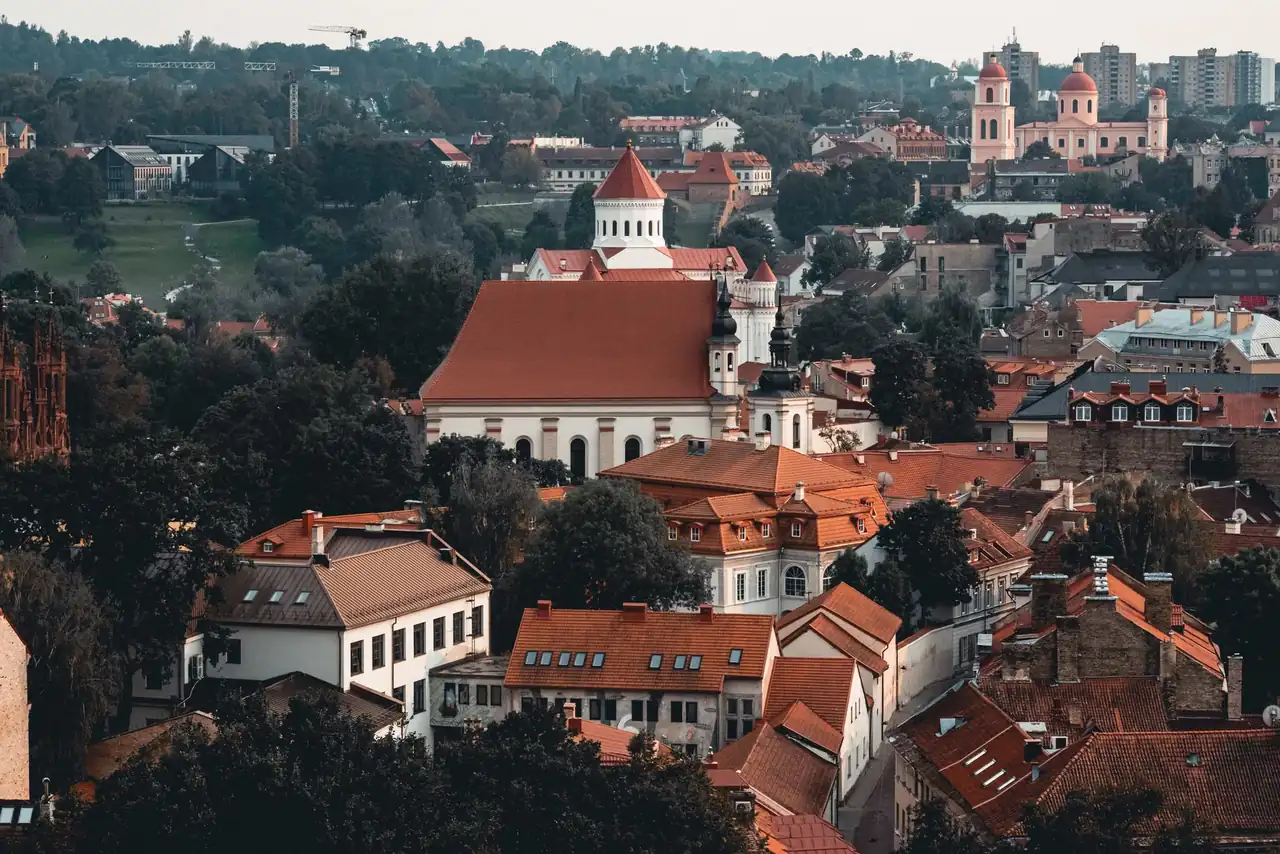
The Vilnius Marathon has gone from being a local event to becoming one of the most recognizable urban races in the Baltic region. Its formula is simple and effective: a historic center declared a World Heritage Site, a course that links parks and the riverfront, and a range of distances that opens the door to both elite runners and thousands of enthusiasts.
The 2026 edition is set for September 13, with the start and finish at Cathedral Square, right in the heart of the city. That location concentrates much of its sporting and tourist appeal: the runner crosses a compact, photogenic, and very walkable capital, where the race blends with urban life without losing the feel of a major event.
An urban marathon with its own identity
The race has established itself as Lithuania’s largest running festival and one of the fastest-growing in the region. Its modern history began in 2004 with the full marathon distance, although its roots go back to 1990 and the later boost of 2001, when a mass 10-kilometer race laid the foundation for the current structure. Since then, the program has expanded with the half marathon, the 10K, the 5K, and children’s races.
That evolution explains its mixed character: it is not just a 42.195-kilometer competition, but a broad participation day, with room for different levels and ages. The result is a street atmosphere that feels like a small sporting carnival, with runners, families, and spectators sharing the same stage for hours.
The organization has also strengthened that international profile. The race has held AIMS certification since 2007 and, according to the data published by the organizers themselves, has exceeded 10,000 participants in various editions. In 2019 it surpassed 11,000 registered runners, and in 2020 it brought together thousands of runners across all distances, a figure that places it among the benchmark events in the Baltic calendar.
Which distance to choose and what each one is like
The official 2026 program includes marathon, half marathon, 10 kilometers, 5 kilometers, and a 200-meter children’s race. That variety is not just a commercial add-on, but the key to its success as a city event. Experienced runners find a course suited to sustained pace, while those looking for their first competitive experience can enter through the 10K or 5K without missing out on the day’s main showcase.
The marathon and half marathon share a start time of 08:30, a reasonable hour to make use of daylight and keep temperatures under control if the weather cooperates. The 5K starts at 14:30 and the 10K at 16:00, a schedule that organizes participant flow well and avoids morning congestion. The children’s race, meanwhile, is set at a symbolic distance of 0.20 kilometers, designed to bring in younger participants without demanding a competitive effort.
Vilnius’s sporting logic is very clear: distances to compete, distances to test yourself, and distances to enjoy the event as a family. That makes it a less rigid day than other classic urban marathons, but no less serious for that. In fact, that breadth multiplies its value as an occasion and broadens the profile of those attracted to the race.
Course, heritage, and a fast-race feeling
The main visual appeal of this event lies in the course. The start and finish at Cathedral Square place runners beside one of Vilnius’s symbols, with the old town as a backdrop and an atmosphere that shifts between the solemnity of the historic center and the freshness of green spaces. The route links the old town, parks, and the Neris riverfront, and in some stretches also goes into wooded areas of Valakampiai and Vingis Park.
That design has several consequences. The first is aesthetic: the race is not limited to a loop of anonymous avenues, but passes through streets of heritage value and recognizable scenery. The second is physiological: the sections with shade and the presence of the river soften the thermal sensation for much of the effort. And the third is competitive: the profile and continuity of the course favor fast times, provided the wind and weather cooperate.
A new route debuted in 2019 specifically to showcase more distinctive corners of the city. The organizers described it as a way to add new kilometers through streets that had not previously featured on the race map. That update reinforces the experience for repeat runners: this is not a static postcard, but a race that adapts and renews itself to keep showing the city from a different angle.
A setting that combines the old city and the riverfront
Vilnius has something that works especially well in a race: it is compact, but not closed in on itself. The runner leaves the urban core and, almost without noticing, moves into a sequence of open spaces where the pace changes with the landscape. The old town provides cobblestones, façades, and historical perspective; the river adds continuity and air; the parks bring calm and a sense of relief that in a marathon feels as welcome as a glass of cold water.
UNESCO included the old town on its World Heritage list, and that shows in the density of the experience. This is not just a race that passes through a beautiful place: it is an event built around a city with visible layers of history, from Gothic and Baroque architecture to its medieval layout. That urban richness gives the race a dual appeal, both for competitors and for those who come along.
For spectators, the advantage is proximity. The cheer zones are not scattered across miles of lifeless road, but connected by walkable distances. That makes it possible to see runners several times during the morning without needing long transfers or complex logistics. In an urban marathon, that convenience is worth almost as much as good shade.
Date, schedule, and basic logistics for the 2026 edition
The organizers have set the 2026 event for Sunday, September 13, with the main start and finish area at Cathedral Square. That detail matters more than it may seem, because it determines the whole weekend logic: bib pickup beforehand, arriving with enough time on race day, and planning transportation in an area that, during the race, completely changes its relationship with traffic.
The registration data published by the organizers and the sales platform show a calendar with entries closing in the days before the race. In 2026, registration appears to close on September 5 on the international platform consulted, though this should be understood as an operational reference for that specific edition and not as a permanent rule. Prices also vary by distance: €15 for the children’s race, €29 for the 5K, €39 for the 10K, €59 for the half marathon, and €69 for the marathon.
Bib pickup usually takes place before race day, during a pre-race expo or packet collection window. That detail avoids last-minute improvisation, especially if the runner is coming from outside the city. It is also worth remembering that race morning brings traffic closures and public transport changes in the center, something common in any major urban race, but especially sensitive in such a concentrated area as Vilnius’s historic core.
What has been built over the years
The competitive history of the Vilnius Marathon can be read almost like a population graph. In the early years there were pauses and difficulties, but the race found its shape from 2001 onward and made the leap to the premier distance in 2004. The half marathon arrived in 2006 and, three years later, joining AIMS provided a framework of certification and international recognition that consolidated the course.
Since then, the event has continued to add layers. Not just more participants, but more symbolic weight within the Lithuanian calendar. The organizers note that the event doubled the number of runners between 2012 and 2013 and reached around 10,000 participants. That scale matters because it changes how the race is perceived: it stops being an isolated sporting test and becomes a date marked on the city’s calendar.
The records also provide context for its sporting level. The men’s marathon record is 2:19:49, set by Dmitrijs Serjogins in 2020, and the women’s record is 2:39:40, set by Diana Lobačevskė in the same edition. In the half marathon, the best historical marks cited by the organizers are 1:05:13 for men and 1:13:59 for women. These numbers help show the course’s potential when conditions are favorable.
Recent results and competitive level
The standings from recent editions paint a picture of a serious competitive field, with times that are solid by European urban race standards. In 2025, Lukas Tarasevičius won the men’s marathon with 2:28:33, while Modesta Bužerytė took the women’s victory with 2:55:23. In the half marathon, Remigijus Kančys led the men’s race with 1:11:02 and Vaida Žūsinaitė-Nekrošienė did the same in the women’s category with 1:16:02.
A year earlier, in 2024, Tarasevičius had already asserted himself in the marathon with 2:25:02, and Milda Eimontė won the women’s race with 2:47:20. The repetition of names on the podium shows a course with a strong local presence and enough continuity for fans to recognize their references. This is not a fleeting event; there is memory, rivalry, and a shared sense of tradition.
That results history is useful for understanding the race. It shows a marathon capable of attracting athletes of a good standard, while also maintaining an important space for national and regional runners. In other words, the event keeps the balance between top-level competition and a participation festival, a blend that explains much of its stability.
What it feels like from outside the race
The tourist value of the race is not secondary. In September, Vilnius offers pleasant light, temperatures usually milder than in the height of summer, and a city rhythm that is less oppressive. For the visiting runner, that means the race can be combined with a short stay without the feeling of having gone only to run and leave. The historic center, the views from Gediminas Hill, and the nearby parks do the rest.
Hotels within walking distance of Cathedral Square become very important in this context. Not only for convenience, but because they reduce the logistical fatigue of race morning. In a race with an early start, conserving mental energy is almost as important as arriving with good legs. Sleeping near the epicenter avoids taxis, detours, and last-minute searches that drain concentration like an invisible leak.
For companions, the race also works as a city plan. The historic center, cafés, viewpoints, and riverside stretches make it possible to follow the event and move around easily at the same time. That is an increasingly valued quality in major urban marathons: that the trip makes sense even if only one of the two wears a bib.
Why Vilnius has earned a place on the international calendar
The race does not compete with the media fame of other major European marathons, but it has managed to build something valuable: a clear identity. It does not present itself as a sporting blockbuster, but as a well-established race in a city with history, space, and a course that does not punish those who want to enjoy the scenery. That balance makes it appealing to runners looking for something more than a result on the standings sheet.
Its growth also reflects a broader running trend: interest in medium-sized urban races, with reasonable logistics, a good balance of quality and price, and a cultural setting that justifies the trip. In that segment, Vilnius fits well. The 2026 entry fees are manageable for a European capital, the range of distances is broad, and the course has enough personality not to be confused with other road marathons.
The race has managed to turn the city into its main selling point. It is not just a pretty backdrop; it is a central part of the sporting product. And that is its strength. At a time when many runners seek events with a complete experience, the Vilnius Marathon offers exactly that: kilometers, heritage, rhythm, and a start and finish that work like a natural large-scale stage.
A race that matters as much for the clock as for the city
The Vilnius Marathon brings together several ingredients that rarely fit so well into a single event: a powerful historic center, a course that is comfortable to run, distances designed for different audiences, and an organization that has refined its format over decades. The result is a race that can appeal both to runners seeking a serious time and to visitors who want a sporting experience with context.
Its best summary may lie in the geometry of the course itself. It starts from a monumental square, runs through historically significant streets, drops down to the river, opens into the parks, and returns to the center. It is almost a moving map of Vilnius, a line drawn in running shoes across a city that blends stone, water, and trees with uncommon naturalness. That is where its value lies, and why it continues to gain ground on the international running calendar.



How to prevent thigh chafing: causes and real solutions

Women’s running windbreakers: seven jackets and how to choose

Do more workouts get rid of soreness? A guide for runners

Jaén Half Marathon 2026: Record 3,800 Runners Registered

Men’s short running tights: how to choose the right pair

World Triathlon confirms data breach involving medical data

Izan Edo targets podium at Miyazaki World Cup

María Pérez ranks ninth in World Athletics’ 2026 top ten

Dos Santos, Duplantis and Sawe: World Athlete of the Year finalists

San Silvestre Vallecana 2026: 42,000 places, prices and start times

 Races3 months ago
Valencia Half Marathon 2027: date and registration

 Races3 months ago
Valencia Marathon 2026: entry, ballot and course

 Reviews and Comparisons4 months ago
Asics Gel-Roadmiles 3 for men: review and current price

 Reviews and Comparisons4 months ago
Asics Gel Sonoma 8 Gore-Tex: complete analysis for trail and rain

 Sneakers3 months ago
Saucony Endorphin Pro 4: full review and verdict

 News5 months ago
Strava API 2026: what changes for clubs, challenges and runner apps?

 Reviews and Comparisons5 months ago
Nike Alphafly 3: opinions, sensations, and real key points

 Reviews and Comparisons4 months ago
Under Armour running shoes review 2025-2026: models and key features

 Sports Equipment4 months ago
Shoe sizes in cm: a clear guide to getting the right fit for your footwear

 Sneakers3 months ago
Skechers GO RUN Consistent 2.0 analysis: comfort and limits

 News5 months ago
Valencia Marathon 2026 route: key tips to train and run better

 Sneakers4 months ago
Adidas Adizero Boston 13 for men: review and verdict