Training
Foam roller running: uses, benefits, and mistakes worth avoiding
The foam roller can relieve load, improve mobility, and speed up recovery, but only if it is used with judgment.

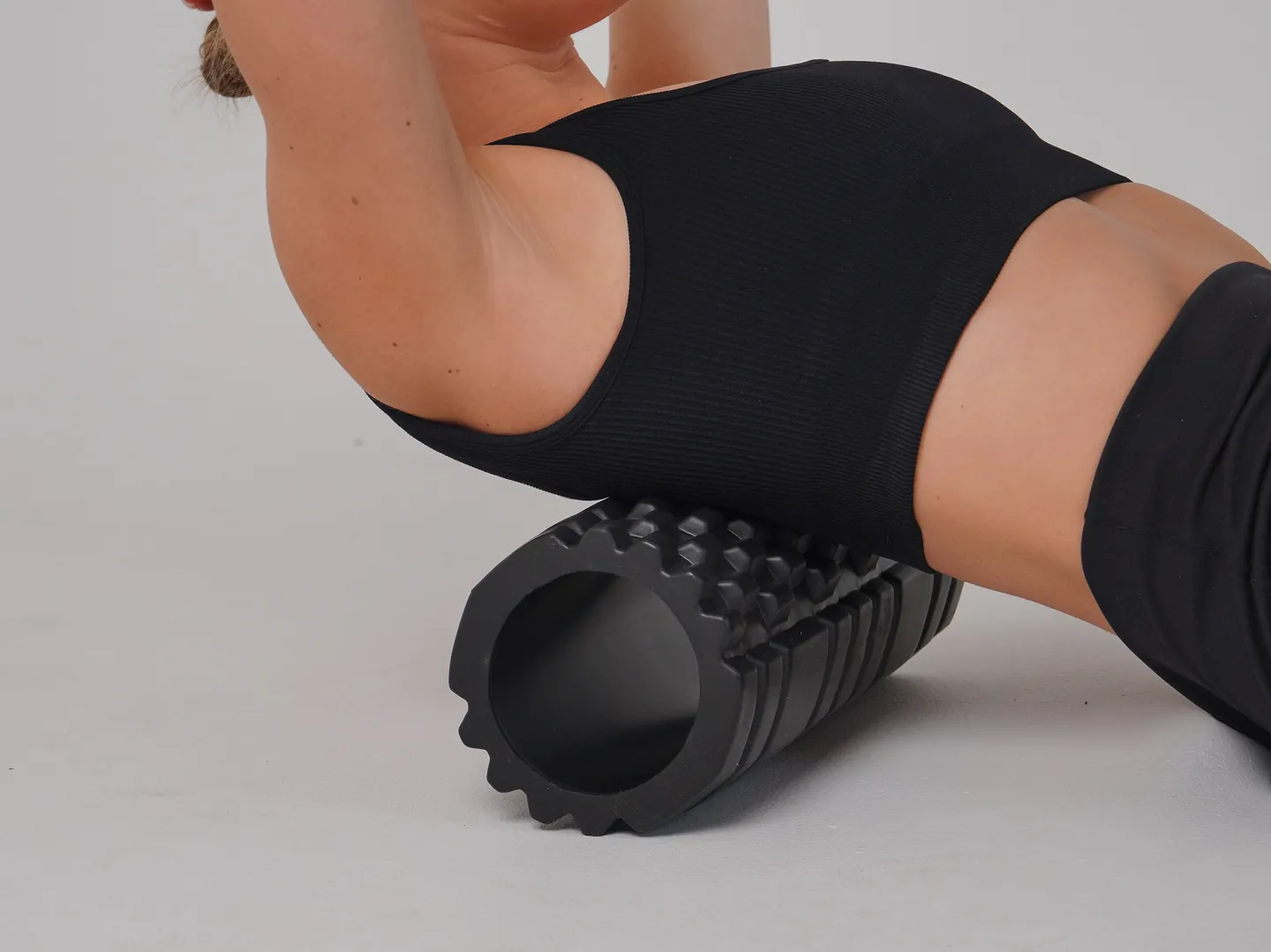
Imagen: Nadin Sh / Pexels
The foam roller has become a common item in gym bags and living rooms because it offers something valuable for anyone who runs often: a simple way to ease the built-up tension in the legs, glutes, and back without relying on complex equipment. Its role is not miraculous, but it is practical. Used well, it helps the body feel less stiff for the next workout and makes recovery stop feeling like an endless uphill climb.
The key is to understand it as a tool for myofascial release, not as a substitute for rest, strength work, or physiotherapy when there is an injury. In running, where every outing adds repeated impact to the same tissues, that controlled pressure can be useful before training, after running or on recovery days. The problem appears when relief is confused with punishment and you roll too fast, too hard, or over areas that simply do not tolerate it.
Why the foam roller fits running so well
Running is a repetitive, almost mechanical activity, in which the same muscle groups absorb and return energy again and again. Calves, soleus, hamstrings, quadriceps, glutes, and hips work like the gears of a clock subjected to small jolts with every stride. Over time, that demand leaves a feeling of hardness that many runners describe as stone legs or a tight band on the outer side of the thigh. That is where the foam roller can provide a useful release.
The reason is simpler than it seems: sustained pressure and slow gliding over soft tissue encourage a relaxation response and a temporary feeling of greater mobility. It does not break up knots like they were putty, nor does it magically lengthen muscles, but it can reduce the perception of stiffness and help the body move more freely. In the day-to-day life of the recreational runner, that difference is noticeable on the first flight of stairs, in the easy jog of the warm-up, and in the general comfort of the hours after a demanding run.
There is also an element of training hygiene. Modern running combines long runs, intervals, hills, gym work, car rides, and long hours sitting at a desk. That mix tightens the posterior chain and punishes hip and ankle mobility. The roller does not fix everything, but it does act as a small break between accumulated tensions, a kind of wrench for loosening bolts that are starting to squeak.
What benefits it really offers and which ones are exaggerated
The clearest benefit is the reduction in the feeling of stiffness. Many people feel their legs loosen up after a few minutes of gentle work on the roller, especially in the calves, quadriceps, and glutes. That effect is interesting both after a workout and before a session where it helps to wake the body up without going in cold to the first pace. The subjective feeling matters because it affects the quality of the next workout, even if it should not be confused with a permanent structural improvement.
Another useful effect is the temporary increase in joint mobility. This is not about turning a stiff hip into a brand-new hinge, but about gaining a momentary margin that makes better movement patterns easier. For a runner, that margin can translate into a less awkward stride, a more comfortable landing, and a lower tendency to compensate with the back or the knee. In runners who spend many hours sitting, the contrast between work-related immobility and the repetitive running motion makes this small help especially noticeable.
Where nuance is needed is in injury prevention. The roller can be part of a care strategy, but it does not by itself prevent plantar fasciitis, tendinopathy, or iliotibial band syndrome. It does not replace strength, properly dosed load, or technique. Nor does it fix poor recovery from lack of sleep, poor nutrition, or a training progression that is too aggressive. Its value is in adding to the picture, not in covering up deeper holes.
When to use it: before running, after, or on easy days
Used before running, the roller makes sense when the goal is to wake up tissues that feel especially heavy or restricted. In that context it should be used in moderation, for a short time, and without chasing pain. A few brief passes on the calves, glutes, or quadriceps can leave you feeling better prepared for the dynamic work that follows. The idea is not to empty the muscle, but to reduce that shell of stiffness that sometimes appears after spending a whole morning sitting before putting on your shoes.
After running, the use is usually more rewarding. The body is still warm, the muscles are receptive, and the session can work as a transition into calm. Between 5 and 10 minutes is enough for a useful routine, especially if the areas are well distributed and the pace stays slow. It is a way of telling the nervous system that the effort is over and it is time to downshift. Many runners appreciate that small ritual because it marks a psychological boundary between effort and recovery.
On rest days or active recovery days, the work can be a little more thorough, without turning it into a long, exhausting session. This fits well in high-load weeks, after harder long runs, or in training blocks where the legs clearly accumulate fatigue. The important thing is not to use it as punishment when something truly hurts. If there is an acute injury, inflammation, or sharp pain, the roller is not the answer.
Which areas work best for runners and how to approach them
The calves are usually the first stop because they bear a large part of the elastic load of the stride. You work seated, with the roller under the calf and the weight distributed through the hands behind the body. The movement should be short, slow, and controlled, from the Achilles tendon to just below the knee, without going over the joint itself. If the discomfort is high, it helps to put more weight into the hands to dose the pressure.
The quadriceps really appreciate the roller after hilly runs, pace changes, or strength work. In a face-down position, supporting yourself on the forearms lets the body glide from the upper thigh to a few centimeters above the knee. The most useful spot is often the outer side, which tends to hold tension when training load goes up or when the pelvis loses some stability.
The hamstrings and glutes complete the most common map. For the hamstrings, the work goes from the back of the knee toward the seat of the glute, with brief pauses in the denser areas. For the glutes, the movement changes: one leg is crossed over the other and you look for that deep point that sometimes sends tension toward the hip or even the lower back. The goal is not to chase pain, but to find useful pressure and steady breathing.
The thoracic back can also benefit, especially in runners who spend many hours hunched over during the day. Rolling between the shoulder blades and the middle back helps open the posture and release that closed-in feeling left by the computer. It is best to avoid the lower lumbar area: there the body’s structure does not offer the same protection, and poorly applied pressure can be more irritating than helpful.
Common mistakes that reduce effectiveness and can make discomfort worse
The most common mistake is rolling too fast. At high speed, the body barely registers the pressure and the tissue does not have time to respond. The correct movement is more like a slow sweep than an impatient back-and-forth. In practice, that means spending time on each area, breathing, and accepting that a good session does not need displays of pain or drama.
Another common mistake is applying too much pressure too soon. A lot of people think relief requires pressing as hard as possible, but the opposite is true: if the stimulus is excessive, the body defends itself and tightens up more. The sensation you are looking for is uncomfortable, yes, but tolerable. It should allow you to talk, breathe, and keep control of the movement. If the gesture makes you hold your breath or clench your teeth, the intensity has gone too far.
It is also wise to avoid rolling directly over joints, bones, or inflamed areas. The knee, ankle, spine, neck, and any area with heat, swelling, or sharp pain are not territory for the roller. This point seems obvious, but in practice it is not always respected. The foam roller works soft tissue; when it comes into contact with structures that are not designed for that pressure, the result is irritation, not recovery.
A subtler mistake is obsessing over the iliotibial band as if it were the single source of all lateral pain. In reality, that band of tissue is very dense and responds better when nearby structures are worked, such as the gluteus medius, tensor fasciae latae, and lateral quadriceps. Rolling it aggressively is usually a poor use of time and patience. The outer thigh can receive gentle work, but the focus is usually better placed on the areas that truly feed the tension.
How to choose the most sensible model for a runner
Not all rollers behave the same. There are soft, medium, and hard ones, and that difference changes the experience a lot. For someone starting out, a medium-density model is usually the most balanced option: enough pressure to feel an effect, but not enough to cause immediate rejection. Too-soft rollers fall short for regular use; too-firm ones can make the routine get abandoned by the third session because of the discomfort.
Texture also matters. A smooth roller spreads pressure evenly and is usually kinder to beginners. One with ridges or mixed zones concentrates the stimulus in specific points and offers more variety of work, which is useful when you want to treat dense areas or better locate tense spots. For most runners, a versatile design with an intermediate surface solves almost all common needs without extra complications.
Size and portability deserve attention if you travel to race or if space at home is limited. The standard format, around 30 to 33 centimeters, is the most practical for legs and glutes. Mini rollers are useful for calves, feet, or small releases anywhere, but they do not replace the full-size model. At the other end, longer rollers can be useful for the back or stability exercises, although for pure running they are usually unnecessary.
If the budget is tight, there is no need to go into a high-end range to notice effects. A basic, durable model can do its job for years if it keeps its firmness and does not deform. In rollers used frequently, what matters is that they do not sink in, do not collect dirt, and maintain a stable surface. Durability matters more than catalog shine.
What it can bring in heavy training weeks, races, and getting back into routine
In a high-volume week, the roller works like a small release valve. After a long run, an interval session, or a combination of strength and running, it can help keep the muscles from settling into a permanent feeling of density. That does not magically speed up adaptation, but it does help the body reach the next stimulus with less internal friction. In endurance sports, that friction matters just as much as pace.
Before a race, the use should be more cautious. A brief session can help release specific areas, but it is not a good idea to improvise an intense routine the day before a 10K or a half marathon. Recovery before competition calls for stability, not experiments. In that stretch, the roller should be a discreet ally, not a source of extra fatigue or an excuse to work sensitive tissues with too much ambition.
When getting back into routine after holidays, breaks, or reduced training, the foam roller is usually well received because the muscles lose some tone and the stiffness of sedentary life returns. A few short sessions help reintroduce movement in a gentle way, especially if combined with mobility and light strength work. They also work well for runners who spend many hours sitting and notice locked hips or tight calves after the first jog of the week.
What it really gives the recreational runner when used with judgment
The value of the foam roller is not in selling a total solution, but in offering an accessible, inexpensive, and specific tool to improve the runner’s body awareness. Well integrated, it helps organize recovery, soften the stiffness left by repeated impact, and make some heavy training weeks more bearable. That margin, though modest, is enough for many people to keep it in their routine without thinking too much about it.
Its greatest virtue may be that combination of simplicity and usefulness. It does not need a battery, it does not force you to follow a complicated protocol, and it adapts to almost any level. It can be used at home, in a hotel, at the gym, or beside the track. But its effectiveness depends on the way, the context, and common sense. Rolling better is worth much more than rolling more, and that difference separates a useful tool from an empty habit.
For the runner looking to recover better without making things complicated, the foam roller fits like a discreet seam in the fabric of training. It makes no noise, promises no miracles, and yet, when used regularly and with judgment, it leaves the body a little less stiff, the stride a bit freer, and the day after a little less rough. In running, sometimes that is the kind of improvement that is most appreciated.
You may also like: Foam Roller: exercises, benefits, and injury prevention for runners.
Este artículo contiene enlaces de afiliado: si compras a través de ellos, se genera una pequeña comisión sin coste adicional para ti. Más información.



How to prevent thigh chafing: causes and real solutions

Women’s running windbreakers: seven jackets and how to choose

Do more workouts get rid of soreness? A guide for runners

Jaén Half Marathon 2026: Record 3,800 Runners Registered

Men’s short running tights: how to choose the right pair

World Triathlon confirms data breach involving medical data

Izan Edo targets podium at Miyazaki World Cup

María Pérez ranks ninth in World Athletics’ 2026 top ten

Dos Santos, Duplantis and Sawe: World Athlete of the Year finalists

San Silvestre Vallecana 2026: 42,000 places, prices and start times

 Races3 months ago
Valencia Half Marathon 2027: date and registration

 Races3 months ago
Valencia Marathon 2026: entry, ballot and course

 Reviews and Comparisons4 months ago
Asics Gel-Roadmiles 3 for men: review and current price

 Reviews and Comparisons4 months ago
Asics Gel Sonoma 8 Gore-Tex: complete analysis for trail and rain

 Sneakers3 months ago
Saucony Endorphin Pro 4: full review and verdict

 News5 months ago
Strava API 2026: what changes for clubs, challenges and runner apps?

 Reviews and Comparisons5 months ago
Nike Alphafly 3: opinions, sensations, and real key points

 Reviews and Comparisons4 months ago
Under Armour running shoes review 2025-2026: models and key features

 Sports Equipment4 months ago
Shoe sizes in cm: a clear guide to getting the right fit for your footwear

 Sneakers3 months ago
Skechers GO RUN Consistent 2.0 analysis: comfort and limits

 News5 months ago
Valencia Marathon 2026 route: key tips to train and run better

 Sneakers4 months ago
Adidas Adizero Boston 13 for men: review and verdict