Races
Nebraska State Fair Marathon: complete guide to the 2026 edition
Grand Island brings together a marathon, half marathon, relay, 5K, and kids’ races in a day with a fair-like atmosphere.

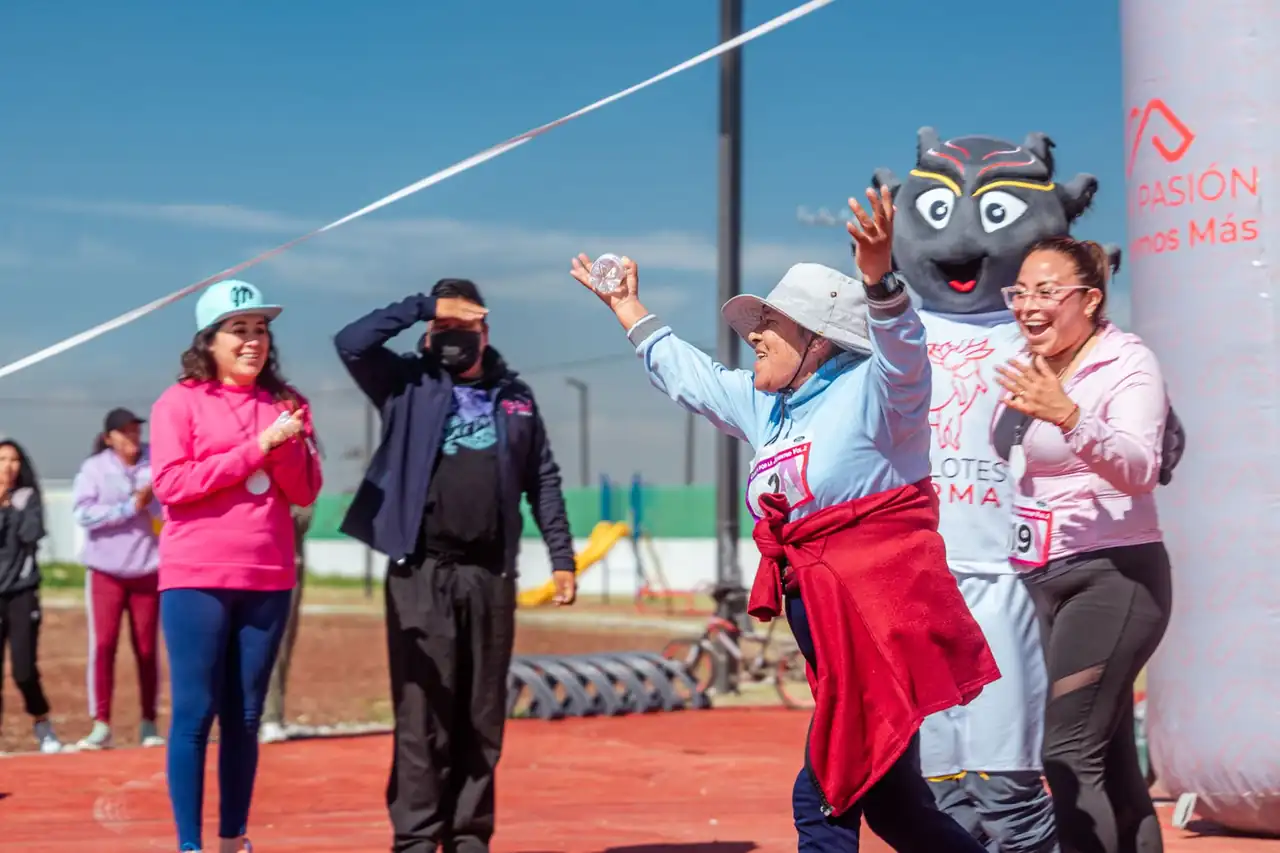
The Nebraska State Fair Marathon once again turns Grand Island into a meeting point between popular sport and fairgrounds, with the start and finish inside the Nebraska State Fairgrounds. The 2026 edition takes place on August 29 and offers distances for very different profiles, from those looking to complete a certified marathon to families who prefer a short or children’s race.
The event stands out for an unusual mix: pavement, a festive atmosphere, and an organization designed so the experience is not limited to the clock. The program includes marathon, half marathon, relay, 5K, 1-Mile Kid Run, handcycle and push rim wheelchair, with a course that starts and ends at the same epicenter of the Nebraska State Fair.
A race born from the pulse of the state fair
In the North American summer calendar, this event occupies a unique place. It is not just a race in the classic sense, but an extension of the fair, with that unmistakable contrast between the sound of shoes on asphalt and the murmur of stalls, stands, and agricultural activity in the background. The result is an atmosphere that feels more like a community celebration than an isolated event.
The marathon reaches its twelfth edition in 2026, a figure that already speaks of continuity and roots. The event has managed to grow without losing its identity, relying on a course that attracts both ambitious runners and those seeking a more social experience. That balance explains part of its appeal: there is room for a personal best, but also for a debut, a team relay, and adaptive participation.
The state fair also provides a recognizable setting for participants. This is not a hidden circuit or a neutral landscape, but an environment full of visual references, wide access points, and surrounding services. In journalistic terms, that combination of sport and popular event makes the race a curious piece within the U.S. late-summer running map.
Distances, profiles, and a course designed to bring in the crowd
The sporting offer is one of the event’s strongest features. The official program includes marathon, half marathon, marathon relay, 5K, and a kid’s mile, as well as adaptive mobility formats such as handcycle and push rim wheelchair. Not every race can say it opens the door to such a wide range of participants on the same morning.
The logic of the event is clear: to allow the most competitive core to coexist with more accessible participation. The marathon demands endurance and preparation, the half marathon lowers the entry barrier, the relay turns the premier distance into a shared experience, and the 5K opens the door to less experienced runners or those who simply want to be part of the celebration. The kid’s mile, meanwhile, brings a family element to the whole event.
That design has added value. It not only increases the number of entrants, but also changes the atmosphere at the start and finish. Instead of one homogeneous wave, there are different speeds, ages, and goals, as if the fair were transformed for a few hours into an avenue of overlapping movements. The race does not impose a single story; it allows several at once.
Schedules, start times, and cutoff times worth keeping in mind
The day’s schedule is quite well defined. Bib pickup opens on August 29 at 5:00, a logical hour for an August morning in Nebraska, where the heat can build very quickly. At 6:20, the handcycle and wheelchair athletes start, while at 6:30 the marathon, half marathon, and relay begin. The 5K starts at 7:00 and the kid’s mile at 7:10.
The full marathon has an important condition: the course remains open for 6 hours, from 6:30 to 12:30. That puts the race within a reasonable range for most runners, but it also sets a clear boundary for those arriving underprepared or planning a conservative strategy. In an event with potential heat and an early start, average pace stops being an abstract idea and becomes a survival tool.
The organization also concentrates start and finish logistics in the same venue, which greatly simplifies the day. For runners and companions, that decision reduces transfers and helps keep the event’s energy on a single axis. Starting and finishing at the fair is no small detail: it gives coherence to the whole experience and avoids scattering the public across different parts of the city.
The weight of the Boston Qualifier and course certification
One of the points that generates the most interest among experienced runners is that the marathon is listed as a Boston Qualifier. That label does not guarantee a place in Boston, but it does place the race on serious ground for those pursuing valid marks in the qualifying process. Added to that is the USATF certification of the course, with number NE18005GM for the marathon and NE18006GM for the half marathon.
Certification provides technical certainty that is not always present in events of this type. In simple terms, it means the course has been measured and validated under official criteria, something essential if the runner wants to compare times or use them in other events. The reliability of the course matters as much as the appeal of the event when the goal is a specific time.
That balance between festive atmosphere and competitive standard is part of the race’s charm. It does not force you to choose between a friendly experience and a serious race. It offers both at once, with the fair as a backdrop and the clock as a discreet referee. In a calendar crowded with marathons, that kind of personality helps it stand out.
How much it costs to register and what the entry includes
The 2026 fees show a tiered structure based on distance and registration date. In the most favorable window, the marathon is set at 90 dollars and then rises to 100 dollars. The half marathon goes from 80 to 90 dollars, the relay from 275 to 300 dollars, the 5K from 45 to 50 dollars, and the kid’s mile from 25 to 30 dollars.
Another useful reference is the registration platform information, which shows amounts with fees included: 98.75 dollars for the marathon, 88 dollars for the half marathon, 297.65 dollars for the relay, 50.37 dollars for the 5K, and 28.87 dollars for the kid’s mile. That difference between base price and final price is not minor, because it helps clarify the real cost before completing registration.
Registration includes several elements that are often highly valued in this type of event: a finisher medal, a T-shirt for all participants, admission to the Nebraska State Fair, post-race refreshments, and a free beverage, alcoholic or non-alcoholic, for participants over 21 or those who choose the non-alcoholic option. In events with a fairground setting, that package makes perfect sense: the bib buys not just a start, but a full day.
Bib pickup, parking, and the flow to the finish
Bib pickup is split across two moments. On Friday, August 28, it takes place from 1:00 p.m. to 7:00 p.m. at Hideout Banquet Hall, 1607 S Locust Street, Suite C, Grand Island. On Saturday, August 29, pickup opens at 5:00 a.m. at the fairgrounds’ Main Gate. This split helps ease pressure on race morning and gives room to those arriving with little time to spare.
Parking for athletes and spectators is located in the Northwest parking lot, next to State Fair Blvd. From there, the organization asks everyone to head to the main gate to access the venue. It is a simple but important solution, because it avoids improvisation during a time window when thousands of people may converge on the same point.
In a race with such a large turnout of families, volunteers, and companions, logistics act as the invisible stitching. If they work well, nobody celebrates them; if they fail, it shows immediately. Here the proposal seems to aim for clear circulation, defined points, and orderly access to the heart of the fair. Logistical simplicity is often an underrated virtue in large-scale events.
Prizes, refreshments, and a finisher atmosphere
The event awards prizes by age category and also in the relay and open divisions, with trophies for first, second, and third place. That structure reinforces the idea that the event is not designed only for the elite, but for a broad base of runners competing at different performance levels. In the amateur field, that plurality usually supports participation better than a system limited to the overall standings.
The runner package also includes a component that today matters almost as much as the result: the commemorative medal and the event T-shirt. In long distances, that kind of souvenir serves a dual purpose. On one hand, it certifies the effort; on the other, it preserves a physical memory of the day. The fair, the heat, the clock, and the fatigue are distilled into a small item, easy to keep and hard to forget.
The finish adds another trademark ingredient: post-race snacks and drinks, along with admission to the fairgrounds. Those who cross the line do not leave the scene, but become part of it. That continuity between sport and celebration helps keep the day from fizzling out right after the finish, a common problem in events that empty out as soon as the last race ends.
The relay, inclusion, and the value of an event open to more profiles
The relay format occupies a special place in the lineup. Compared with the individual marathon, which demands sustained endurance and a certain degree of solitude, the relay redistributes the effort among several team members and changes the tone of the experience. The distance stops being a wall and becomes a chain of segments where commitment is shared and emotion multiplies.
Also important is the presence of disciplines such as handcycle and push rim wheelchair. This is not a decorative add-on, but a real way of broadening the meaning of the event. Inclusive races stop being symbolic gestures when the schedules, start, and overall structure are organized to welcome them naturally. Here that fit is built into the official program.
In a time when many races compete to stand out with visual gimmicks or fleeting formats, this marathon opts for a sturdier formula: a variety of distances, official certification, fairground atmosphere, and open participation. It does not reinvent running, but it does add a recognizable and useful context. And for many runners, that is worth as much as a fast course.
An event that combines performance, family, and local spectacle
The Nebraska State Fair Marathon works as a snapshot of community-based North American running: competitive, yes, but also family-friendly, accessible, and tied to a very specific place. For a few hours, Grand Island becomes a stage where the rhythms of sport and fairground life coexist, a mix that gives the event a clearly distinctive character.
The runner chasing a time finds a certified marathon with Boston Qualifier status. Those who prefer a more relaxed atmosphere have the 5K or the kid’s mile. Families share a common setting, and volunteers support a logistics setup that spreads the day’s energy across different audiences. Few events manage that crossover without losing their identity.
The 2026 edition leaves a clear image: a race measured not only by its premier distance, but by the way it brings together profiles, schedules, and expectations around the same space. The Nebraska State Fair Marathon is not just a sporting event; it is also a way to begin the morning among grandstands, banners, metal barriers, the smell of fair food, and the sharp sound of an early start.



How to prevent thigh chafing: causes and real solutions

Women’s running windbreakers: seven jackets and how to choose

Do more workouts get rid of soreness? A guide for runners

Jaén Half Marathon 2026: Record 3,800 Runners Registered

Men’s short running tights: how to choose the right pair

World Triathlon confirms data breach involving medical data

Izan Edo targets podium at Miyazaki World Cup

María Pérez ranks ninth in World Athletics’ 2026 top ten

Dos Santos, Duplantis and Sawe: World Athlete of the Year finalists

San Silvestre Vallecana 2026: 42,000 places, prices and start times

 Races3 months ago
Valencia Half Marathon 2027: date and registration

 Races3 months ago
Valencia Marathon 2026: entry, ballot and course

 Reviews and Comparisons4 months ago
Asics Gel-Roadmiles 3 for men: review and current price

 Reviews and Comparisons4 months ago
Asics Gel Sonoma 8 Gore-Tex: complete analysis for trail and rain

 Sneakers3 months ago
Saucony Endorphin Pro 4: full review and verdict

 News5 months ago
Strava API 2026: what changes for clubs, challenges and runner apps?

 Reviews and Comparisons5 months ago
Nike Alphafly 3: opinions, sensations, and real key points

 Reviews and Comparisons4 months ago
Under Armour running shoes review 2025-2026: models and key features

 Sports Equipment4 months ago
Shoe sizes in cm: a clear guide to getting the right fit for your footwear

 Sneakers3 months ago
Skechers GO RUN Consistent 2.0 analysis: comfort and limits

 News5 months ago
Valencia Marathon 2026 route: key tips to train and run better

 Sneakers4 months ago
Adidas Adizero Boston 13 for men: review and verdict