Health and Nutrition
Socks for the Camino de Santiago: a guide to getting it right
Fabric, fit, and height make the difference on long stages and help reduce chafing and blisters.

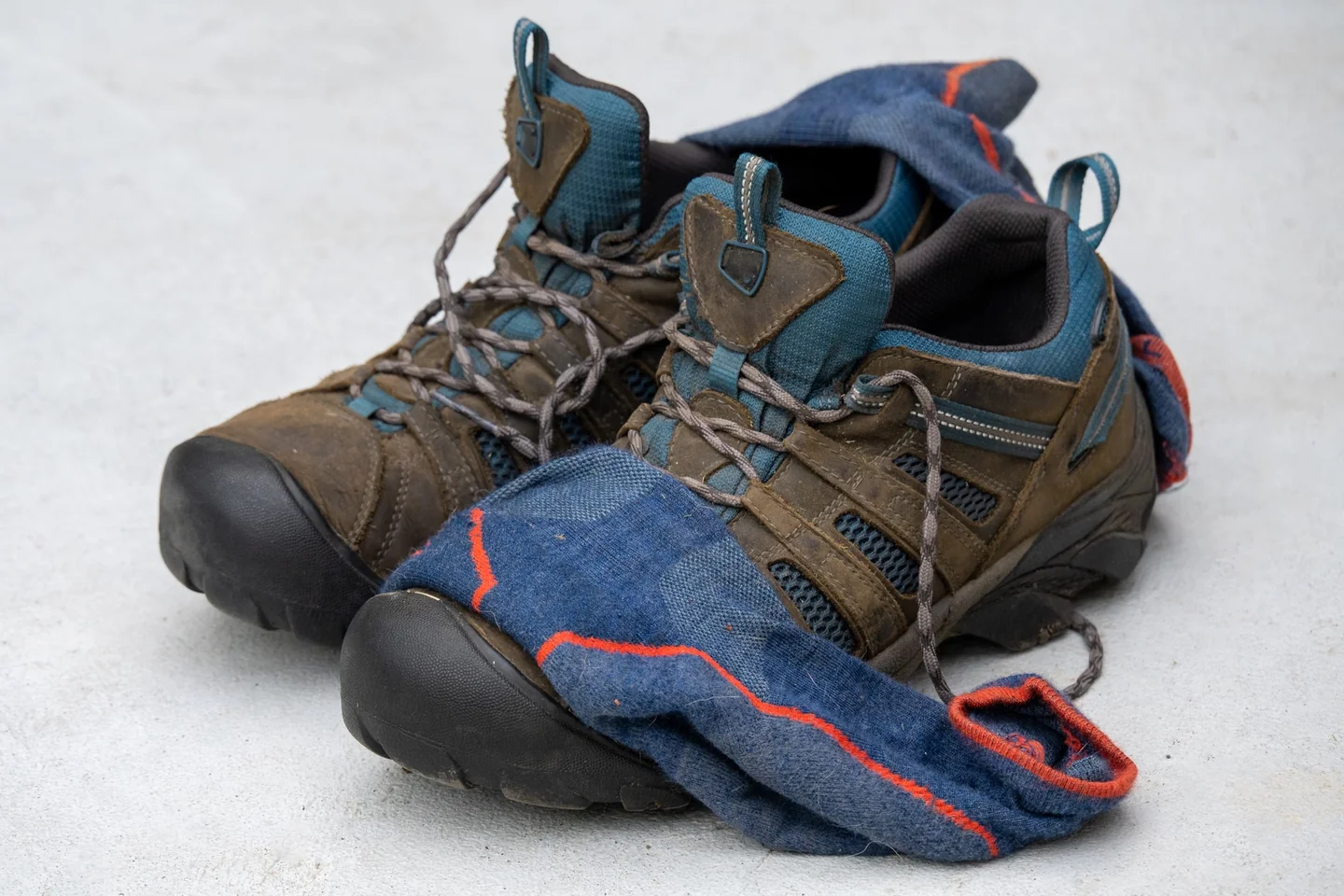
The foot that arrives intact at the end of a stage rarely does so by chance. On the Camino de Santiago, the sock functions as a first-rate technical piece: it separates the skin from friction, helps wick away sweat, and cushions the pressure that builds up hour after hour inside the shoe or boot. When that layer fails, the result is usually the same, even if the scenery changes: softened skin, heel friction, heat in the toe box, and, often, blisters that force you to slow down.
The difference between a good walking day and an uncomfortable one often begins with a detail that is as small as it is invisible. It is not enough to wear suitable footwear; the fabric, seam, height, and fit of the sock influence just as much as the sole or cushioning. On a multi-day trek, with stages of 20, 25, or 30 kilometers, that choice stops being secondary and becomes a matter of performance and foot health.
Why the sock matters as much as the footwear
The Camino punishes through accumulation. A single rub may seem insignificant at the start of the day, but after thousands of steps that repeated gesture becomes real abrasion. The skin softens with sweat, loses resilience, and responds worse to pressure. In that context, the sock acts as a first line of defense: it reduces friction, distributes impact better, and prevents moisture from being trapped next to the foot.
There is also a thermal effect that should not be underestimated. In summer, the foot needs ventilation; on cold days, it needs to maintain a stable temperature without getting soaked. Technical materials do this job better than cotton, which retains moisture and takes longer to dry. That is why, on long routes, people look for a fabric that moves sweat outward quickly and does not become a sponge inside the shoe.
The problem is not just sweat, but what it does to the skin. A damp foot slips more inside the footwear, increases friction, and multiplies the risk of chafing at specific points: the edge of the heel, the base of the toes, the instep, or the nail area. That tiny slip, almost imperceptible at first, explains many of the discomforts that appear once the stage is well underway and the body is tired.
Materials that work best on long walks
Composition is everything. For a demanding route, the most useful fabrics are usually synthetic blends, merino wool, and certain technical yarns designed to wick moisture. Polyester and polyamide offer lightness, quick drying, and wear resistance, while elastane or lycra provide stretch so the sock hugs the foot without wrinkling. That combination reduces the formation of folds, and folds are direct enemies of skin in motion.
Merino wool deserves a special mention. Although many people associate it with winter, it also works well in spring and in changeable weather because it regulates temperature better and controls odor more effectively than other materials. Its feel is usually more pleasant and less scratchy than traditional wool, and that matters when the foot spends hours enclosed. It is not a miracle fiber, but it is one of the most balanced options for anyone seeking comfort for many hours.
Quick-drying fabrics are especially valuable when there is rain, humidity, or frequent washing. On a trek with hostels, carrying several heavy pairs is not practical. A sock that dries quickly makes it easier to rotate your gear and maintain a steadier feeling of freshness. By contrast, a dense and poorly breathable fabric can build up heat and moisture until the inside of the shoe becomes an unfriendly environment for the skin.
The right height according to terrain and footwear type
The sock cuff is not an aesthetic matter. On many stretches of the Camino, a medium or high cuff protects against rubbing from the edge of the footwear, small stones, and dirt entering from outside. In addition, if you wear a mid-cut boot or a shoe with a pronounced collar, the edge of the fabric prevents direct contact from always hitting the same spot on the skin.
Low-cut models can work, but they are not the safest option for everyone. On hot stages, some pilgrims prefer a lower height for a cooler feel; even so, if the ankle rubs easily or if the footwear has a stiffer cuff, short fabric leaves less room for protection. The useful rule is simple: the more contact there is between foot, sock, and footwear, the more important it is to have coverage that does not shift.
The visual stability of the sock also matters. If, during the walk, the cuff slips down, folds, or creates a wrinkle under the ankle, discomfort can appear within minutes. That is why models designed for hiking or trail running often include a more anatomical fit around the arch and a cuff that does not open like a loose sleeve. What looks like a minor detail often decides the comfort of the whole day.
Seams, reinforcements, and fit: the three pieces you notice most
A flat seam, or no seam at all, reduces the risk of rubbing on the toes. On long walks, the toe area works much more than it seems, especially on descents, when the foot slides forward. If the seam is bulky, that repeated push eventually leaves a clear mark on the skin. A clean finish prevents that friction from becoming a constant annoyance.
Reinforcement at the heel and toe is another decisive feature. These are the two areas that receive the most load and impact. Well-placed padding helps cushion and distribute pressure, although it is important not to confuse padding with excessive thickness. A sock that feels very plush when tried on may seem comfortable, but if it traps too much heat or reduces space inside the footwear, it ultimately works against you.
The fit should be firm, never suffocating. If the sock is too loose, it slips and creates wrinkles; if it is too tight, it can hinder circulation and produce an unpleasant feeling of tightness by the end of the day. Ideally, it should stay in place without fighting the foot. That balance, so easy to describe and so hard to get right, is one of the great secrets of well-chosen gear.
Summer, winter, and in-between seasons do not ask for the same thing
In warm months, the priority is ventilation and quick drying. The most effective combination is usually a lightweight technical blend with a strong ability to expel moisture. At these times, thermal overload can do more damage than a slight lack of insulation. A foot that is too hot sweats more, and if that sweat is not managed well, the whole stage becomes harder than expected.
In autumn and winter, the goal shifts toward insulation without losing breathability. Here merino wool and thermal blends make sense because they maintain comfort better when temperatures drop and humidity rises. The point is not to add warmth for the sake of it, but to prevent the foot from entering a spiral of cold dampness that ends up taking a toll on the skin and the walker’s mood.
Spring and transition periods are often the trickiest. A cool morning can turn into a hot midday, and the same pair that seemed perfect when leaving the stage can start to feel heavy halfway through the route. That is why, rather than thinking in terms of a fixed season, it is better to think about the real combination of temperature, humidity, route type, and walking pace.
How many pairs to bring and how to rotate them without overcomplicating things
You do not need to carry half a shop, but neither should you improvise. On a long pilgrimage, the sensible thing is to have several technical pairs to alternate, plus a more comfortable rest pair for the end of the day. The exact number depends on the length of the route, whether they are hand-washed at night, and how long each model takes to dry. Even so, bringing at least two walking pairs and one rest pair usually gives enough margin to avoid getting stuck with damp gear.
Changing them halfway through a stage can make a difference. When the foot starts to feel hot and heavy, putting on a dry pair helps reduce accumulated moisture and changes the inside feel of the footwear. It is not a universal solution, but it is a very common practice among walkers who know that sweat and friction do not rest. That little breather often feels like opening a window in a closed room.
The rest pair serves an almost domestic function: recovering the foot. After a shower or upon arriving at the hostel, a softer, dry sock allows the skin to air out and lets the technical walking pair rest. That pause is sometimes underestimated, but a foot that comes out from under the day’s pressure responds better the next day. Recovery begins long before bedtime; it begins when you take the day’s armor off the foot.
Which materials to avoid and why cotton is still a bad idea
Cotton does not handle sweat well on long routes. It absorbs moisture, takes a long time to dry, and creates an initial feeling of freshness that is misleading. Later, once the fabric is soaked, it becomes heavy, soft, and more likely to encourage chafing. It is a comfortable everyday garment, but on a multi-day trek its behavior is worse than that of a technical fabric.
It is also wise to distrust models that are too thick without technical justification. More bulk does not always mean more protection. If the sock takes up too much space inside the shoe, the foot can end up compressed or moving irregularly. The result is paradoxical: the apparent extra comfort ends up creating more friction and more heat than necessary.
Designs with hard or poorly finished seams also deserve caution. At first glance they may seem robust, but what matters is how they feel after several hours of walking. The Camino does not forgive what seems reasonable in the shop and then performs badly on the trail. The best test is not the mirror, but the sum of the kilometers.
The role of sizing and trying them on before setting out
A poorly sized sock ruins more stages than a modest model that has been chosen well. If it is too short, it pulls the heel down; if it is too long, it creates pockets in the toe box or instep. That difference of just a few millimeters is enough to create pressure points where the skin suffers. The foot does not appreciate surprises, especially when it has been repeating the same motion for hours.
Trying them before departure is not decorative advice. It is worth walking in them for several days, with the same footwear you will use on the route, because what matters is how they perform together. A sock that seems perfect at home may turn out to be too warm, too thin, or too slippery when walking. The final combination is what counts, not the isolated technical sheet.
How the fabric ages also matters. With use, some models lose elasticity, loosen at the cuff, or thin out at the heel. On a long route, that can leave the foot less protected in the second half of the trek. That is why it makes sense to check the real condition of the material and not wear a brand-new pair that is already worn out inside.
Technical socks and blister prevention: what really helps
Blisters almost always come from a combination of moisture, friction, and heat. A technical sock reduces that combination, but it does not eliminate it on its own. Real prevention works like a system: well-fitting footwear, well-cared-for nails, clean and dry feet, and fabric that does not shift. When one of those pieces fails, the rest has to work twice as hard.
There are details that seem minor and are not. Using a model with padding where it matters, drying the feet properly during breaks, and changing socks when moisture is already noticeable can prevent a small discomfort from becoming an injury. On long treks, the body warns you long before it gives up. The problem is that, often, that warning comes in the form of a very mild burning sensation.
Double-layer socks still have their place in some cases. They work well for people who are very sensitive to chafing because they distribute some of the friction between two fabrics. In return, they usually take up more space and can feel warmer. They are not a requirement or a universal formula, but they are a useful tool when the foot tends to suffer even with conventional technical models.
What the best pilgrimage models have in common
The best ones are not the flashiest, but the most coherent. They usually combine technical fibers, careful seams, reinforcements where they matter, and a fit that stays firm for hours. Some add light compression at the instep or arch support; others prefer to prioritize ventilation and lightness. The key is not a single brand, but that the design matches the foot and the time of year.
They also share a less visible quality: stability. After several washes and many kilometers, they still keep their shape better than an ordinary model. That durability is valuable because the Camino is not done in an afternoon stroll, but in a succession of efforts where every small failure adds up. Useful material is what performs the same on day three as on day eleven.
Anyone who walks eventually learns that comfort makes no noise. A good pair of socks does not call attention to itself, does not tighten, does not slip, does not burn, and does not force you to think about it with every step. And that is precisely its merit: disappearing as a problem. On a pilgrimage route, having your feet stop being the news is already a form of success.
The invisible detail that supports every stage
The romantic image of the Camino usually focuses on landscapes, hostels, and arrivals in the town square, but the real story begins lower down, in the feet. A well-chosen sock supports more kilometers than its size suggests. It protects, regulates, dries, and reduces the mechanical punishment that turns a beautiful day into a painful one. In this journey, the small things have disproportionate authority.
That is why, when choosing gear for many consecutive days of walking, it is worth looking beyond price or color. Composition, shape, and how well it adapts to the foot say much more than the commercial label. On a route where every step counts, the right fabric acts as a small insurance policy against wear. It does not prevent effort from existing, but it does keep it from becoming unnecessarily hard.
One clear idea remains among so many fibers and seams: feet do not ask for luxury, they ask for intelligence. A good pair of socks for the Camino de Santiago does not promise miracles, but it does promise a cleaner, drier, and more stable walk. And on a long route, that difference is felt in the body, in the mood, and in the way you arrive at the next village with the sense that the day is still in your legs, but not in the form of punishment.



How to prevent thigh chafing: causes and real solutions

Women’s running windbreakers: seven jackets and how to choose

Do more workouts get rid of soreness? A guide for runners

Jaén Half Marathon 2026: Record 3,800 Runners Registered

Men’s short running tights: how to choose the right pair

World Triathlon confirms data breach involving medical data

Izan Edo targets podium at Miyazaki World Cup

María Pérez ranks ninth in World Athletics’ 2026 top ten

Dos Santos, Duplantis and Sawe: World Athlete of the Year finalists

San Silvestre Vallecana 2026: 42,000 places, prices and start times

 Races3 months ago
Valencia Half Marathon 2027: date and registration

 Races3 months ago
Valencia Marathon 2026: entry, ballot and course

 Reviews and Comparisons4 months ago
Asics Gel-Roadmiles 3 for men: review and current price

 Reviews and Comparisons4 months ago
Asics Gel Sonoma 8 Gore-Tex: complete analysis for trail and rain

 Sneakers3 months ago
Saucony Endorphin Pro 4: full review and verdict

 News5 months ago
Strava API 2026: what changes for clubs, challenges and runner apps?

 Reviews and Comparisons5 months ago
Nike Alphafly 3: opinions, sensations, and real key points

 Reviews and Comparisons4 months ago
Under Armour running shoes review 2025-2026: models and key features

 Sports Equipment4 months ago
Shoe sizes in cm: a clear guide to getting the right fit for your footwear

 Sneakers3 months ago
Skechers GO RUN Consistent 2.0 analysis: comfort and limits

 News5 months ago
Valencia Marathon 2026 route: key tips to train and run better

 Sneakers4 months ago
Adidas Adizero Boston 13 for men: review and verdict